Hello, everyone.
This is Enta.
This is a continuation of the previous post.
Don't you just think, "Who cares about the hassle in this series!?"
This is where I really want to get to, lol.
I think people who are actually working in the field will probably understand what I mean.
Well then, here you go.
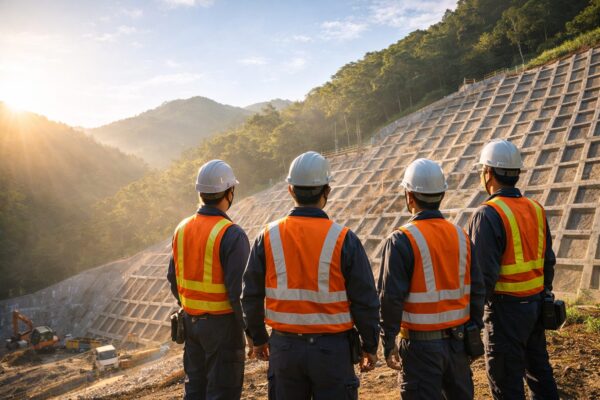
What is the real issue? Ultimately, the heat on the job site remains the same.
The direction of this revision is correct.
It’s just that we haven’t really moved beyond the premise of “taking measures on-site,” have we?
For slope construction workers, the reason summer construction is so tough isn’t because there isn’t enough money for safety measures.
The problem is, to begin with, that they're working on a slope in the middle of summer.That's right. (It's part of the job, but the temperature conditions are different now than they used to be.)
Whether we set up 100 mist fans or double the break time, the physical strain on workers laboring on a slope under direct sunlight at 38 degrees Celsius remains the same.
Unless drastic measures are taken—such as shortening construction time, scheduling projects to avoid the summer months, and adjusting for nighttime construction—the reality on-site won’t change a bit.
In this revision, the Ministry of Land, Infrastructure, Transport and Tourism has also outlined a policy of “setting construction schedules that take extreme heat days into account.”
However, construction schedules are often set based on the client’s needs, so how many construction sites actually have the option to “halt work during the height of summer”?
Can a construction company issue a quote with a summer surcharge?
Realistically speaking, when it comes to private-sector contracts, it is possible to include the summer surcharge in the estimate, depending on the outcome of negotiations.
However, in the case of public works projects (those under direct national jurisdiction, prefectural, or municipal), unit prices are determined based on cost estimation standards, so
Under the current system, it is not easy for a construction company to add its own “summer surcharge.” (It would likely not be approved in the first place.)
With this revision, the cap on on-site environment improvement expenses has been raised to 1,001 TP3T, which has expanded the range of expenses that can be accumulated, but,
This is a system for “incorporating actual results into cost estimates.”
In other words, it involves getting the actual expenses incurred (such as for a fan) approved as part of a design change.
It’s not really a system where you can just go ahead and ask, “I’d like you to raise the unit price for the summer,” is it?
What We Should Be Doing Now as a Construction Company
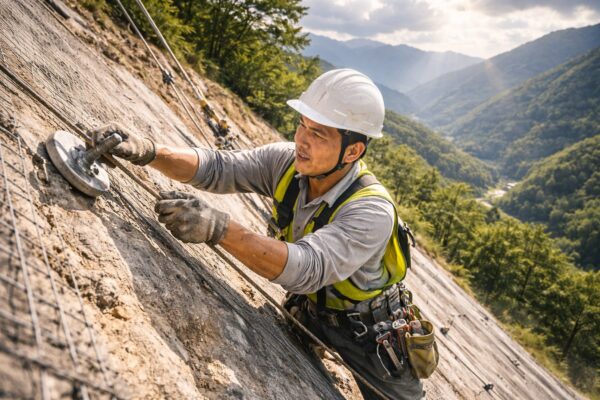
Basically, since we're not the general contractor, there's almost nothing we can do, lol.
Since it's all up to the general contractor, all I can really do is ask them to turn on the fan because it's hot, lol.
All that's left is to come up with ideas like setting up a break room (with the AC cranked up) on site.
Well, as a first-tier subcontractor working under a general contractor, it might be a good idea to at least be aware of the following points.
1. Understand the cost estimate.
Due to the revision of the general administrative expense rate, the estimated price for directly managed contracts will increase.
Please be sure to carefully review the revised cost estimation standards. (This will affect your estimates, right?)
2. Establish a system for documenting summer construction work.
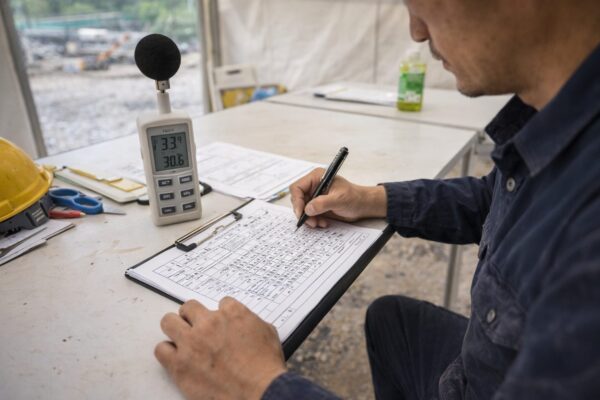
I expect the general contractor will do this as well, but they should obtain a WBGT meter and make it a habit to record daily readings and any work interruptions.
This serves as the basis for the design change.
3. Make full use of the practice of accumulating expenses for on-site environmental improvements.
Spot coolers, mist fans, electrolyte tablets, air-conditioned clothing... Expenses incurred for these measures can now be accumulated and recorded up to a maximum of 1,001 TP3T.
It’s a waste to say, “We took the necessary measures but didn’t file the application,” but it’s unclear how the general contractor will handle this with the subcontractor lol
It might be a good idea to keep evidence such as receipts and usage records.
4. Preliminary discussions with the general contractor.
Discussing the “Policy for Dealing with Extreme Heat” with the general contractor before construction begins might help ensure that subsequent negotiations regarding design changes go more smoothly.
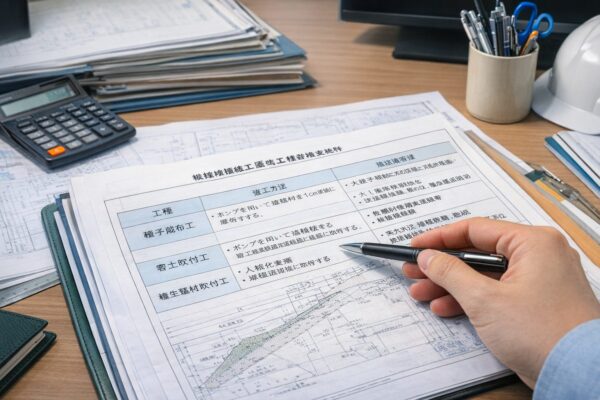
I believe this revision is the first step toward finally reflecting the realities of construction sites in cost estimates.
But it's only the first step.
The slope site is not inside a building, but on a mountainside.
There are only a few places with air conditioning, and only a few places to escape to in the shade.
To truly protect the construction site, we need to set construction schedules that avoid work during the height of summer, implement a system for summer premium rates, and shorten the actual construction hours themselves……
I think we need to move that discussion forward more quickly.
And, of course, if we don't raise our rates, we won't be able to take on as much work in the future.
It's a tough time for general contractors, but it's tough for subcontractors, too.
Let's do our best!
See you later.