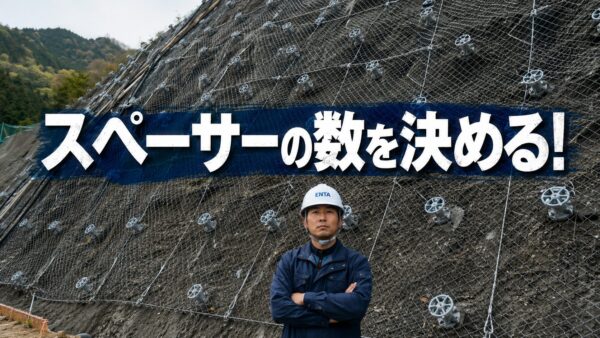
Hello, everyone.
This is Enta.
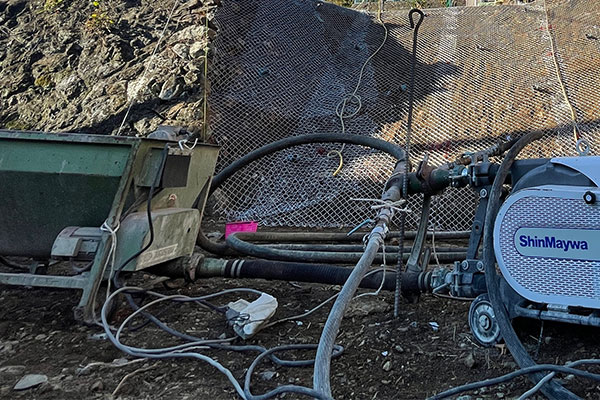
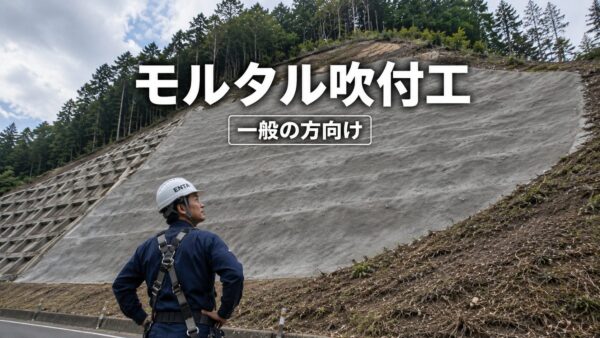
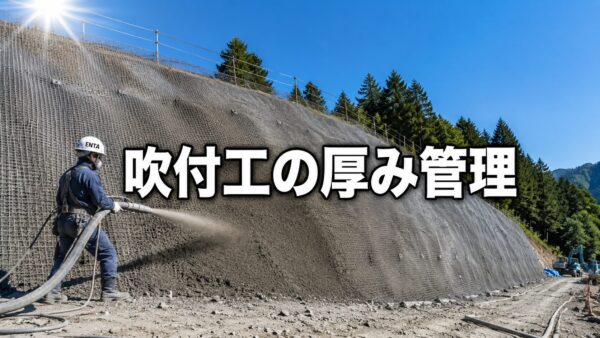
The other day, for the first time in a while, we performed spray application and Mini-Crete spray application on a small lot.
The mortar I asked them to bring on Saturday—the one I said should be a little stiffer—turned out to be dry-mixed mortar!
Honestly, there's just no way to practice aerial maneuvers with this equipment, lol.
We added water directly to the ready-mix concrete truck and mixed it.
This is the first time something like this has happened, and since that's how the materials came, I had no choice but to...
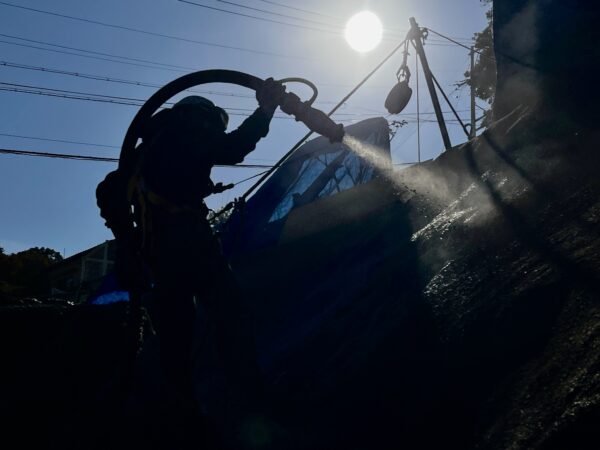
Anyway, even though I ran into some clogs along the way, I managed to blow out 5.3 m³ over the course of 6 hours.
I've tried all kinds of machines and methods so far, but in the end, if the squeeze pump is big enough, it's a piece of cake lol.
At our company, we use the MM-75 from Shinmeiwa for grout injection in anchor work.
The discharge volume per rotation varies depending on the size of the pump tube, so it's best to use the largest size possible.
It says that the MM-75 is followed by the MM-105, and the MM-200 comes after that.
If you're wondering which one to use, the MM-200 is obviously the better choice.
The larger pumping tube is best suited for spraying.
I'm thinking of getting a bigger one next time I buy a pump with a pumping tube, lol.
I imagine that each company has its own know-how and methods, but ultimately it depends on the pump size.
I think it would be a good idea for you all to keep that in mind when making a purchase.
I think a pump-tube-type pump (squeeze pump) is very useful because it can be used for both grouting (mortar, cement slurry) and spraying.
See you later.