

Hello, everyone.
This is Enta.
Have you heard of tapered plates?
First, let's talk about the term "taper."
In the metalworking industry, this is called taper machining.
Since “taper” is a common term in that industry, it won’t hurt to keep it in mind.
A taper is something that tapers toward the tip.
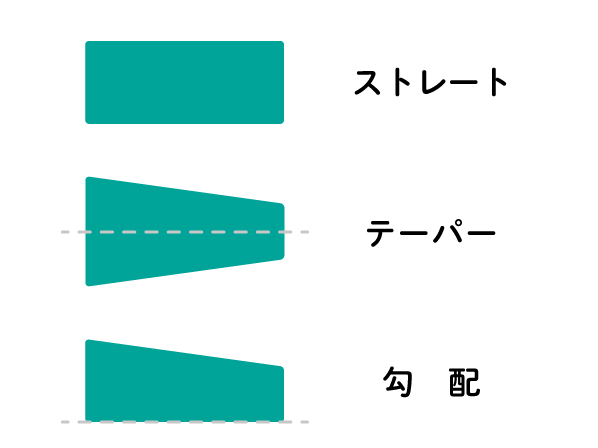
It looks something like this.
I found a really nice picture online!
So, the “taper plate”—which we often use—is a load-bearing plate used when the installation angle for sheet pile work and ground anchor work exceeds 20 degrees.
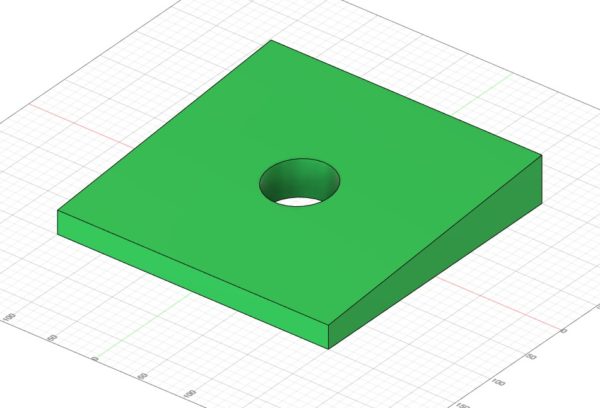
I tried drawing it in 3D CAD.
For example, if there is a 25-degree difference in the pouring angles, the options will vary depending on whether you create the angle at the intersection of the formwork or use a taper plate as shown here, but,
The maximum adjustment angle of the angle adjustment base for the head treatment component in ground anchor construction is approximately 20 degrees.
It's still 5 degrees short. That's when you use a tapered plate like this.
The tapered plates are made of iron and, in the case of permanent anchors, are hot-dip galvanized. (Same as the anchor plates.)
Also, since it can be created on-site, it offers a certain degree of flexibility.
It's convenient because it's surprisingly easy to create even when combining a vertical angle with a horizontal angle.
Alternatively, you can adjust the vertical angle within the legal framework and use a tapered plate to adjust the horizontal angle.
Since the angle relative to the guide frame and the pressure plate is extremely important, please be aware that these adjustment bases exist.
See you later.