Hello, everyone.
This is Enta.
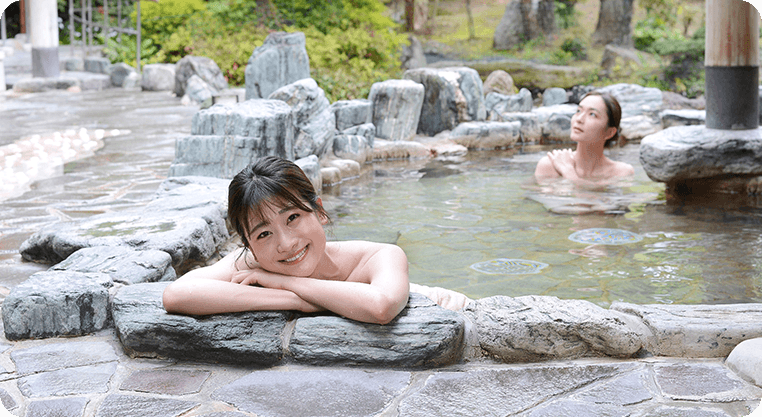
Hot Springs!
Do you like it?
I absolutely love it!!! lol
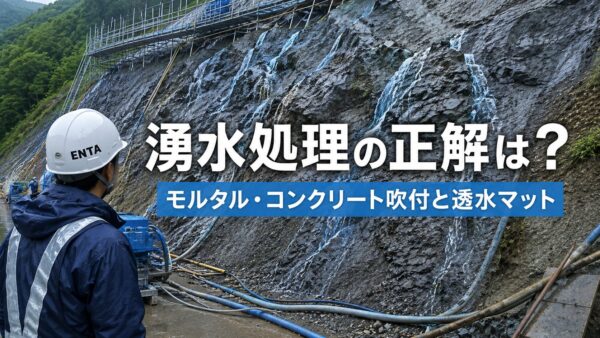
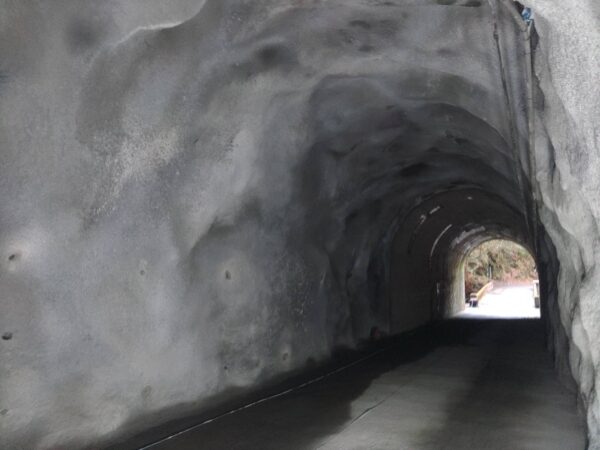
However, spraying in places like this is very difficult.
There is a spring with alkaline aggregate reactivity due to the composition of the hot spring water, and it flows through bedrock.
What's that?
That's what you're thinking, right? lol
What Is Alkali-Aggregate Reaction?
Alkali-aggregate reaction occurs when an alkaline pore solution in concrete reacts chemically with certain minerals in the aggregate,
Cracks in Concrete and Loss of StrengthIt is a phenomenon that causes [...].
Depending on the components present in the hot spring water, an alkali-aggregate reaction may occur.
To put it simply, if you use standard mortar or concrete spraying in a hot spring area,
It may deteriorate quickly!That's the point.
So, what are we going to do?
All we have to do is prevent the alkali-aggregate reaction (ASR) from occurring!
As a general precaution:
-
Use of Low-Alkali Cement: Using cement with a low alkali content reduces the amount of alkali that triggers the reaction
-
Selecting the Right Aggregate: Select aggregates that are resistant to ASR. Use aggregates considered to have low reactivity.
-
Addition of Pozzolan Materials: Adding pozzolanic materials such as fly ash and silica fume to concrete neutralizes excess alkali in the cement and prevents ASR.
-
Proper Formulation Design: Control the environment within the concrete by maintaining a low water-to-cement ratio and ensuring sufficient hardening and proper curing.
-
Proper Curing: Ensure proper curing during the concrete hardening process. Maintain appropriate humidity and temperature levels.
This is the norm!
But the work we're doing is slope stabilization!
At first glance, this looks like it could work!!?
Those are numbers 1 and 3.
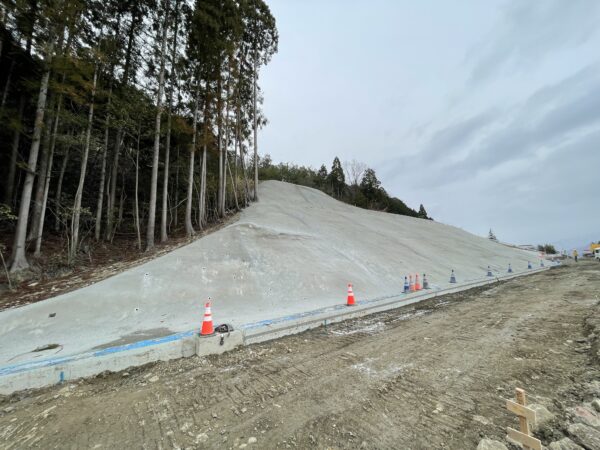
I think it's a good idea to use low-alkali cement for small areas.
However, since the cost increases with area and thickness, this is not a practical solution.
So, that makes it number 3.
The solution is to add an admixture!
This might actually be the best option for slope contractors, lol.
It's easy, after all.
In terms of the overall feel, I think replacing the sand—rather than changing the mix ratio, which would be a hassle—is the better way to increase strength.
(I think this is probably within the margin of error when it comes to the actual amount of cement per 1BT, but I'll leave it up to the site crew, lol.)
It's just a small thing, but since we're doing it anyway, we might as well make something great, right? ^^
See you later.