Hello, everyone.
This is Enta.
I hear the weather is going to get really rough starting today!!
A severe cold snap... What a terrifying name...
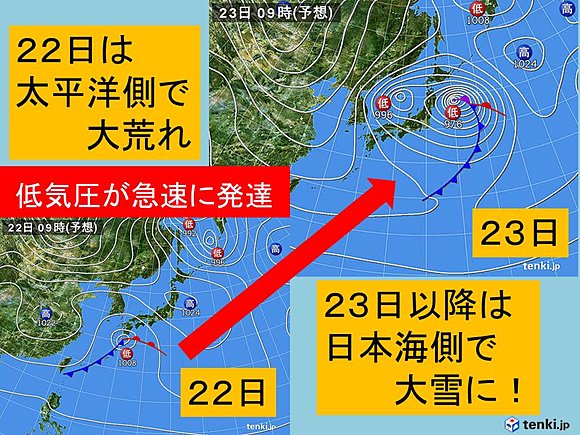
Please be very careful!!
Please help spread the word so we can all stay safe and prevent accidents!
But that's beside the point.
How to Make a Packer (Part 2)
Last time, I cut the packer to a length about 20 centimeters longer and shorter than the specified length.
So, this time, it's the cement slurry injection hose.
Even when using a packer, the basic principle for injection is to start from the bottom.
Pour the cement slurry from the bottom up.
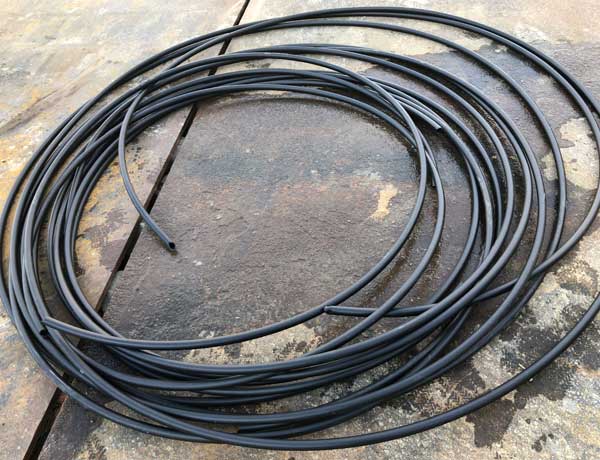
Cut it to a length of approximately the anchorage length plus the free length plus 50 centimeters (from the injection point).
You don't have to install it all the way down to the bottom of the anchorage length; it's fine as long as it's about 10 or 20 centimeters above that point.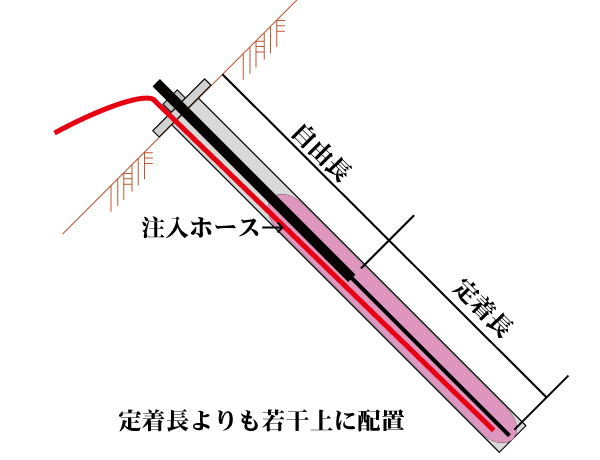
Please be careful, as the cement slurry may stop flowing if it gets stuck to the bottom.
If the injection tube is too short, it can be difficult to inject, so it’s okay if it’s a little longer.
As long as you order with a little extra leeway—rather than sticking strictly to the exact quantities listed for the ingredients—you'll be fine.
In the worst-case scenario, I think pretty much any anchor supplier would have this type of poly hose (injection hose) in stock. Haha.
Next is the test hose.
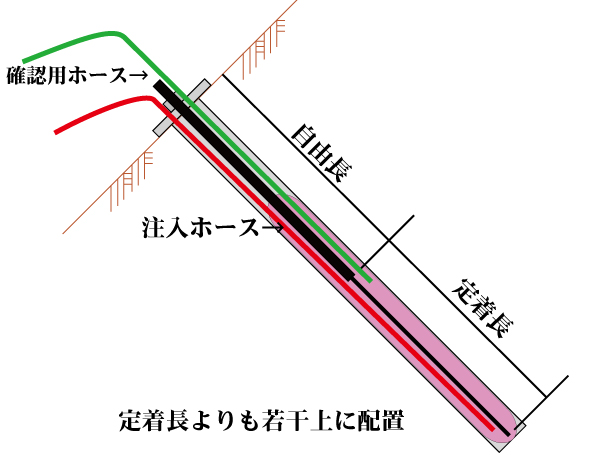
It doesn't really matter whether you include this or not, but,
If you do install one, place it about 10 to 20 centimeters below the top of the anchorage length.
Free length + 20 centimeters (fixed length) + 50 centimeters (injection point)
If cement slurry is injected through the injection hose and the grout rises up through the test hose,
This is used to verify that the grout has been filled.
However, if this anchor is a long one—over 20 meters, for example—it may not rise up through the inspection hose.
As you'd expect, when it's that long, it takes time to bring it up, and the pressure at the bottom of the packer is absolutely immense.
It would be a waste if the packer broke because you fed too much through it, so it’s okay to use a shorter packer.
I think it's probably okay to leave it out if you're using a long anchor.
And since the longer it is, the more material is used, both insertion and injection become more difficult.
Since this consists of PC steel strands, an injection hose, and a verification hose, the casing size may change if the circumference increases.
If you do not install one, you can check whether the fluid is being injected properly by connecting a pressure gauge to the injection hose to monitor the pressure.
The packer itself is rock-hard because it dehydrates on its own under its own weight, even without applying pressure.
I'd like to experiment with this area sometime, too.
See you later.