Hello, everyone.
This is Enta.
A few days ago, I went on a little trip—or something like that—with some friends.
That said, since it’s around Shima in Mie Prefecture, it was just part of my everyday life lol
I went because I was invited, but since our group usually goes to all sorts of places,
I don't find sightseeing all that exciting.
But there's nothing better than getting together with like-minded friends, having a few drinks, and laughing our heads off.
I laughed a lot.

All my stress is gone in an instant!!
But that's beside the point.
Concepts of Expansion Joints
Don't you ever give it a second thought when installing expansion joints, like the "Erasu"?
Is it okay to put it in? Or not??
If a combined construction method involving ground anchors or similar elements is used,
It is common practice in structural calculations to include joints in the framing and to cut the edges.
However, unless ground anchors are used, it is unlikely that joint filler would be applied in the first place.
So, let’s start by considering what expansion joint material actually is.
Well, if I Google it...
"In concrete structures, based on differences in deformation caused by thermal expansion and external loads,
"Joints installed at regular intervals to absorb movement and prevent excessive cracking."
That's what it said.
So, basically, it’s a way for the concrete to expand when it heats up (roughly speaking).
Considering thermal expansion, I think it would be better to have a frame for the spray-applied method.
However,The sprayed concrete formwork prevents collapse by providing continuity and covering the entire structure.
As my mentor says,
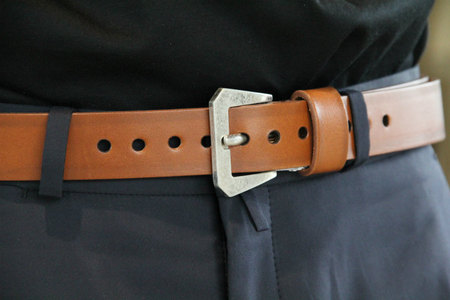
"If you think of the legal framework as a 'band' (in the sense of a belt on a pair of pants), then,
If there’s a gap in the band when you’re securing the mountain, it won’t do its job, will it!
(In short, it means it doesn't stay in place and slips off.)"
So, if the entire slope is to be supported solely by the slope frame, it may not be advisable to have joints in that frame.
A legal framework is defined by its continuity.
This may already be included in the design, so please discuss this with the local government to reach a decision.
Next, regarding the joints in sprayed mortar and concrete—this is actually a bit of a gray area, but,
Currently, if the width is 10 cm or more, expansion joints are to be installed every 10 meters. (According to the municipal standard specifications.)
While it may be effective on smooth surfaces, it can still be applied to slopes with severe unevenness, but
The results are mixed.That is my understanding.
If it's 10 cm or more, it might be somewhat effective, but since the sprayed substrate and surface are uneven,
I get the feeling that cracks tend to form around the drain pipes or in thin sections before they start to concentrate in the expansion joints. (This is purely based on my experience.)
As things stand, there is very little literature or reference material available on grout.
However, regarding the grout,More often than not, these elements are included in the design based on experience.It seems that...
Consultants who don’t do much design work within the legal framework tend to approach it with the same mindset as they would for concrete structures, and
In some cases, it may be shown on the drawing at a position halfway along the vertical cross-section of the frame.
(In the F300 standard, the joint is marked at the 150mm position, lol.) Things like that happen all the time.
Guidelines for Grouting
| Construction Method | Specifications | Decision |
| Framework Using a Combination of Ground Anchor and Formwork Methods | It's often included | |
| Rock Bolt and Scaffolding Combined Method | Can't get in | |
| Framework Workers Only | Can't get in | |
| Spray-Applied Work with Significant Irregularities | Thinner than 10 cm | It's often not possible to enter |
| Spray-Applied Coating for Smooth Slopes | Thinner than 10 cm | I sometimes put it in |
| Spray-Applied Work with Significant Irregularities | Thicker than 10 cm | It's often included |
| Spray-Applied Coating for Smooth Slopes | Thicker than 10 cm | I sometimes put it in |
Basically, everything is already specified in the design documents and drawings, so there’s no need to intentionally omit or add anything.
I don't think so. However, as a construction management engineer, when dealing with government agencies or general contractors, I might ask, "What should we do about this?"
That level of consideration is necessary. It’s not a matter of saying, “I won’t do it because it’s not written down,” but rather,
I think asking, “It’s not written here, so what should we do?” is what broadens the scope of our technical expertise and construction capabilities.
See you later.
*The guidelines for expansion joints are based on my personal experience.This is not a guarantee.