Hello, everyone.
This is Enta.
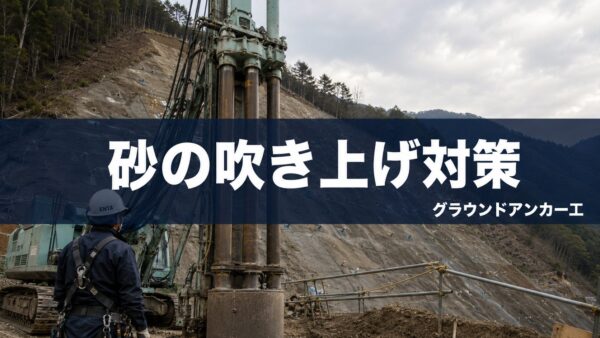
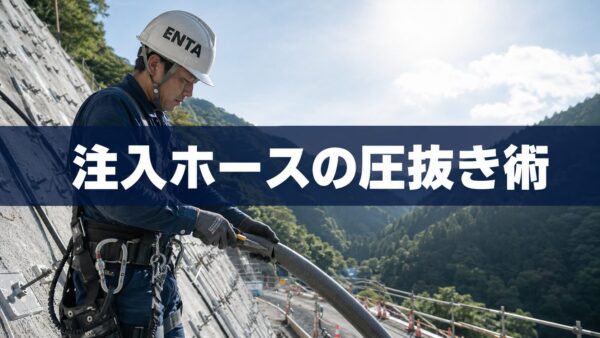
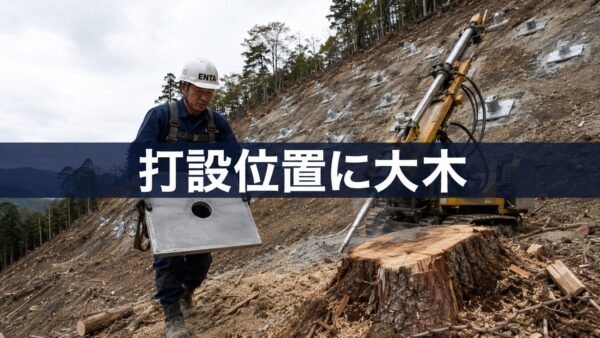
I’d like to give a brief explanation of ground anchor construction.
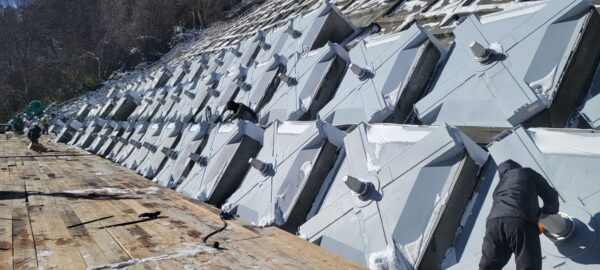
~The Invisible Force That Stabilizes the Ground Through Tension~
Ground anchor construction is,A construction method that secures and stabilizes the ground and structures using “tensile force” (tension)That's it.
This is an extremely important ground reinforcement technique that involves embedding “anchors” in the invisible underground to support structures and prevent slope failures, retaining wall collapses, and slippage.
🔧 Basic Structure of Ground Anchors
Ground anchors consist of the following structure:
| Body Part | Description |
|---|---|
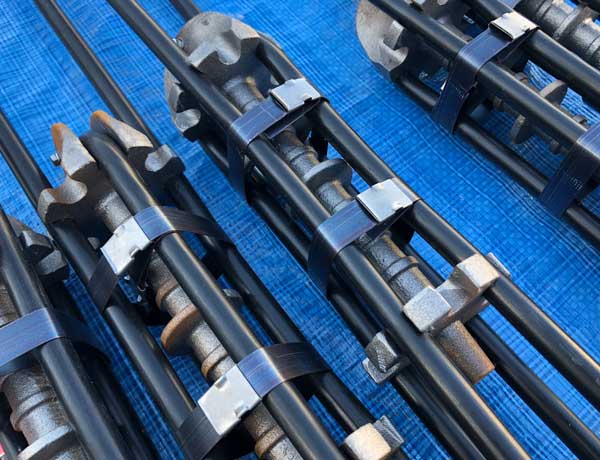
| Fusing Section (Fusing Length) | The portion where the tip of the anchor is firmly bonded to the ground. Here, tensile forces are absorbed through circumferential friction. It is integrated with the ground using cement-based grout. |
| Free Style | This section connects the anchor section to the surface section and serves to transmit tensile force. It is typically encased in a PVC pipe or similar material to prevent deformation. |
| Head (Anchor Head) | The portion installed at ground level and connected to structures or load-bearing plates. This is where the tensile force is anchored (secured) using wedges or nuts. |
| Pressure-receiving plate | A steel plate that connects anchors to retaining walls and other structures. It transfers the anchor force to the structure across its entire surface. |
⚙️ Principle: Using tensile force to “hold back” the ground or structures (retaining structure)
The principle behind ground anchors is very simple, and
It works by “pulling on anchors embedded deep in the ground and using that force to hold the structure in place” (clamping it).
▸ Simple Structure
-
Drill a hole at an angle and insert the anchor
-
Cement-based grout is injected throughout the entire anchor to integrate it with the ground and form an “anchorage section” (the free length moves freely inside the hose).
-
Apply tension using a hydraulic jack or similar device to the anchor head
-
Tensile force is transmitted from the anchor anchorage to the ground, exerting a force that stabilizes the retaining wall or slope.
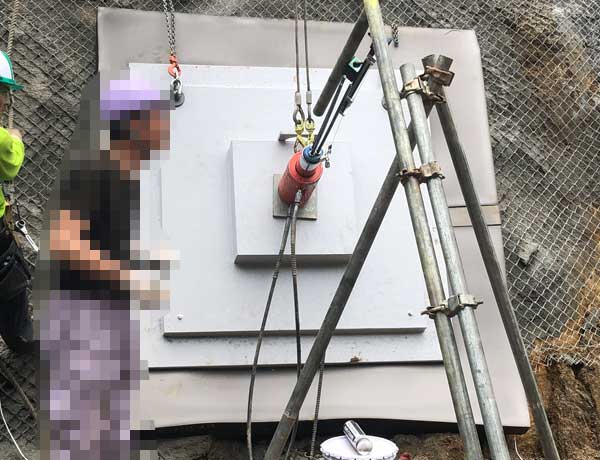
In this way,Prevents landslides and prevents retaining walls from lifting or collapsingYou can.
🧱 Why use “tension” for support?
When people think of ground reinforcement, they tend to imagine “pressing down (compression),” but ground anchors do the exact opposite—“Pull and Support"That's the idea."
The reason is:
-
If anchored to the solid bedrock deep underground,Significant resistance is generated (circumferential friction resistance)
-
The anchor is compact, andIt doesn't take up any space on the ground (though the construction work is pretty extensive, lol).
-
Retaining walls and slopes that were added laterCan be further reinforced
...is the benefit
🌍 Situations Where Ground Anchors Come in Handy
-
Slope Stability on Steep Slopes
-
Preventing Sliding and Overturning of Retaining Walls
-
Landslide Prevention Work
-
Large-scale infrastructure such as tunnels, dams, and viaducts
- Temporary Work on Retaining Walls
It’s a bit more involved than installing rebar, but the stability is outstanding.
Installing drainage boreholes here will provide greater stability and allow us to handle sudden heavy rains.
See you later.