Hello, everyone.
This is Enta.
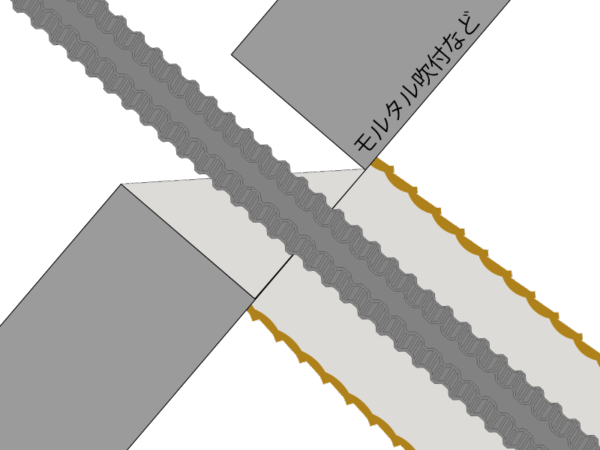
That's what I'm talking about today lol
Huh? What???
You're probably thinking that, right?
Yes. This is about filling in the gaps.
Generally, grouting for rebar insertion and ground anchor work is performed only up to the horizontal level.
You can't put any more in than that, right? (It'll spill, lol)
For sprayed mortar or formwork construction, the work is completed at the mortar stage.
Even if rebar is installed in the soil section, it will end up in a horizontal position within the soil.
What I'm trying to say is,Is mortar okay for filling the gaps!?
That's the story.
Apparently, there's an inspector in a certain prefecture who pointed that out, lol
I don't know how that staff member responded at the time (I just asked).
What do you think about that?
Since I was asked, here’s my opinion.

Filler material
- In the case of sprayed mortar or formwork, materials of a similar grade
- The same level of strength
- For earthwork sections, the strength must be greater than that of the natural ground.
- Mortar with Easy-to-Understand Mix Ratios
1. Materials of comparable quality
In other words, it’s a material comparable to a 1:4 sprayed mortar.
2. The same level of strength
Rather than the grout itself, it is important that it bonds well with the surrounding sprayed mortar and formwork, so a similar strength of about 18 N/mm² is required.
3. Strength equal to or greater than that of natural rock
For backfilling (leveling) around spray-cast formwork, the backfill material only needs to be as strong as the natural ground—in other words, as long as it’s harder than the natural soil, it’s fine.
Even temporary anchors used in ground anchor construction are acceptable as long as they are buried at least as deep as the soil layer.
4. Mix Proportions
Personally, I think it's fine to work things out on the spot, but,
It’s a bit of a hassle when people start talking about mixing ratios, so I prefer products from home improvement stores where the mixing ratios are clearly specified lol.
It's what people commonly call "dry mortar," lol.
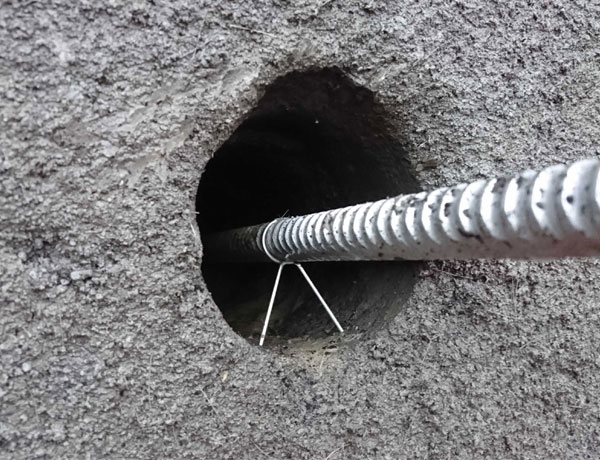
In conclusion, I think it should be fine as long as it has the same strength as the surrounding mortar.
Some dry mortar products come with complete documentation from building supply stores, so I think it would be much better to use those.
People sometimes say that inspections are just nitpicking, but there are many aspects that really make you think.
If you keep sending me this kind of information, I’ll be able to give it some more thought.
I really appreciate it.
We'd love to hear from everyone about what they were told during their checkups.
There's a chance people might say, "What?!" eventually, so just keep that in the back of your mind lol
See you later.