

Hello, everyone.
This is Enta.
Here's how to restore (replace and repair) the fuel filter at the site where it was damaged by the demon the other day.
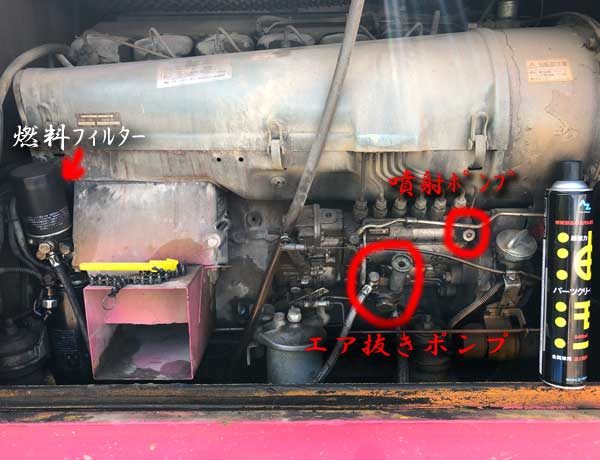
This is what it looks like when you open the engine compartment.
This is Engi from Mitsui Germany.
It's quite an old model, but this engine is tough and powerful!
I'm still going strong, lol.
So, with this issue, the RPM suddenly started shaking—like "brrrr... thud-thud-thud..."—and dropped, so I figured it was probably a fuel problem.
So, the first thing to check is the bolt located beneath the bleed pump.
This is the part.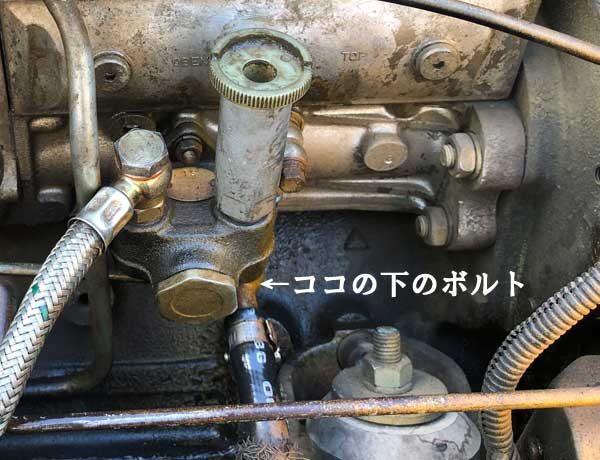
This is the bolt that this hose is connected to.
If you remove this, it looks like this.
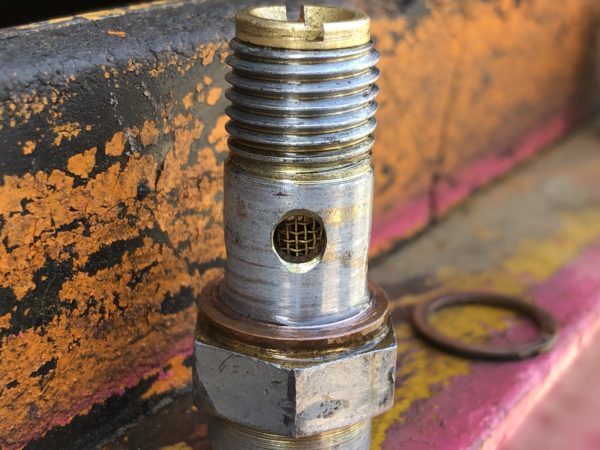
Fuel is now leaking out through the gap in the hole.
Larger pieces of trash get stuck in this mesh.
This makes it harder for the fuel to flow.
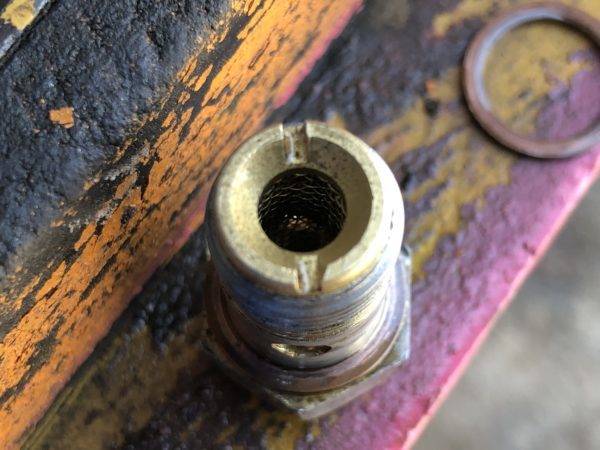
So please wash this area thoroughly, using compressed air or something similar to make sure all the debris is completely removed.
This hose is connected directly to the fuel tank.
If the machine is old, this area might be completely clogged with debris, so let's try blowing air through here.
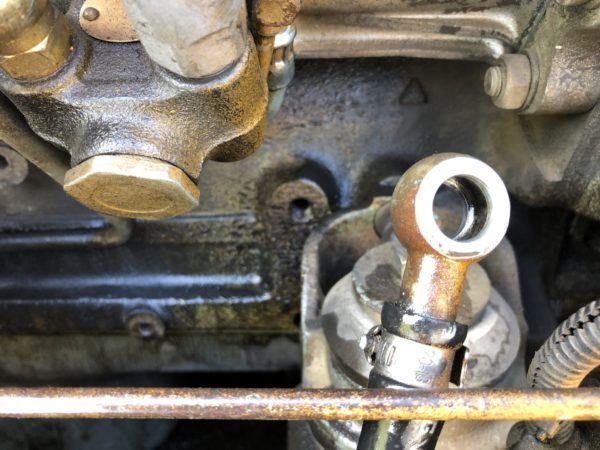
Since this hose has holes on both ends, hold one end closed with your finger.
Then, place your mouth on one end and try blowing into it.
If you hear a gurgling sound coming from the fuel tank, everything's fine.
If the sound quality isn't great or there's no sound at all, it means the hose is broken.
It's important to isolate the problemSo I recommend doing them in order.
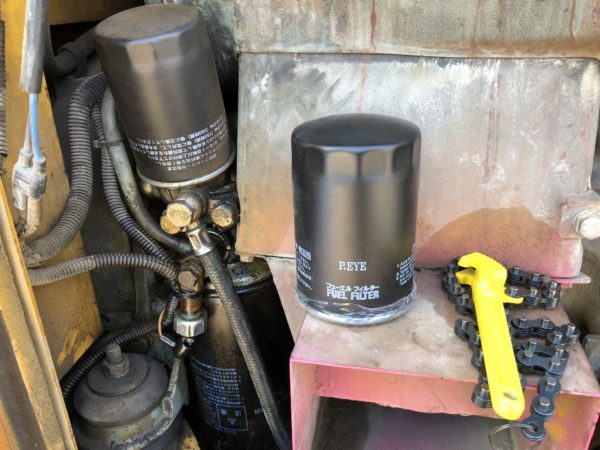
The diesel fuel that has passed through the bolt with the screen mentioned earlier enters the fuel filter.
This fuel filter traps water and fine debris particles.
So, you go through here to get to the engine side for the first time.
I used a chain wrench like the one in the photo. (Actually, I recommend using a belt wrench or a cup wrench.)
Remove it and clean the surrounding area with parts cleaner.
No trash, please.
Apply a thin layer of grease (any type of lubricant will work) to the rubber gasket on the new filter, then tighten it.
About three-quarters of the way from where the rubber gasket makes contact.
Since I was using a chain wrench this time, I wrapped a rag around it and tightened it lightly (since it’s a part that vibrates).
Even if you think you're keeping your machinery well-maintained, you don't realize something is wrong until symptoms start to appear.
Even though I know I should replace these kinds of consumables regularly, I tend to forget if everything’s working fine.
Ahhhh—would you mechanics like to come over to my place? lol
To be continued tomorrow.
See you later.