Hello, everyone.
This is Enta.
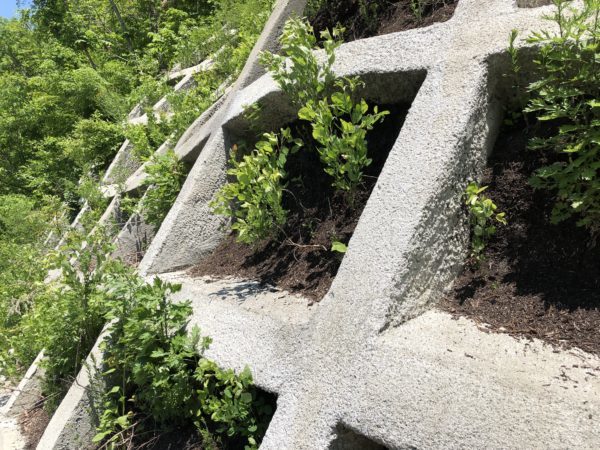
Do you bend the rules?
Or should we go straight through?
Which one do you think is better?
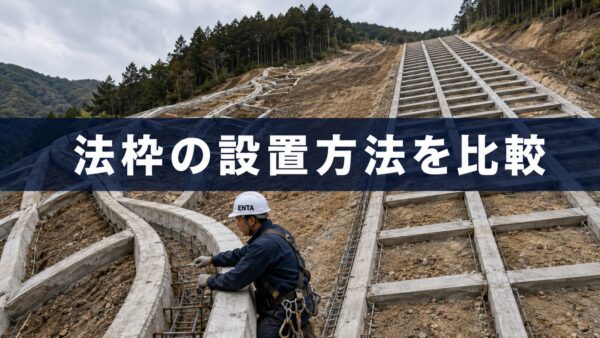
While the basic principle of free-form framing is to shape the frame to fit the contours of the mountain, aesthetic considerations are also important.
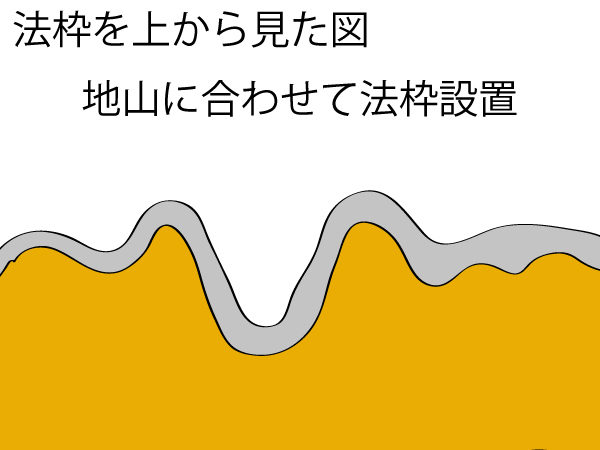
This is a cross-sectional view from above, but as long as you get the general idea, that's fine.
This is what it looks like when installed along the natural ground.
Set the frame size to □300.
With D13 rebar, you can create flexible structures like this.
However, if the rebar diameter is D16 or larger, the situation will become quite challenging.
Depending on the ground conditions, some sections can be bent while others cannot.
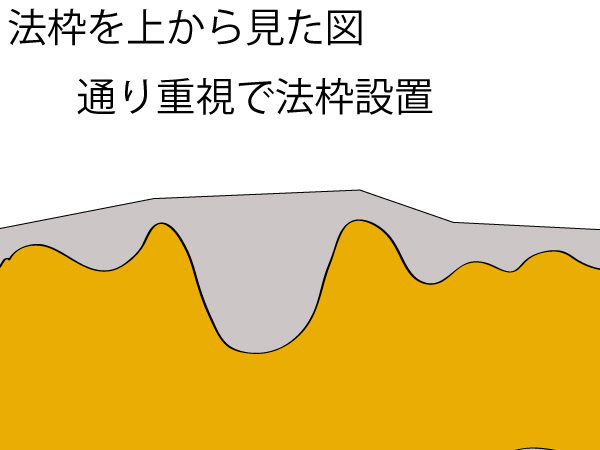
What do you think?
I think it'll look something like this, roughly speaking.
It's not that one is better than the others, but if you look at this in cross-section, the picture changes.
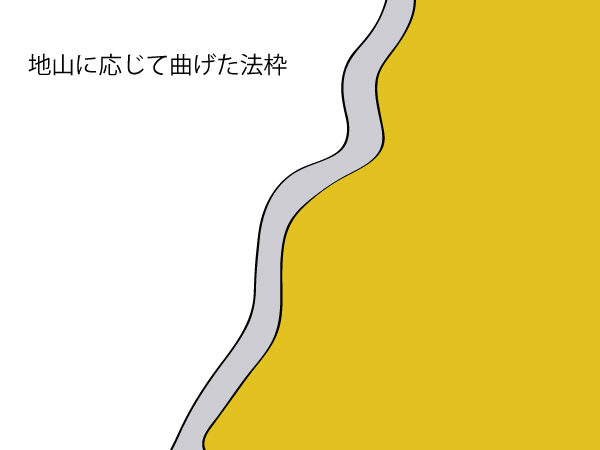
This is a ground-level installation.
Can you picture it?
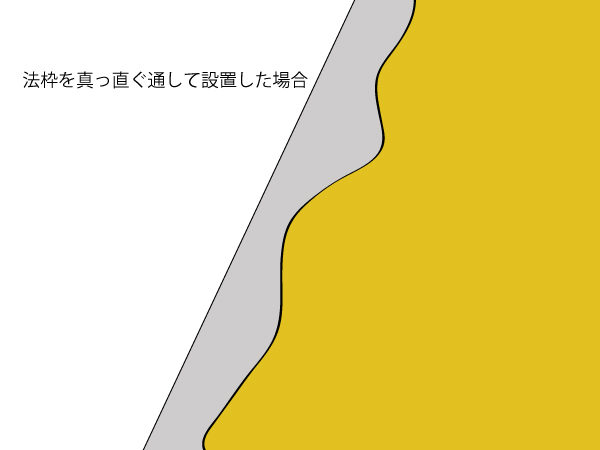
This installation uses straight lines to align with the legal framework.
Actually, the only difference between the installation methods is the cost!
I'll have to check at a later date to see which one is more expensive and which one is cheaper.
Please give it some thought, everyone.
It's good to have high standards, but if you think those standards will affect your profits, which option would you choose?
What is important, what is necessary, and what can be discarded?
See you later.