Hello, everyone.
This is Enta.
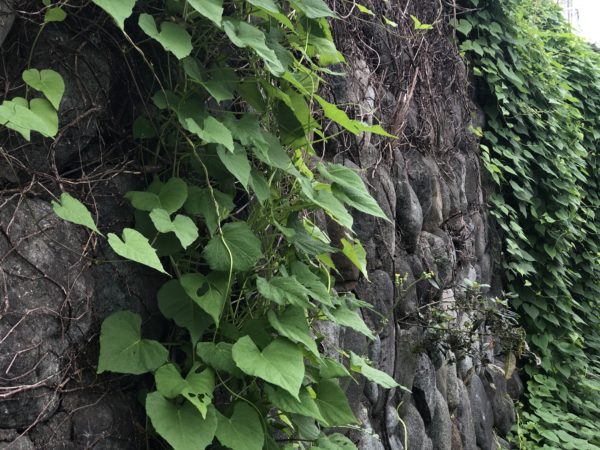
We’ve recently seen a significant increase in inquiries, site surveys, and quotes regarding the Moldam Method.
Since we can travel to any prefecture, we get requests from all over.
So, for now,This stone wall is crazy.That's what I meanInformation for the General PublicI will.
Recently, this blog has been viewed by people in the construction industry who aren’t directly involved in slope engineering, and we’ve been receiving inquiries from them.
So, this post is aimed not at slope specialists or civil engineers, but at the general public who don’t really understand slopes lol.
Please go easy on me—I don’t want people in the slope engineering industry to say, “That’s just common sense!” lol
I'll write this for beginners lol
1. Dry Stone Masonry
"Dry stone masonry" refers to stone walls made of natural stones simply stacked on top of the ground, or walls made of cobblestones.
Since the back is, of course, soil, it gets eroded by rain and other factors.
As the soil inside keeps disappearing, the stones will come loose more easily.
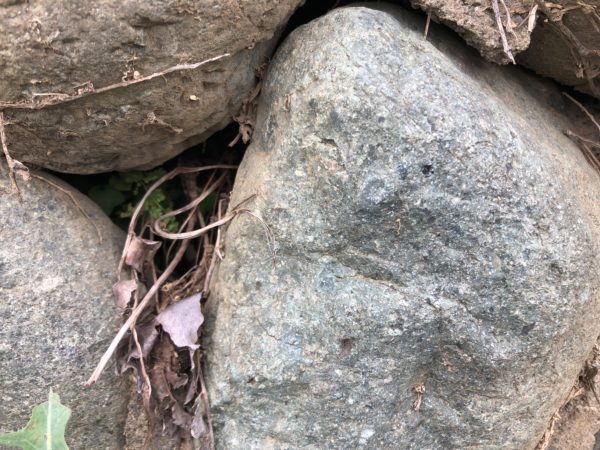
2. The grout is missing.
Mortar has been packed into the gaps in the stonework as part of repairs to dry-stone walls and similar structures.
Since these are surface-only mortar joints, they are about 1 to 2 cm thick.
As a result, it is prone to cracking and peeling, and falls out easily.
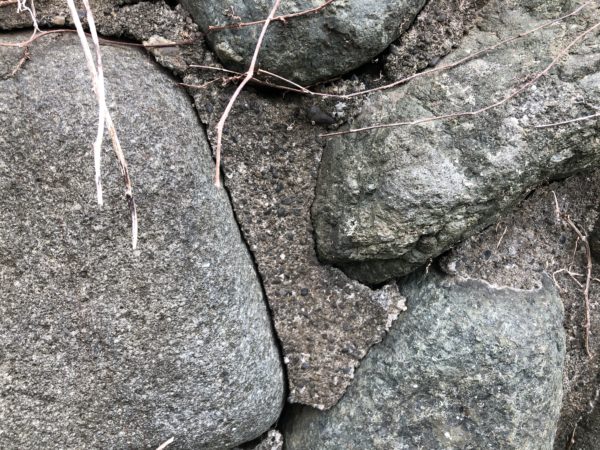
3. It's a dry-laid wall, but the spacing is wide and the joints are filled with mortar.
In this case, it doesn't come off, does it?
If the gaps between the stones are wide, the stones will fall out when you tap them.
If it falls, it will collapse.
Therefore, in this case, the Moldam method cannot be used.
For reinforcement, rebar is arranged in a grid pattern (1 m × 1 m) and then covered with sprayed mortar.
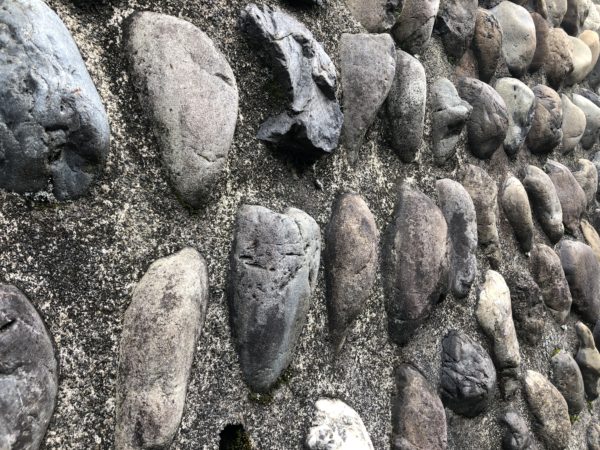
4. Structures such as houses built on top of stone walls
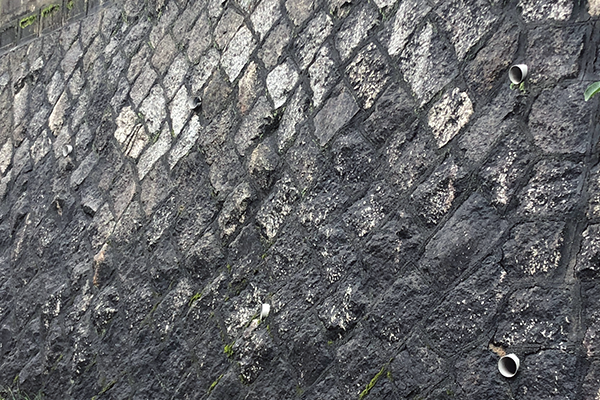
This is also a common scenario.
This is a structure built with natural stone several decades ago.
There are houses on top of that.
Generally speaking, the mortar joints in dry-stone walls like this tend to be loose, lol.
If you tap it lightly with a hammer, it makes a soft, hollow sound.
And when you lift the grout, you'll often find that the soil is gone and the area is hollow.
Generally speaking, they tend to extend about 10 to 20 centimeters into the wall.
Furthermore, this type of stone wall is vulnerable to rain; it can be washed away by floods or easily collapse if the interior is damaged by heavy rain.
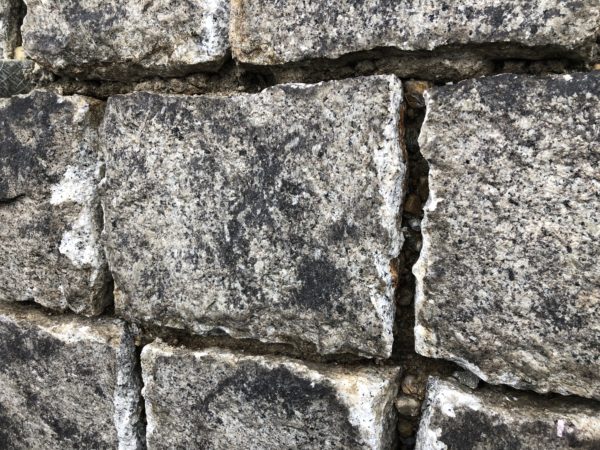
Even stone masonry that looks reasonably sound can have quite a few voids when you remove the mortar.
The areas where the water has pooled are particularly noticeable.
The stone wall shown in the photo above had gaps of about 15 cm at its deepest points.
5. Already swollen (pregnant)
This is really bad.
Please call me as soon as possible.
And this is a problem that cannot be solved by surface treatment alone using the Moldam method.
Since this construction method involves the use of rebar insertion workers and others, it will be more expensive.
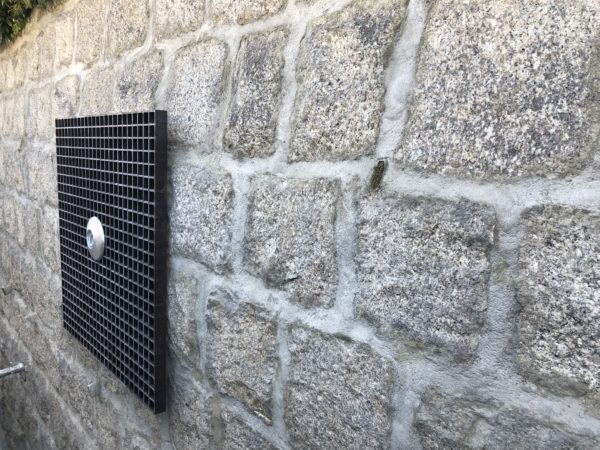
At first glance, stone walls look really sturdy.
But in reality, it's incredibly weak.
That's because each stone is unique in its own right.
Since they aren't connected, if one part comes loose, the rest will come loose all at once.
In particular, when heavy rain causes water to seep into the soil inside the stone wall and saturate it, the wall collapses explosively from the inside.
This is common knowledge in the slope engineering industry. The same mechanism that causes a slope to collapse occurs here.
Dry-stone masonry is virtually powerless against the pressure caused by internal collapse.
With the above in mind, please take a look at the stone wall on your property.
And if you think something looks suspicious, please let us know.
See you later.