


Hello, everyone.
This is Enta.
Lately, I've been focusing all my strength training on my legs, so I look like a fawn now lol
Strength training is tough, but it’ll be worth it if it helps my lower back, so I’ll keep at it for a while ^^
But that's beside the point.
You know what a dial gauge is, right?
It's not necessary for slope stabilization contractors, but it's a must-have for anchor contractors. (Stress control)
Do you know how to read a gauge?
Quite a few people don't know that.
The reason is... well, everything's digital these days! lol
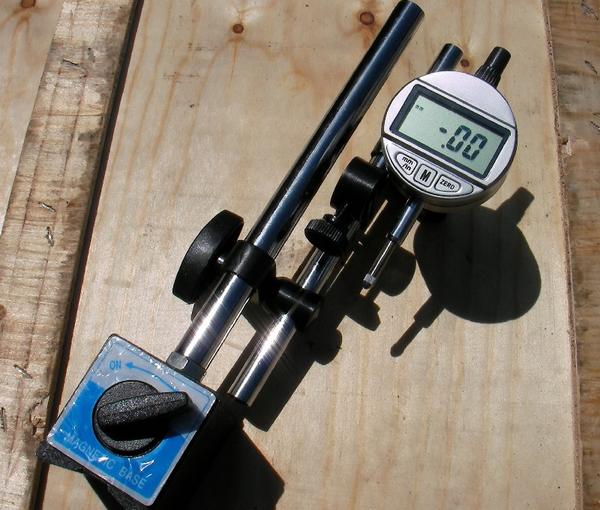
That said, the shift to digital is a relatively recent development, but,
This really took off all at once, didn't it?
It's so convenient! It gives you incredibly clear numbers.
It's also super Instagrammable lol (like an Instagram addict)
When this is converted to analog, it immediately becomes much harder to see and understand.
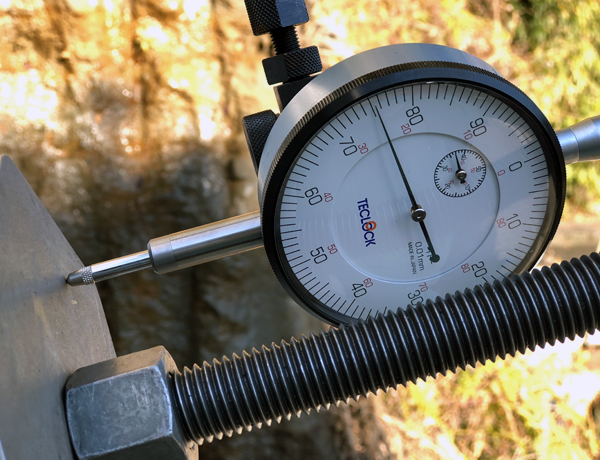
Here are some photos I just took the other day.
It’s been a while since I’ve seen an analog dial gauge, lol.
It's hard to tell the numbers at a glance in the photo, and they're hard to read, aren't they?
However, the difference from digital is that the needle moves, so you can feel even the slightest changes right in your hands.
The needle moves up and down very slowly—a motion you don't see with digital displays—
I discovered that sometimes analog is better than digital when it comes to management!
Sometimes I wonder, “Is it really necessary to do something this precise on site?” but there’s something great about the analog feel!
The other day, the winds were strong in the Tokai region, but even with the needle shaking back and forth like that, I managed to keep it at 1/100... lol
Well, let's get right to it—do you know how to interpret the numbers above?
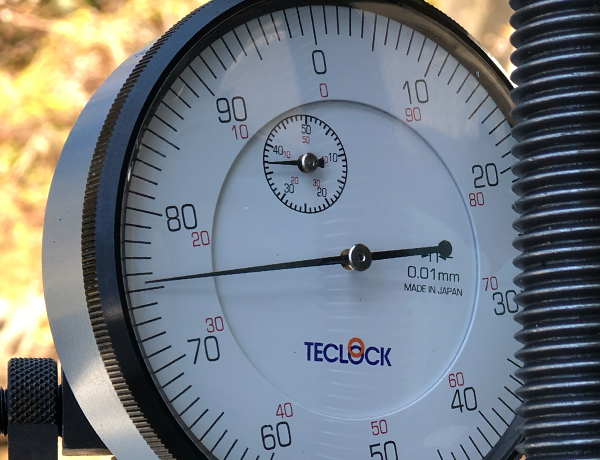
I've uploaded it in portrait orientation to make it easier to see.
What do you think? Do you get it??
Most manufacturers use the same design, but,Read the hour hand, then read the minute hand.
Also, this dial gauge has an accuracy of 1/100.
Looking at the scale on the hour hand, you can see that it goes up to 50, which means it can measure up to 50 mm.
One full rotation of the minute hand is 1 mm.
The hour hand is at 36.
The hour hand is at 75.
That means,It is 36.75 mm.
As long as you decide whether to round down or round up the reading on the hour hand, it won't be a problem.
The hour hand's markings rotate, so if you want to set it to zero, turn it to align with the zero mark. (It doesn't really serve any purpose, but it's a matter of personal preference.)
One of the great things about analog is that it doesn't need batteries, lol.
I once found myself in a bind while out in the mountains—my digital device had run out of battery, and the nearest convenience store was an hour away.
I recommend keeping a spare battery on hand, but depending on the situation, I’d also recommend going analog!!
By the way, the part that goes on the floor is called a magnetic stand.
If you search for it, you'll find plenty of results.
See you later.