Hello, everyone.
This is Enta.
I'm swamped with planning next week's event, designing my daily routine, and doing cost estimates lol
If I don't keep finishing them up and sending them out, they'll just keep piling up one after another...
I'll do my best lol
But that's beside the point.
Lately, we've been getting more requests for stone masonry again, but,
For now, I’d like to explain what kinds of stonework are problematic.
Case 1
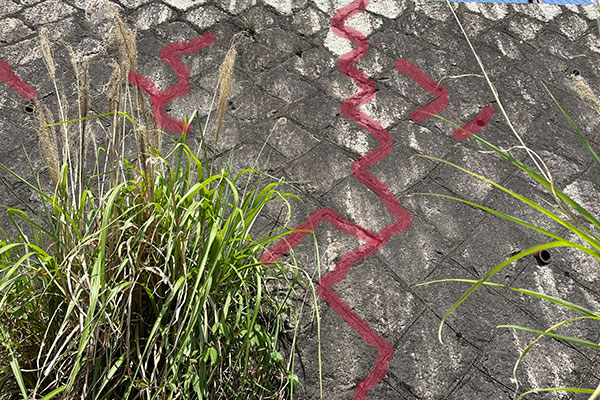
First of all, a stone wall with vertical cracks like this is one that was on the verge of collapsing but somehow managed to hold together.
This means they had already been subjected to some kind of internal pressure.
Financial Health: 30%
As a remedial measure in this case,
Remediation Worker
Reinforcing Bar Installer
Drainage Boring Worker
Sprayed Mortar (+Reinforcement Installation)
I think the basic premise is that these should be used in combination.
Case 2
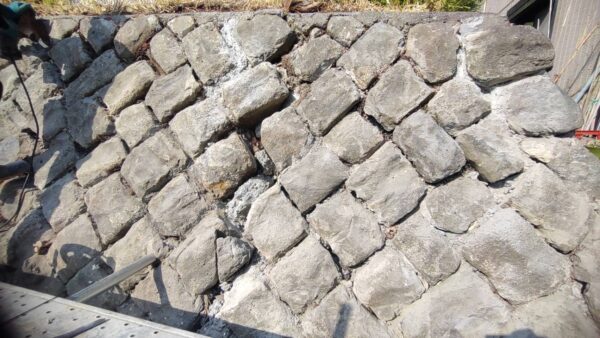
Stone walls with such wide joints are gradually eroded by rainfall, and
It crumbles away as if the stones were being pulled out.
Therefore, the grout lines must be completely redone, and measures must be taken to prevent them from cracking.
Financial Health: 50%
Remediation Worker
Moldam Method
Case 3
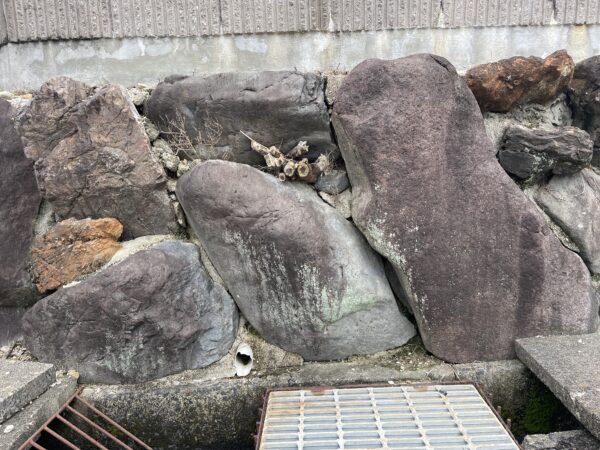
There are also places like this where natural stones have been stacked up.
This stone wall is made of some pretty large boulders, but I think it’s quite sturdy and won’t collapse easily, given their size.
It's put together skillfully and doesn't fall apart right away, but we sometimes get called in to help with weed control, lol.
Weeds growing in the soil can also cause it to become loose.
Risk Level: 70%
There is a possibility that it could lose its balance and fall due to an earthquake, but if it isn't very tall, it might be okay.
Remediation Worker
Moldam Method
Case 4
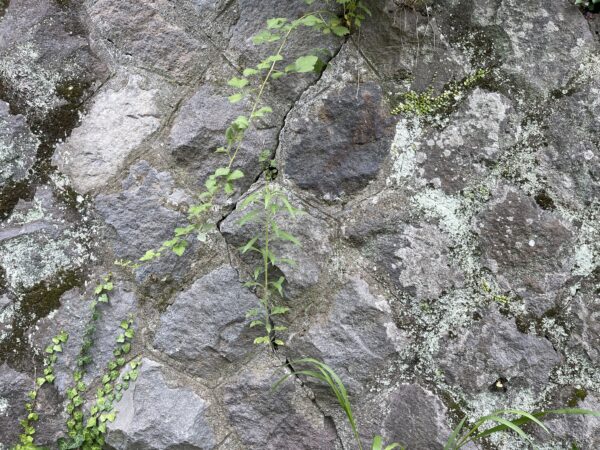
In cases where the dry stone wall is already beginning to collapse (e.g., cracks have formed, stones are protruding, or stones have fallen out)
Since it's already collapsing, there's a high chance that heavy rain could cause it to collapse all at once.
Because the joints are so large, there is a high likelihood that the amount of soil particles inside has decreased significantly.
It is extremely dangerous, especially if it is 3 meters or longer.
Financial Health: 20%
Remediation Worker
Reinforcing Bar Installer
Drainage Boring Worker
Moldam Method
We recommend using these together!
Case 5
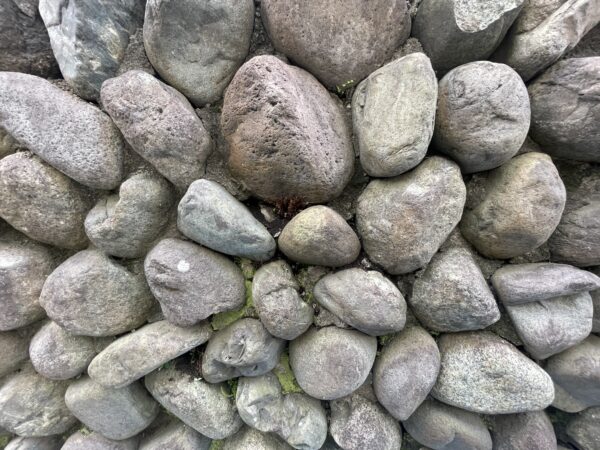
This is a rubble-stone wall.
Even though the joints in this type of stone wall are still somewhat intact, the stones can easily fall out if the wall is deteriorating.
Surprisingly, rubble-stone walls are often built on steep slopes, and if an earthquake strikes, they’ll collapse in an instant.
Also, since they aren’t piled as high as you might expect, the risk is relatively low, but the impact on homes if they were to collapse would be incalculable.
Risk Level: 50%
Remediation Worker
Moldam Method
Drainage Boring Worker
We've covered Cases 1 through 5.
Please take a look at the stone or block walls on your property.
Please think of this "soundness" rating such that 100% soundness means the company was just established (newly founded).
From that point on, its soundness gradually deteriorates due to aging.
If a stone wall has been subjected to a major earthquake, its structural integrity will decline sharply.
In areas that have been hit by heavy rain time and time again, the structural integrity will continue to deteriorate.
For now, please check it out.
I'll write about how to inspect and check things again tomorrow!
See you later.
A Simple Way to Check the Condition of Your Home's Stone Masonry (For Single-Family Homes)