



Hello, everyone.
This is Enta.
I've been conducting basic testing at a certain site for the past few days.
Have you ever taken the basic exam for ground anchor construction?
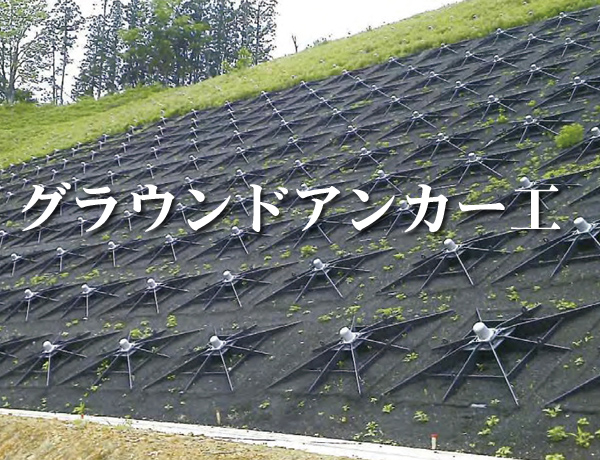
When carrying out this type of ground anchor work, the key factor is the anchorage layer.
This is the basic test used to verify that, and what the basic test determines is the circumferential friction force (τ).
(This is written for those who aren't very familiar with ground anchor construction.)
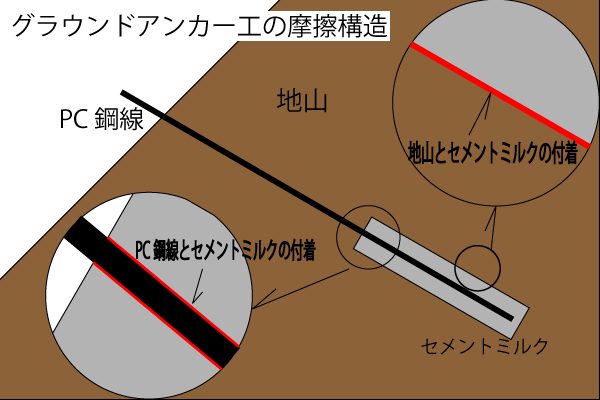
In this basic test, the assessment of circumferential friction involves the rock mass and the grout.
I understand what grout and prestressed steel strands are.
In the case of natural ground and grout, the N-value varies depending on the region and specific location where the work is being carried out.
When installing ground anchors, conduct any basic tests specified in the design, if applicable.
We then determine the length of the anchor body based on those results.
Estimates for most sites are calculated based on past performance (at nearby sites) and data from geological survey borings conducted at the site in question.
However, basic tests are conducted for reasons such as outdated design calculations, limited track record, or lack of data.
That said, there are some standard estimates, so I usually use this one below.
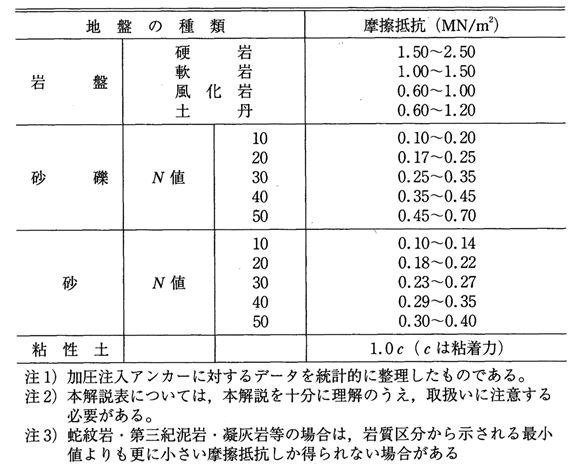
Basically, the higher the N-value, the greater the friction.
I’ll give a rough overview of how the basic exam is administered.
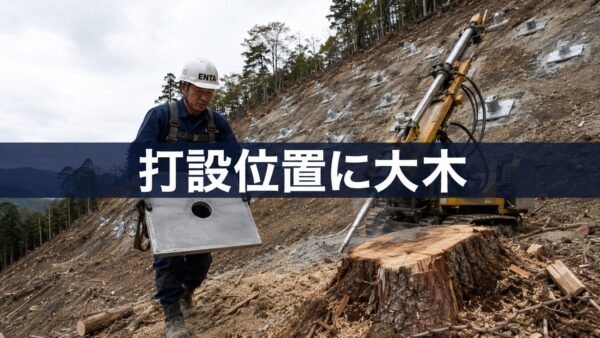
1. Drill a hole up to the design anchor point.
2. Insert an anchor with a fixed length of 1 meter into the mounting area. (There are other methods as well.)
3. Inflate the rubber packer located directly behind the 1-meter anchoring section.
4. Inject grout only into the anchorage section.
5. Do not inject the free end. (In some cases, the free end may be flushed.)
6. Wait for the grout to set
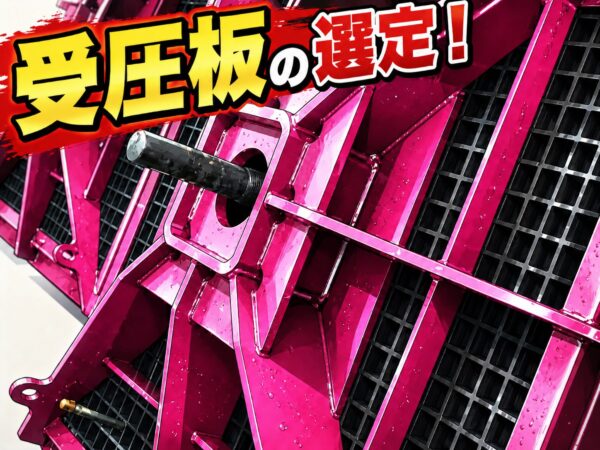
7. Install the pressure plate and tighten it.
8. As a general rule, maintain tension until the anchor can be pulled out; however, for safety reasons, set the load to 0.9 times the yield tensile strength or less.
9. Determine the load at which the bolt pulls out. If it does not pull out, the load is equal to or greater than the design value.
10. Perform the design calculations again using the circumferential friction coefficient τ obtained from the test to determine the anchor length.
This is the basic test for this series of procedures.
If you have a general understanding of this, I think you won’t feel anxious when it comes time to actually do the work on-site.
Ground anchor work is interesting because it operates in parts of the mountain that you can’t see.
It’s really fascinating to derive the values for the natural ground in this way, based on theory.
That's probably why I like this kind of work, lol.
It's fun to drill the holes yourself, get nervous while checking the numbers, and then recalculate, isn't it? lol
When you take the basic exam, please be sure to work through it all the way to the end (the stability calculation).
I feel like I'm getting an even better grasp of ground anchors!
See you later.
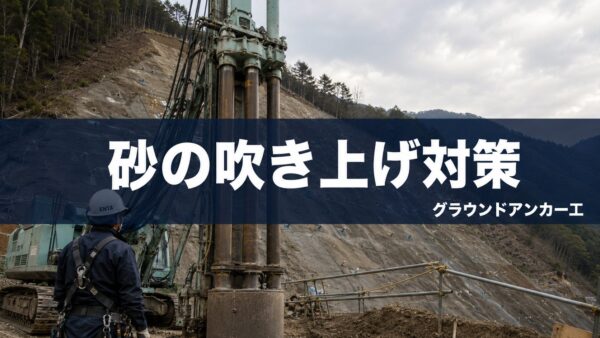
P.S. This basic exam is shaping up to be a wild ride! That’s because the drilling fluid isn’t coming up at all!!
Where did the drilling fluid go?? lol


Thank you as always. I'm learning so much!
No, no.
It's just a small thing.
So it’s the “packer” variation, huh? Even for the basic exam, I bring a packer with me depending on the survey data. It just so happens that I have an exam tomorrow. I was surprised to see that my current situation matches the topic of this blog post ^_^
Thank you for your hard work.
I'm writing this for people like that—for everyone across the country who's thinking, "That's exactly it!" lol
I really value that kind of information and would like to share it here, so I'm looking forward to hearing how things turn out lol
Thank you in advance.