Hello, everyone.
This is Enta.
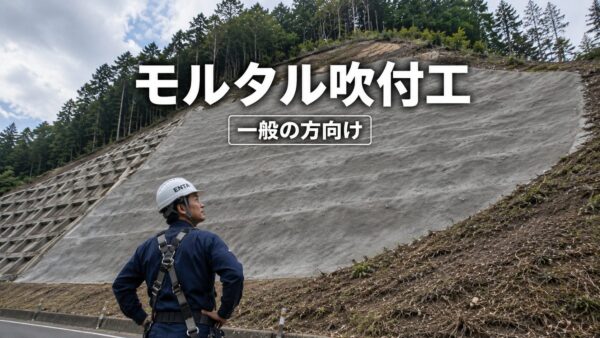
Locations Where Mortar and Concrete Spraying Are Performed
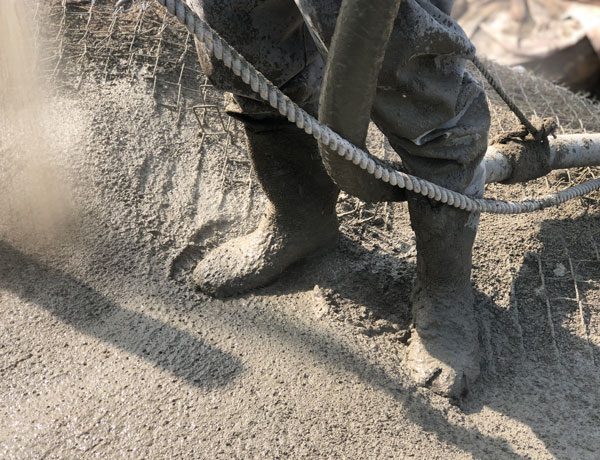
Contrary to popular belief, there is actually only one area where mortar and similar materials are sprayed.
"What?! That can't be true, right?!" I know you're probably thinking, "Pfft," but there's actually just one.
That said, while there used to be only one, it is now installed in a variety of locations.
One such place is

Rock that is prone to weatheringand so on.
As a condition,
1. Grass doesn't grow.
2. The slope is steep
3. Bedrock
4. Numerous jointsWhat Is a Joint?
5. Severe erosion
and so on.
When I list the conditions like this, you might think, “Well, there are a lot of them,” but,
This is practically a mountain of boulders, lol.
The purpose of sprayed mortar and sprayed concrete is to prevent further weathering.So,
There is basically just one.
However, since we haven't been able to allocate staff for mowing recently, it has been used as a weed control measure, or
Measures to prevent erosion and sediment loss from riverbank revetments. It has been used to prevent collapse caused by rainwater in areas with sediment deposits.
In a sense,It is used as a method that allows for easy surface treatment, but on the other hand, it also has its drawbacksYes, there is.
The drawback of sprayed mortar and sprayed concrete is that you can't see inside them.
If the substrate is bedrock, the installation is basically a bedrock-bonded method, so no gaps will form between the bedrock and the mortar.
Since there are no gaps, it helps prevent weathering.
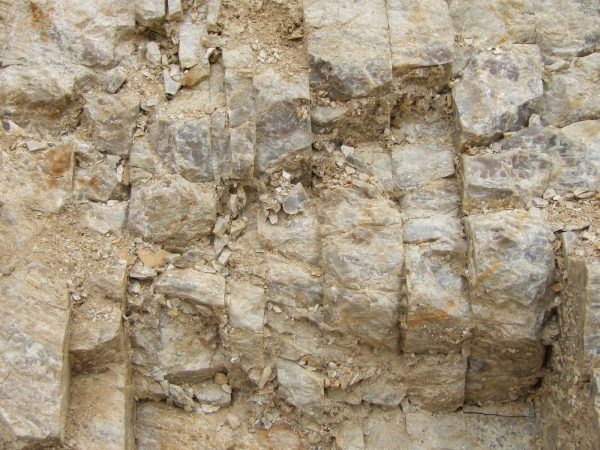
However, in areas where rocks cannot adhere, rainwater seeps in, causing gradual weathering.
There's no way to prevent this.
Weathering of sprayed mortar and sprayed concrete generally takes the form of cavitation.
Over time, it weathers away inside and gradually comes out through the drainage pipes. (Soil discharge)
These days, there are also construction methods like cavity-filling grouting. (Though I’m just speculating about the grouting part, lol.)
It would probably be best to fill the voids as a temporary measure to extend its lifespan, and ultimately tear it down and rebuild it.
It’s nonsense to just call everything “sprayed mortar.”
Incidentally, sprayed mortar is classified as temporary, while sprayed concrete is classified as permanent.
See you later.