Illegal Practice No. 1: Concealing the Outsourcing of Work to Subcontractors
The series of events that led to Mr. D (57), a formwork carpenter, finding himself in a dire situation began when A Construction, a mid-sized construction firm, was awarded a contract by the Housing and Urban Development Corporation.
After receiving the order, Construction Company A contracted General Contractor B—a major firm—to provide comprehensive construction management services. Since General Contractor B is larger than Construction Company A, this arrangement was not classified as a subcontract but rather as “Subcontractor"That's what they used to call it."
After that, it appears that Construction Company A was no longer involved in this project. They had left it entirely in the hands of General Contractor B, a larger firm than their own. This constituted “lump-sum subcontracting”—prohibited under Article 22 of the Construction Industry Act—commonly known as “outsourcing the entire project.” This was the first violation of the law.
Illegal Act No. 2: Concealing an Accident
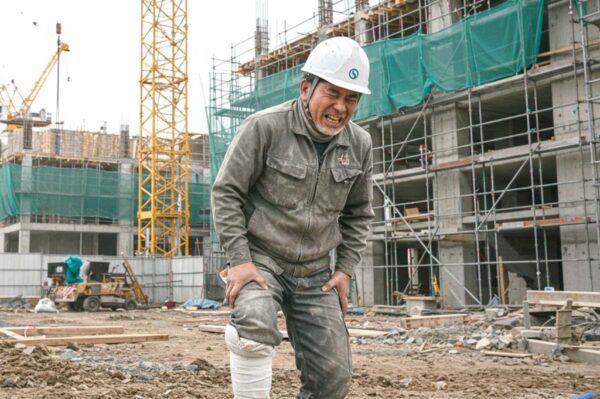
An accident occurred at this public housing construction site. Mr. D, a formwork carpenter employed by C Industries—a subcontractor of General Contractor B—suffered a serious injury to his right leg.
Then a second illegal act occurred. The site manager of General Contractor B and Subcontractor C Industries conspired to prevent Formwork Carpenter D from using workers’ compensation insurance, instead having him receive treatment through the National Health Insurance program he was enrolled in. Their motive appears to have been the belief that, if an investigation were conducted, it would be discovered that A Construction was not involved in the site and had simply outsourced the entire project.
General Contractor B and C Industries paid formwork carpenter D a total of approximately 1 million yen, ostensibly to cover medical expenses and other costs. However, his time off work subsequently lasted for five months.
His leave of absence had lasted five months, and since he was not receiving the temporary disability benefits that would normally be paid out under workers’ compensation insurance, he would not be able to transition to a disability pension if things continued this way. Mr. D’s anxiety grew. He had no idea how much longer his leave of absence would last.
Mr. D could no longer stand it, so he consulted the X Labor Standards Inspection Office in Tokyo. As a result, the cover-up of the accident was uncovered.
The key elements of the case so far are as follows.
- Construction Company A outsourced the entire project to General Contractor B → Prohibition of Multi-Tiered Subcontracting
- General Contractor B was awarded a turnkey contract by A Construction → Prohibition of Multi-Tiered Subcontracting
- General Contractor B and C Industries Concealed a Work-Related Injury → Violation of the Occupational Safety and Health Act (Cover-up of an Accident)
If the issue is the prohibition of bulk subcontracting, they should be investigating Construction Company A and General Contractor B. However, the X Labor Standards Inspection Office has adopted a strategy of first “Violation of the Reporting Requirement for the Commencement of Designated Principal Contractor Operations"…and referred General Contractor B to the Tokyo District Public Prosecutors Office for investigation."This is the first case in Japan where charges have been filed under this law.That was it.
So why did they use this item, which seems like a "secret trick" (?)?
Prioritizing Formwork Carpenter D’s ”Workers” Compensation Certification”?
I can only speculate as to why the X Labor Standards Inspection Office cited a “violation of the requirement to report the commencement of a designated principal contractor business,” butBecause we were in a hurry to help formwork carpenter D,Isn't that the case? Since five months had passed since the accident, and Mr. D had come to seek advice in a desperate situation, they likely needed to have his workers' compensation claim approved so he could receive compensation for lost wages. It seems they first determined that they needed to quickly resolve the matter of the cover-up.
Consequently, the X Labor Standards Inspection Office deemed the “Report on the Commencement of Specified Principal Contractor Operations” submitted by A Construction to be invalid because it did not reflect the actual situation, and referred the case of General Contractor B—which was effectively undertaking the construction work—to the Tokyo District Public Prosecutors Office on charges of “violation of the Report on the Commencement of Specified Principal Contractor Operations.” If a violation of this law is alleged, a labor standards inspector may conduct an on-site inspection.
Next, General Contractor B, its Senior Managing Director, and subcontractor C Industries were referred to prosecutors for violations of the Industrial Safety and Health Act (concealment of an accident). It appears that this approach saved time that would otherwise have been spent investigating the outsourcing practices of A Construction and General Contractor B, thereby allowing for the swift recognition of Mr. D’s workers’ compensation claim.
By the way,A "Report on the Commencement of Business as a Specified Principal Contractor" is a system under which the construction company that "actually carries out the construction work" is required to file a report with the Labor Standards Office.That's right. In this case, this is the report that General Contractor B should submit.
In the construction and shipbuilding industries, it is common for employees of numerous companies and affiliated contractors to work together at the same site; therefore, designated principal contractors are required to submit a report on the commencement of operations to the director of the relevant Labor Standards Inspection Office. The report must include the following information:
- Number of Regular Employees (the total of the principal contractor’s employees and the subcontractor’s employees)
- Status of Appointment of the Chief Safety and Health Officer or the Principal Contractor's Safety and Health Manager
- Project Overview (Building Footprint, Building Height, etc.)
Disciplinary action against A Construction was taken subsequently. The X Labor Standards Inspection Office launched an investigation into A Construction on the grounds that its decision to outsource the entire project to General Contractor B led to the cover-up of the accident.
In contrast to the leniency shown toward Mr. D, the craftsman, authorities reportedly decided to take the unusual step of pursuing criminal charges against him.
From the God of Construction