Hello, everyone.
This is Enta.
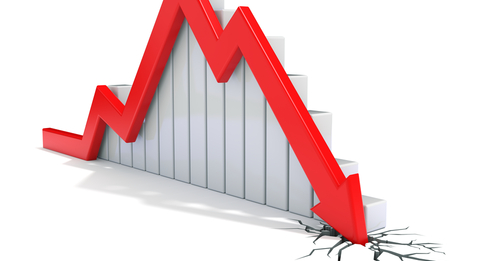
Do the CEOs and representatives of your companies say they're making a profit?

Or are you saying, “On the contrary, I’m not making any money at all! I’m in the red!!!”?
So, what do you all think?
An employee at my friend's company says this all the time, so I decided to write an article about it lol
I hear the company's president is always going on about how they're in the red, which isn't exactly fun for my friend, who's the one bringing in the work.
I hear they're saying that even if they get a fairly good price, they still won't make a profit.
Why do people say it that way?
Let's think about whether we're actually making a profit or not (just for fun, lol).
So, we’ll look at each type of business structure one by one and evaluate them based on whether they’re profitable or not.
1. A company with only human employees (slope stabilization work only)
2. Personnel and a complete set of spray equipment
3. Personnel, Spray Equipment, and Construction Management
4. Construction management only
I'll write it something like this.
1. A company with only human employees (slope stabilization work only)
This is a common type of slope.
Generally speaking, this is a situation where a sole proprietor has started a business and established a sole proprietorship.
It was like forming one team with a few employees.
Generally, we take on jobs with teams of three to five people.
Construction business licenses are almost always registered at the representative’s home or similar location, and there is generally no office to speak of.
We primarily work as second-tier subcontractors.
If you submit a safety report, you can work at any job site. (We already have many regular general contractors.)

The advantage of this type of company, which operates solely on a contract basis, is that its operating expenses are very low.
Fixed costs include employee salaries and office expenses (which are incurred even if you live there).
Plus, there are operating costs. Operating costs refer to the expenses incurred in running an organization, such as transportation costs.
There are no other charges.
Well, if I had to pick, I'd say a small generator and a hammer drill.
It’s long been said that if you’re going to work as a slope contractor, all you need is a small generator, a hammer drill, and a safety harness.
Other than that, all you need is your own two hands to do the job.
Let's consider the costs associated with this approach. (This is just one example.)
In Aichi Prefecture, the standard labor cost rate used for cost estimates (based on government rates) is 27,600 yen. (Calculated on a per-day basis.)
Labor costs: 27,600 yen × 5 people = 138,000 yen (daily labor costs)
—————————————————–
Actual labor costs: 15,000 yen × 4 workers + 20,000 yen × 1 foreman = 80,000 yen
Expressway Toll: 2,500 yen × 2 round trips = 5,000 yen
Fuel cost: 35.00 yen (7,000 yen every other day)
Vehicle Expenses: 3,400 yen (HiAce 5 million ÷ 5-year loan ÷ 12 months ÷ 25 days)
Equipment costs: 700 yen (4 hammer drills + 1 generator; total cost of 600,000 yen, amortized over 3 years)
Total: 92,600 yen
The difference compared to receiving payment based on the labor cost rate (excluding social insurance) is per day
138,000 yen – 92,600 yen = 45,400 yen (33%)
That said, there are other hidden expenses involved, so I think the actual figure is around 20 percent.
Assuming there are 260 working days in a year,
260 days × 27,600 yen (138,000 × 20%) = 7,176,000 yen
Looks like there's still this much left, lol (though I don't know if that's right, lol).
*Since the actual amount includes social insurance premiums, I think the unit price is actually a little higher.
If it were a company that operated solely on a contract basis in this manner, one would have to say it is profitable.
However, this applies only when the work is performed by regular employees.
If this were to become a contract job, the 20% gross profit margin is expected to fluctuate between approximately 10% and 25%.
Even so, I don't think we'll end up in the red—almost never, anyway. (Based on experience.)
If we end up in the red, it’s usually because of unexpected issues that arise during contract work; however, since we typically work with only one or two general contractors, we’re usually able to work things out through discussion.
However, I don't want you to get the wrong idea: a company needs to make a profit.
Engaging in economic activity means generating profits and reinvesting them.
We have to make a profit, so we can’t run a deficit. Inefficiency is strictly forbidden!
For those who rely solely on their own labor, a loss directly impacts their bottom line.
This means that any team that’s doing its job properly and seriously absolutely must not be allowed to run a deficit.
Other than that... lol
Now that I've written this far, I realized I forgot to include office expenses in the amount above (well, if I calculate it as a percentage, it should work out roughly, lol).
Next time...2.,That's right.
See you later.