Hello, everyone.
This is Enta.
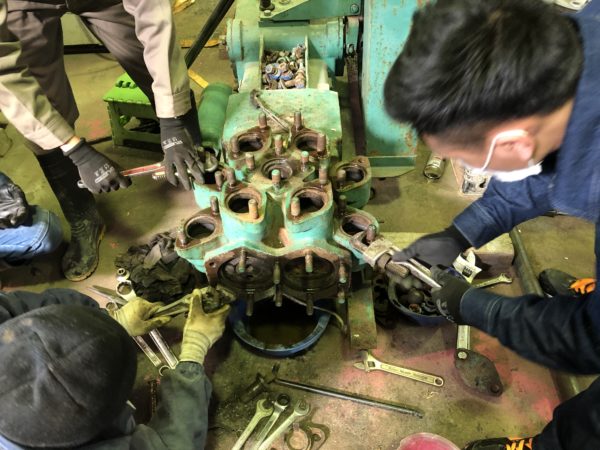
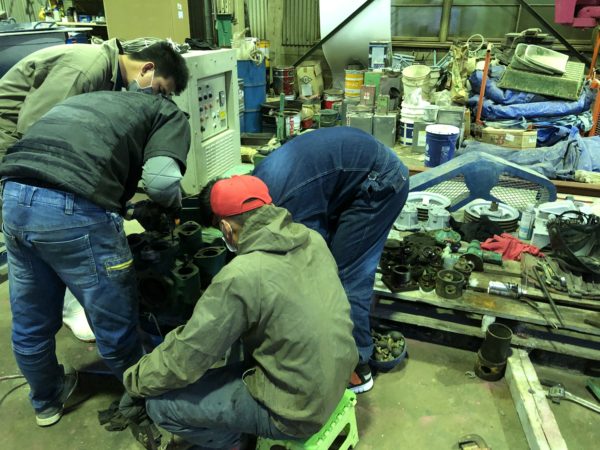
The other day, I was teaching the first- and second-year Vietnamese students how to disassemble machinery.
This is the pump for the MG-15.
I got my hands on something that’s pretty run-down, so I’m giving it a complete overhaul lol
Normally, either I or another employee would handle the maintenance, but this time I’m taking the machine apart while teaching them about its structure.
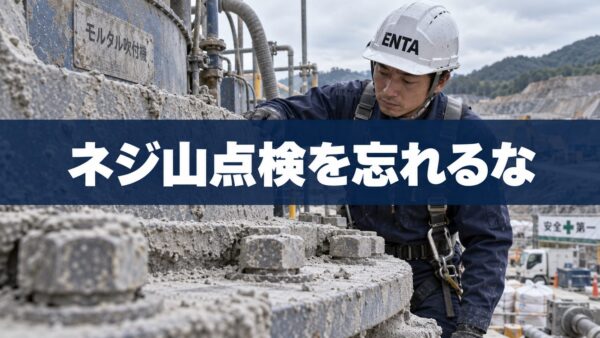
The bolts are the part that’s actually quite a hassle.
Generally speaking, the stud bolts on machines like this haven't been replaced in decades.
That's why it's practically rotten.
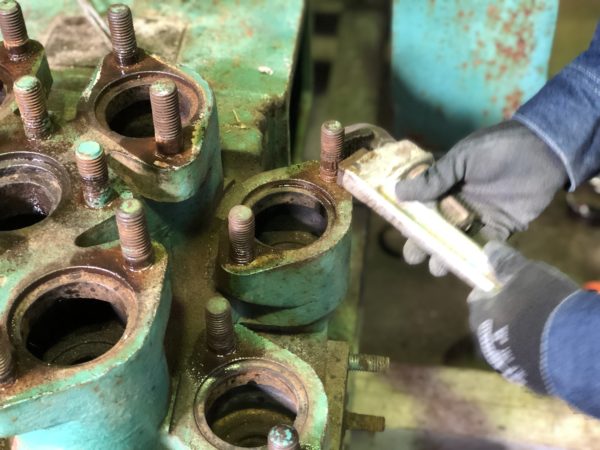
And there’s actually a trick to removing bolts like this.
It’d be fine if I could turn it with a screwdriver and get it to move, but it barely moves at all lol
I use a single pipe or similar tool to turn it with a bit of force, and if it loosens slightly during this process, I apply lubricant (GRP) and let it soak in.
And then I'll tighten it again.
Loosen it, then tighten it—repeat this process to gradually loosen it.
Here's the trick.
This way, you can remove it without any strange jamming and while keeping the screw threads intact.
If you forcefully and aggressively try to loosen this, the screw threads will strip.
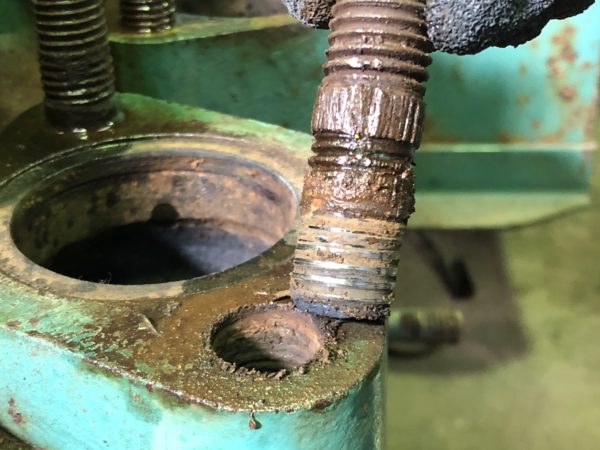
It looks something like this.
Partly because it was my first time, but when I thought, “I’ll just take it off,” and did, this is what happened lol
Since the screw threads are stripped, that means the female side is in the same condition.
At this point, it becomes necessary to weld onto the female side, cut a thread, and recreate the thread.
Even the smallest things can lead to unnecessary work down the road.
For stud bolts that just won’t come out, you can heat the area around them, or if they’ve snapped off completely, drill a hole and remove them with a reverse tap.
Since this is their first time doing maintenance, they seem to be having fun with it lol
Four people for one machine lol
Things have gotten completely out of hand, but it looks like fun.
When you teach things like this, if a machine malfunctions on the job, you’ll be able to ask, “What’s broken?”
Where's the problem?
That's what you'll learn.
If we can treat it ourselves, we can decide on the fastest course of action.
Is it fixable, or does it need to be replaced?
It's just a little bit of knowledge, but it will be useful for the company in the future, and it will be helpful to the person as well.
For a while, they (the second-year trainees) will be doing work like observing on-site operations and taking rope training courses.
I just want you to understand that we prioritize safety above all else.
We also teach these principles—not to tamper with equipment or use it for purposes other than its intended use—as part of our maintenance training.
There are various challenges, but since I want you to take away as many skills as possible, it’s actually quite hard for me, too.
It's fun, though! lol
With both new graduates and mid-career hires joining us this year, it looks like it’s going to be an even more fun and busy year than last year!
See you later.