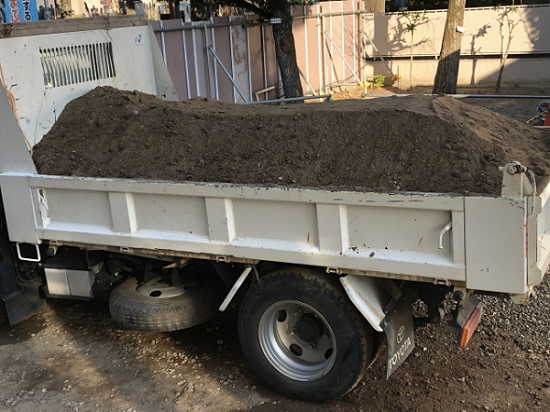
Overload Management: A Surprisingly Tricky Issue
In the construction industry, the issue of overloading is an inseparable problem.
Managing overloading—such as when transporting construction materials or heavy machinery—is extremely important, and overloading management is always a topic covered during inspections.
At shipping companies, delivery slips for materials and other items always include the weight, and as long as you can prove—using the vehicle registration certificate and the license plate number of the vehicle used for transport—that the load is within the vehicle’s weight limit, it is considered acceptable for administrative purposes.
So, where exactly do challenges arise when it comes to managing overloading?
Management Methods That Take Porosity Into Account
One thing that troubles many supervisors is,Management of Overloading During the Disposal of Industrial Waste Such as CongaraIsn't that the case?
Many people probably think that all you need to do is conduct a standard inspection of the dump truck, convert the cubic meters to metric tons, and take photos of the load, but the key factor here is the void ratio.
Unlike excavated soil, there are naturally voids when loading concrete rubble. Inspectors will point out the need for management methods that take this void ratio into account.
Is managing by weight the right approach?
I imagine many people on construction sites lease scales to manage weight.
As long as you know the weight, you can manage it simply by comparing it to the load capacity without having to consider factors like void ratio, which makes the process much easier. It is standard practice to measure the weight once on the day of removal using a scale, record it for management purposes, and provide photographic evidence.
In this case, it should be sufficient to clearly state the date and time of the measurement, the vehicle number, the manufacturer of the weighbridge, the vehicle’s maximum load capacity, the measured value, the corrective action taken, and the name of the person who performed the measurement.
How do you take photos of packaging?
Most supervisors probably conduct weight checks. In particular, at large companies, there are some that require employees to undergo these checks as a company policy.
However, one thing that surprisingly often comes up during inspections is,How to Take Photos of Packaged Items.
Just because you’ve obtained an overloading management certificate through weight control, does that mean you’re simply taking photos of the cargo configuration and calling it a day? If you haven’t been questioned about it so far, you’ve been very lucky.
Photos of cargo arrangements must not only simply show the arrangement of the cargo, but must also serve as proof that the load is not overloaded. So, specifically, how should these photos be taken?
Although this varies depending on the supervisor, in Kongara’s case, the specific loadable height is calculated based on the dump test results and the maximum load capacity, taking the void ratio into account.
Some people calculate the maximum allowable load height using a formula such as: maximum load capacity ÷ bed length ÷ bed width ÷ void ratio. In such cases, by verifying the maximum allowable load height through inspection and ensuring that the load height in photographs does not exceed that value, it is immediately clear that compliance has been maintained.
The key is to ensure that the photo clearly shows at a glance that the vehicle is not overloaded.
There is no single correct answer, but I will explain my reasoning.
There is no single "right" way to manage overloading. However, since this is a topic that is sure to come up, you need to demonstrate that you manage even the smallest details so that you can explain your approach with supporting evidence.
Even when it comes to taking photographs, if you’re presented with a photo that gives no indication of the situation and you claim there’s no overloading, but the authenticity of the photo is unclear, that doesn’t count as proper oversight. Even if you take photos of overloading and conduct a dump test, you cannot prove the vehicle’s maximum load capacity without the vehicle registration certificate.
You might think, “Isn’t that obvious?” but mistakes regarding overloading are not uncommon. If you make a mistake here, inspectors are likely to scrutinize you even more closely.
If you can’t even manage to prevent loads exceeding the weight limit, isn’t it understandable that subsequent inspections would be scrutinized more closely?
When it comes to managing overloading, there’s no need to overthink it for materials with no voids, such as excavated soil. Isn’t it sufficient to inspect the dump truck, take photos of the load, and use a tare scale? However,When transporting materials with high porosity, such as tangled materials or trash, a little extra care is needed in handling them.
From the God of Construction

P.S. It’s been on my mind lately: Setting aside comments from people who just want to complain or who can’t accept others’ opinions or ideas, the comments from professionals in the field and those directly involved are really interesting.
It really is interesting how your perspective changes depending on your position. It’s important to hear both sides, isn’t it?
If there are any comments, please be sure to check the comments section.