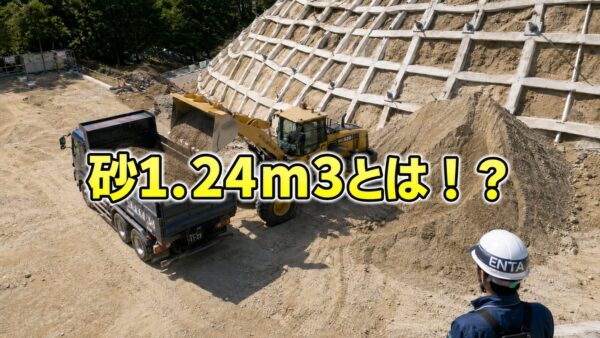
Hello, everyone.
This is Enta.
But it's hot again today, isn't it?
When it gets too hot, human errors start to pile up.
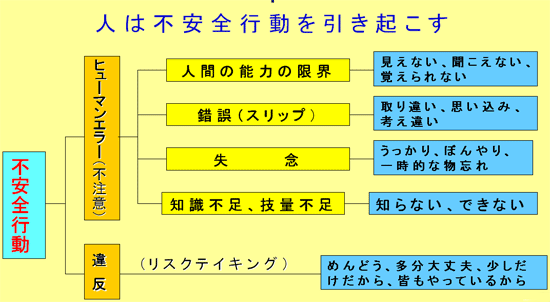
Please notice when you realize, "Oh, I'm acting kind of weird!"
By doing so, we can help prevent errors before they occur.
Please be very careful!
But that's beside the point.
Core Drilling
It's really tough to collect test specimens (core samples) in the winter, isn't it?
Summer is really tough because of the heat, isn't it!
I really hate it, but I actually like the way it feels when the core comes out~ lol
However, if they’re too fresh or too old, they’ll fall apart or become rock-hard, making them difficult to pull out.

Guidelines for Core Drilling
Normally, the load should be removed either after the specified stress is reached or just before yield.
However, let's say, for example, that we wait until the stress reaches 18 kN/mm² before pulling it out.
It's rock-hard, and the core won't cut through!
It feels like you have to really push hard to finally get it out.
So, based on my experience,
Day 3 of Summer
Day 5 of Winter
I'm removing the core now. It depends on the weather, but after about this many days, it usually reaches the perfect firmness.
If it's any harder than that, it'll be too stiff and difficult to work with, and if it's any softer, it'll fall apart. Also, be careful not to press too hard.
As shown in the photo, the sides become wavy.
It's fast when you press it, but the blade wears out quickly, lol.
There's also a machine in Shibuya that presses it automatically.
It's too expensive for me to buy, lol
This is a minor point, but if you don't pull it out straight, it will cause uneven loading, and...
Please be aware that this may reduce the strength.
Core Protection
The extracted cores are left to cure underwater as is until they reach the specified age.
That will increase the strength and result in a form that more closely resembles on-site conditions.
On-site, it’s inevitable that it will rain, get damp, be windy, and the temperature will go up and down.
Since concrete is not always completely dry, it is placed in water.
Normally, water temperature control would be necessary, but on-site, that isn't required.
Just top it off if the water level has dropped, and as long as you keep it in the shade, there won't be any problems.
Please note that the concrete must be cured two days before the compressive strength test.
Well, that's it for now.
Production and SalesWakazono Manufacturing