Hello, everyone.
This is Enta.
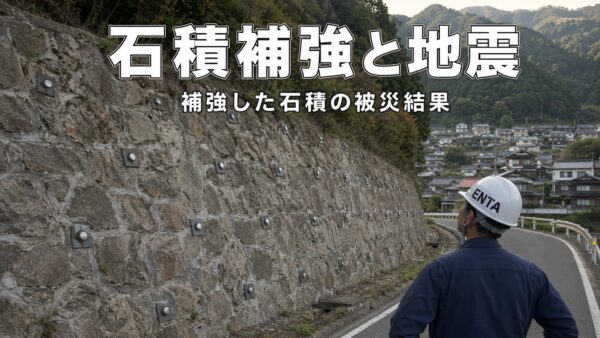
Recently, we’ve been receiving reports that stone walls are about to collapse, have collapsed, or are on the verge of collapsing.
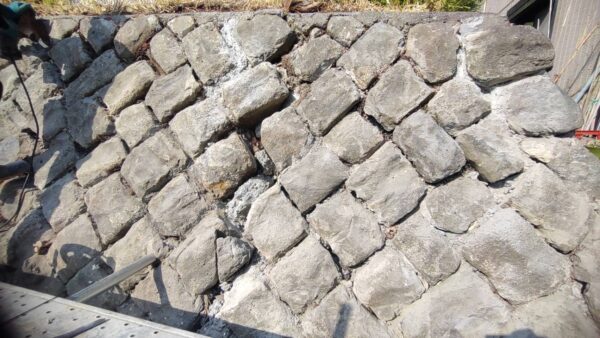
It opens up like this, or...
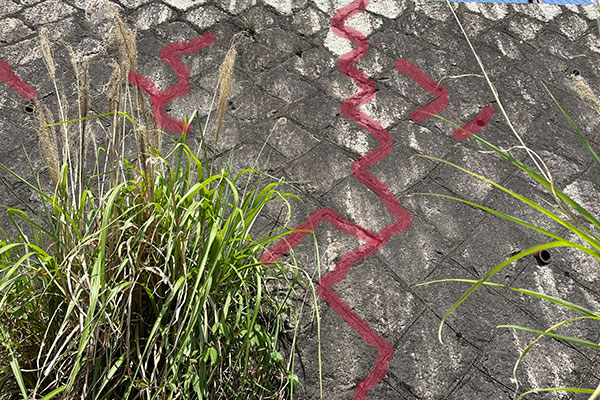
There are cracks on the front, and it's starting to look a bit worrisome.
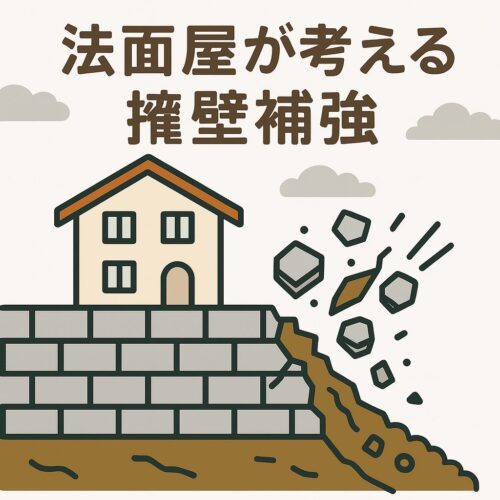
A cross-section of a stone wall typically looks like this.
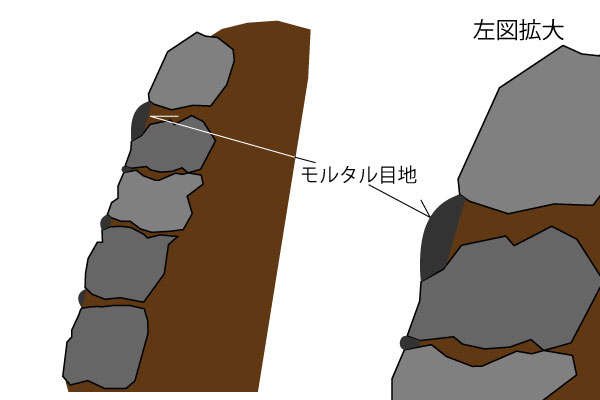
There is soil and sand at the back, and stones have been piled on top of it.
Stones are being used to prevent the soil behind it from washing away.
However, over time, these mortar joints can come loose, and the drainage channels can become clogged.
If the drain becomes clogged, the water inside cannot escape and will either try to force its way out all at once, causing the structure to gradually collapse, or it will explode all at once.
Furthermore, if the soil behind the wall washes away, the stone wall will eventually begin to collapse.
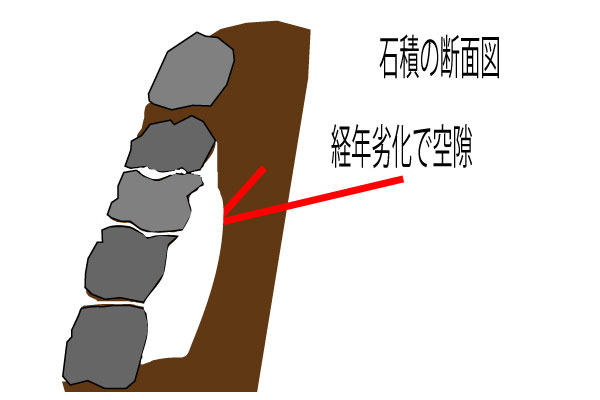
Once this happens, the stones usually start to move, and the effect gradually spreads throughout the entire area.
What should I do about this?
If that happens, the only solution is to fill it in.
Or should we remove the stone wall and consider another construction method?
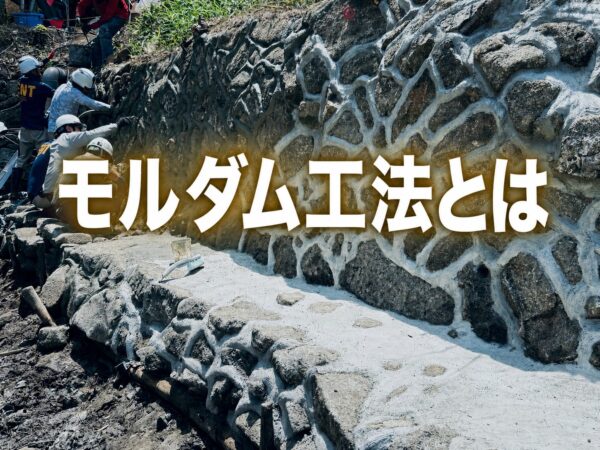
Simply put, we seal all the cracks and holes on the surface and inject the material inside.
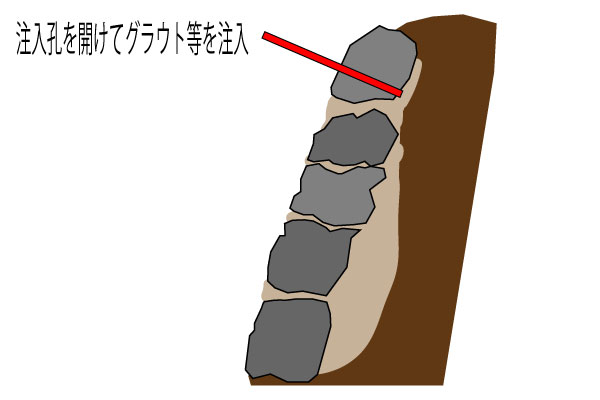
If you completely fill the back side, the stone itself will be secured in place, making it much more durable from that point on.
But I think people will say, “But this won’t let the water drain!”
Of course, after the grout is injected, we’ll drill holes and install drainage.
Actually, this technique isn't limited to private stone walls—it's also used on old, deteriorated public retaining walls and the like.
Since this method is actually quite old, I think it should produce reliable results, but,
In the case of slopes that are excessively long or steep,
Be careful, as applying unusual pressure can actually make the condition worse.
I think this should be sufficient for stone masonry.
See you later.