



Hello, everyone
This is Enta.
Due to a labor shortage, I'm mixing grout at the plant.
It's been a while since I've been out on a job site, and man, it's tough lol
My body really feels sluggish.
I'll do my best not to be a burden to my coworkers lol
Amid all that,We are currently hiring.
Experienced Construction Managers, Novice Tradespeople, and Skilled Salespeople
Please give us a call.
We warmly welcome anyone living near our office or anyone willing to move here to work with us.
This offer is limited to those who are eligible for 100% coverage under the social insurance system.
Please apply via our website.
But that's beside the point.
If you have performed work such as sprayed concrete or sprayed mortar,
Occasionally, we encounter slopes with severe spring seepage.
Places where water emerges from the natural aquifer and flows along rock joints can be quite tricky.
Mortar is weaker than you might think before it sets, so even if it’s only slightly exposed, it will be eroded and collapse due to seepage.
What would you do in that situation?
Probably,
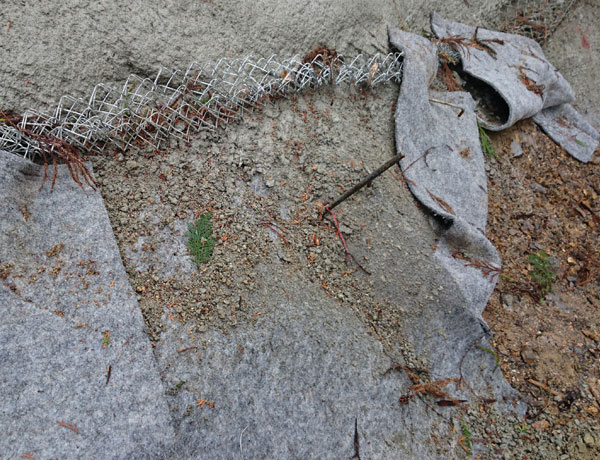
You're spraying it on top of a permeable mat or something like that, right?
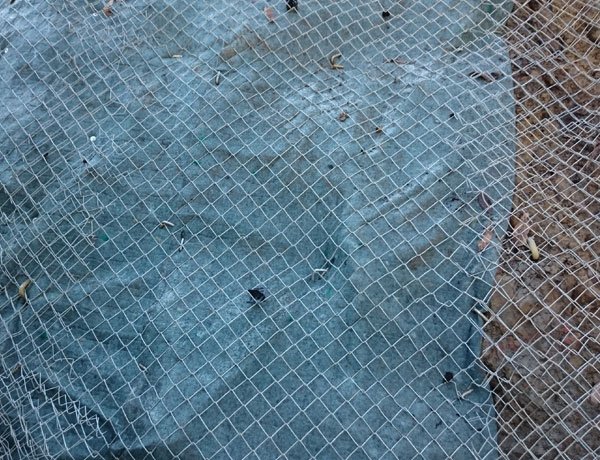
Actually, this is...
It's no good.
Although it’s not really pointed out much these days,
The basics of sprayed mortar and concrete are:
Sticking close to the rock is the key!
That's it.
Whether there's water or not,
The key is to stay close to the rock.
That's why, back in the day, we often used a quick-setting agent while spraying, or
We applied the spray over and over again, draining the water with a hose as we worked.
Lately, there’s been a tendency to just lay down a mat and call it a day, but,
As for the areas where the mat has been laid, it’s essentially the same as if it were loose, so,
It is possible that weathering is progressing rapidly.
Furthermore, in cold climates, there is a very real possibility that water inside the mat will freeze and expand, potentially causing cracks.
When installing the mat, it might be better from a construction and quality control perspective to install it in very small sections.
See you later.



I always visit this page to learn from it.
If spring water is detected before construction begins, doesn’t that mean spray-applied coating isn’t suitable in the first place? Once the work is completed, can the spring water be managed with drainage pipes (though I suppose it depends on the extent of the problem)? I would appreciate your advice.
Thank you as always.
Depending on the volume of the spring water, there are, of course, cases where it is not suitable for sprayed mortar.
Although this will depend on the scope of the work and the volume of water, it seems possible to consider options such as legal frameworks.
If the volume is small enough to be handled by a drain pipe, then a drain pipe would likely be the best option.
So, while it depends on the craftsman’s skill level, a reasonably skilled worker can perform the installation using a rapid-setting agent.
However, in cold climates, the risk of cracking in such areas due to freeze-thaw cycles is significantly higher.
We look forward to your continued support.