Hello, everyone
This is Enta.
An unexpected accident occurred.
Well, I say "accident," but no one got hurt—it was just a matter of getting some mortar on me.
However, if someone had been standing right in front of it, they might have been injured.
So, I’m sharing this with you; please be sure to include it in your company’s equipment inspection checklist.
If you're wondering what's dangerous, it's this.
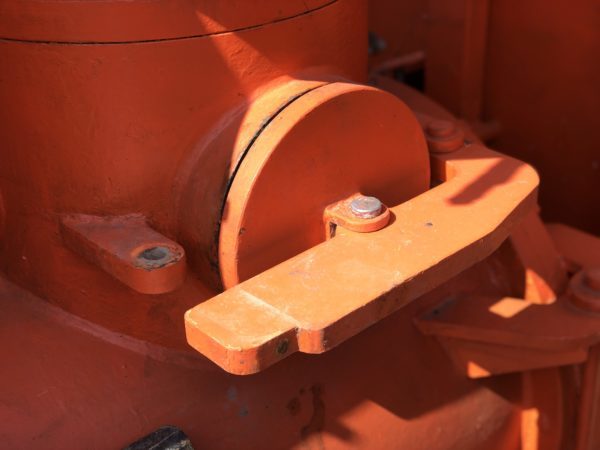
There's a door on the kiln of the spray machine, right?
This time, this part suddenly burst open, and the mortar inside flew out!
The equipment at the front is covered in mortar.
The situation is absolutely terrible! (Just imagine being surrounded by mortar, lol.)
That said, it was a good thing no one was around.
So, as for the cause, here it is.
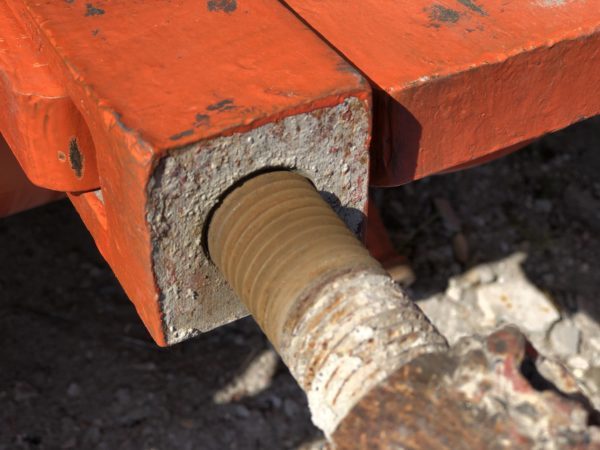
In this part of the photo, there are still threads visible, but the bolt that popped out had worn-out threads.
It is important to check whether the screw threads are worn.
There's also a little mortar on this screw, which is very dangerous.
Actually, when it comes to how it wears out, the first thing is rust.
Corrosion occurs easily.
Most of the bolts we use are high-tension bolts, but even those rust.
High-tensile steel products have a black rust finish.
As for that "iron oxide coating," it just makes it a little less prone to rust—but it will definitely rust eventually.
Be sure to apply grease to the threaded portion.
Without oil, it will go bad right away.
This is also a common occurrence; sand from mortar and the like sticks to the surface and gradually wears it down.
Mortar often gets on this part. (As shown in the photo above.)
It’s something you can’t really avoid, but if it gets dirty, be sure to wash it and tighten the screws.
By spinning it without washing it—so that it makes a scratchy sound—it gradually wears down.
What's more, it's not just the bolt that wears down—the nut wears down in the same way as well.
If possible, I’d like you to use a pressure washer to remove the mortar residue (sand, etc.) from both surfaces and then apply grease.
Doing so prevents strange jamming (where the bolt won't come out), or,
It prevents the material from sticking, so it makes the work easier, too. (It’s the little things that matter.)
And above all, the friction between the bolts and nuts will be eliminated, preventing accidents like the one we just experienced, where the bolts flew off.
Since bolts and nuts rely on friction to function, please make sure the threads are intact.
It's important to pay attention to the threads on both the bolt and the nut.
Please inspect it thoroughly.
See you later.