



Hello, everyone.
This is Enta.
For some reason, as Golden Week approaches, things are getting a little hectic around the office.
But it looks like I'll be working on the 30th, the 1st, and the 2nd...
Even though it's a Ministry of Land, Infrastructure, Transport and Tourism site... (lol)
There's just no helping it. The construction schedule takes priority!!
I'm sure some of you have work commitments, but it would be best if we could take turns taking time off to work things out.
But that's beside the point.
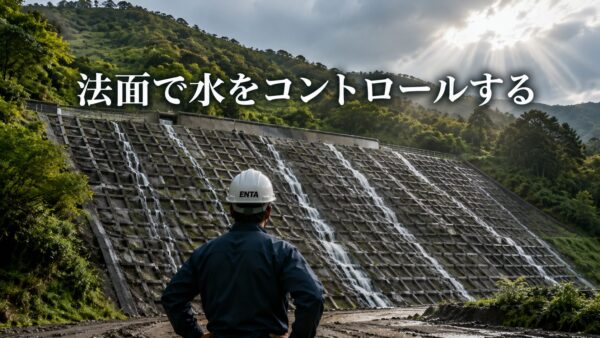
Control the flow and position of the water.
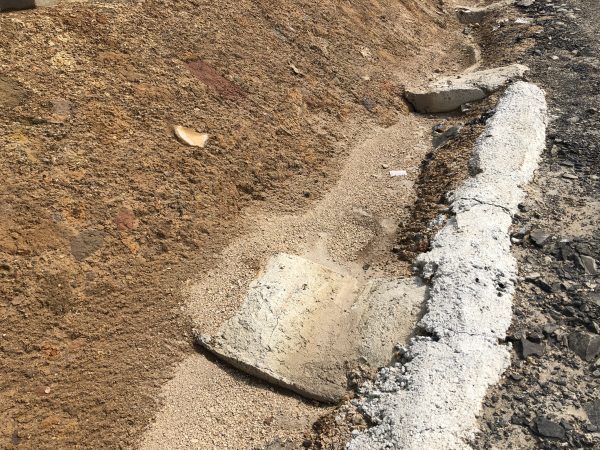
Do you know what this is?
This is a temporary waterway running alongside the slope. There are steps formed with mortar.
I often build them on the banks, and they help slow down the flow of rainwater.
The steps in this waterway also slow down the flow, preventing the water from rushing through all at once.
This principle is commonly applied in our daily lives; a prime example is a river.
There are a lot of steps here, aren't there?
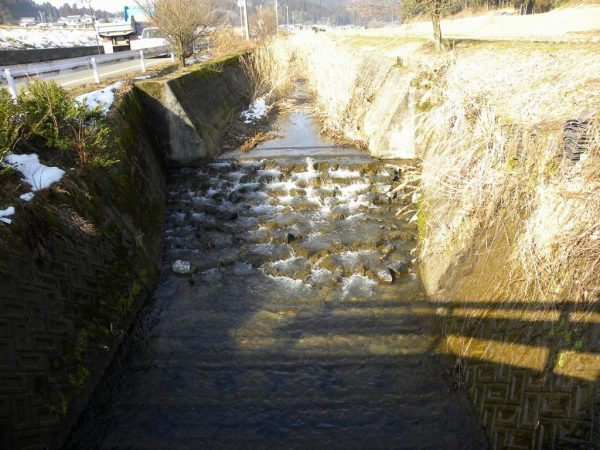
This is what the steps used to look like.
I'm guessing this probably doubles as a fish passage, too. For ayu and stuff. (It's a really tiny river, though lol.)
When you're doing river construction, timing the water level changes and the fish passage are pretty crucial (lol).
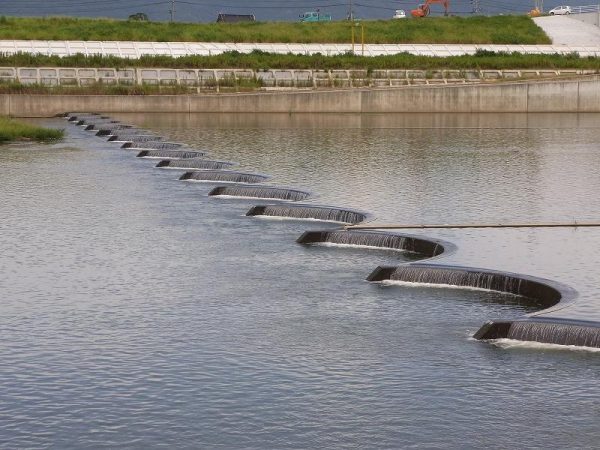
If you let the water accumulate to a certain level first and then let only the excess overflow, the flow rate will slow down and the water will become calmer.
As for where to use this on the slope,
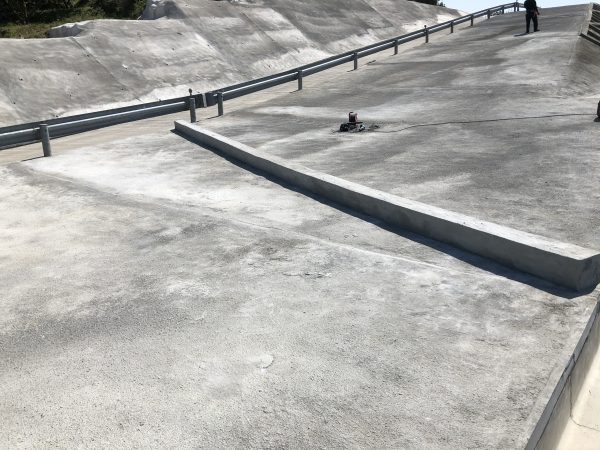
In this case, the purpose is to direct rainwater flowing down the slope into the drainage channel, but,
This water is also being channeled into the waterway to reduce the flow velocity and prevent erosion.
Reducing the flow velocity helps prevent erosion and collapse.
Water is incredibly powerful—it can even destroy structures.
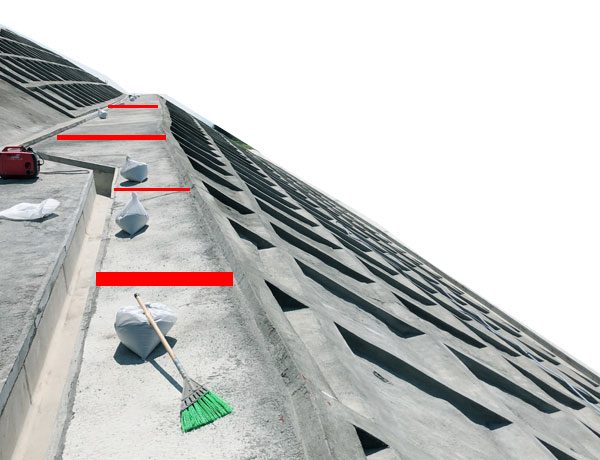
For example, in the photo above,If there were no waterways...When it rains, the water really runs off.
If a step is created with mortar along the red line, the flow velocity drops sharply.
Basically, you direct the water to hit something to slow it down.
On the sloped sections of the shoulder, such as those on a formwork frame, create bumps like this so that the formwork doesn't slide along the shoulder,
By periodically releasing water onto the front face of the retaining wall, you can prevent water from seeping into the wall’s shoulders and also prevent erosion.
Unless there is a drainage channel, it is best to disperse the water on the slope as much as possible to minimize the impact on vegetation restoration measures and the like.
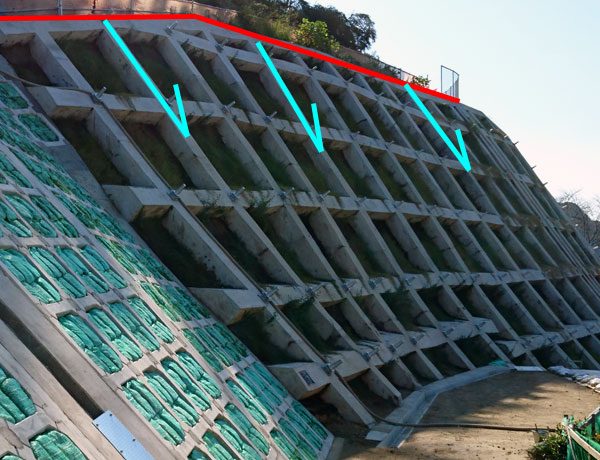
A director who shows that kind of little thoughtfulness really knows how to get the job done.
There might be a few minor details to nitpick, but I think it's wonderful.
A long time ago, I, too, was taught the above by a senior director and have been putting it into practice ever since.
Since this isn't something government offices or anyone else will see, it's purely for my own satisfaction, but,
When it rains and the rain flows over the mortar bump on the shoulder of the frame and comes out the front of the frame, I just think, “Whoa! That feels great!” (lol)
See you later.


As always, you do such a great job, lol.
Thank you as always.
There are tons of people at our level out there.
Plus, we mess up quite a bit too, lol.
I'd like to bridge the gap between the good times and the bad times.
There are many craftsmen even more skilled than us, as well as plenty of highly experienced supervisors, so we’re learning from them every day.
There's always someone better than you.