Hello, everyone.
This is Enta.
This time, the issue is a construction defect in the frame work.
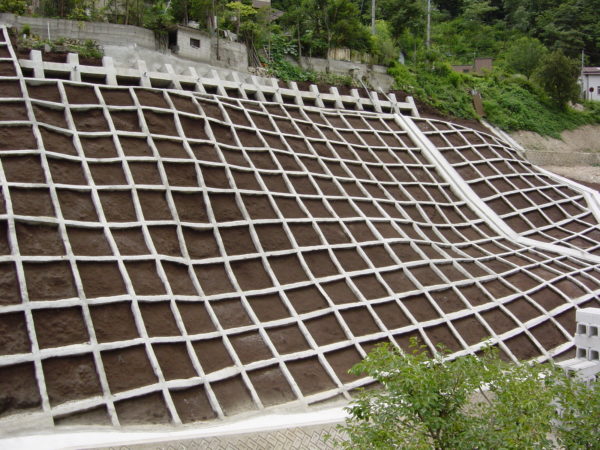
Some easy-to-understand examples would be the intersection points and the anchor pins on the crossbars, right?
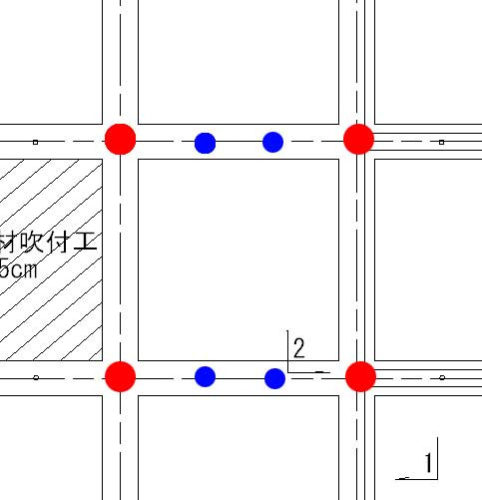
First, regarding the role of this anchor pin, it prevents the formwork from shifting during assembly.
That's why it's not really necessary after the mortar has been sprayed on.
Then, drive in an anchor pin that is about three times the size of the legal frame. (For the intersection)
For the drop-stop anchors on the horizontal formwork, use rebar that is approximately 70 percent longer than the formwork dimensions.
If all the surfaces need to be drilled during this machining operation, it will be very time-consuming.
The standard procedure is to use a rock hammer (a lightweight rock-drilling tool) or drill holes with a hammer drill before pouring the concrete.
However, some contractors cut these rebar to make the pouring process more efficient.
In particular, this rebar is very easy to work with.
That's why we just snap it off with a rebar cutter right on the job site!
It only takes a second if you use a machine like the Thunder.
You might be tempted to think, “There’s no way a company like that exists!” but they do.
There aren't many, but there are definitely some.
The slightly silly ones have their cut edges facing up, so they sparkle and are easy to spot.
The director can't possibly be in charge of managing every single anchor pin like this.
Besides, I can't afford to worry about things that won't be necessary in the long run. (But design is important.)
In some cases, these types of tasks are delegated to contractors in the name of trust.
There's no way they'd cut it!
However, since there are contractors who cut corners, preventive measures are necessary to address this.
That means you must inspect it.
While on a company safety patrolConstruction InspectionWe will conduct the procedure and perform random sampling inspections.
If we were to create such a system, it would serve as a deterrent.
Also, since the areas where you’re likely to cut yourself are usually the hard parts, be sure to keep that in mind as well.
By doing so, contractors will be less likely to commit fraud because they don't want to get caught. (This serves as a deterrent, even if only slightly.)
It’s hard to say whether creating an environment that prevents this from happening is part of the job, but since this kind of behavior tends to become a habit, there’s a very real possibility it could happen again at the next worksite.
I suppose we should also work to create an environment and mindset where such things aren't done and aren't allowed.
Ultrasonic testing might be a good option, too.
See you later.