Hello, everyone.
This is Enta.
It's slow on the job site, but there's a lot of paperwork.
Paperwork is such a hassle, isn't it? lol
Well, I guess this is just part of the job...
I've been doing various maintenance tasks over the past few days, and I'm reverse-engineering the consumables.
Reverse engineering is a method of disassembling an object to examine its structure, taking new measurements, and recreating it.
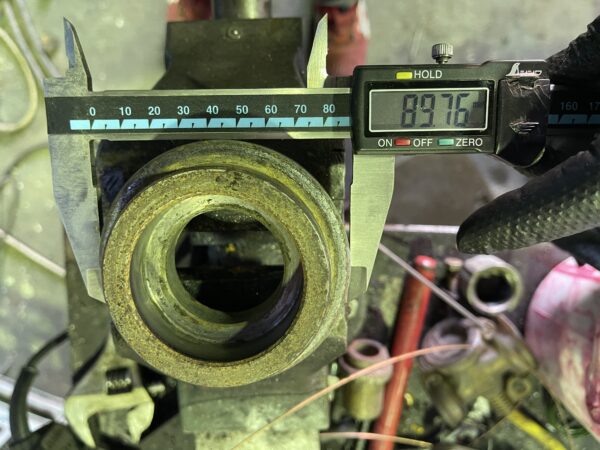
We are only performing work on parts where a slight error in the drive mechanism is not a problem.
For example, measure the dimensions of a part like the one shown in the photo.
It's already showing a little wear, but it's within the margin of error, so it's not a problem lol
A bearing goes inside this part.
I've gotten a little better at getting the bearings to fit snugly lately, so I can do it now lol
Buying from a manufacturer can be quite expensive, but if you can process the materials in-house—and especially if you can do it yourself—it will help improve your skills and reduce overall costs.
They say it's about cutting costs, but the truth is, we're doing it mostly because it's fun.
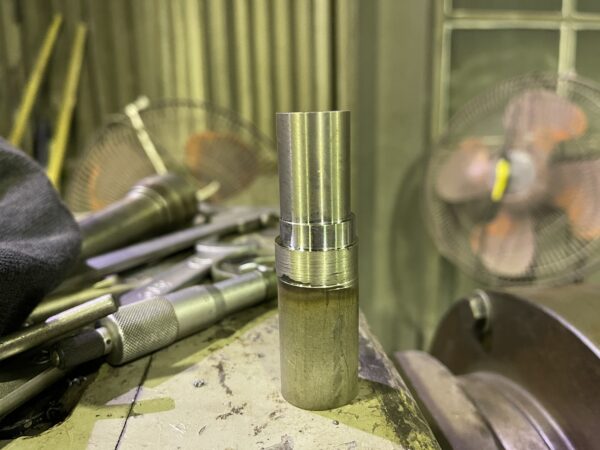
I was making this jig, but it didn't line up properly, so it's a failure.
Even doing small tasks takes time, but as you gradually learn to do more things, everything becomes more interesting.
Maybe I'll get into this kind of field someday, lol.
Reverse engineering using 3D CAD is fun, too.
It's even more fun when you bring it to life with a 3D printer.
See you later.