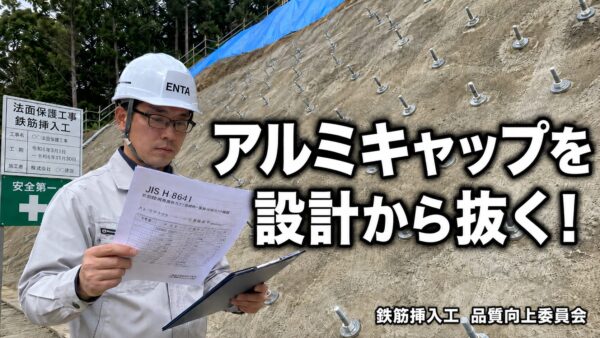
Hello, everyone.
This is Enta.
Apparently, there’s been a cold snap since the other day, and,
It's incredibly cold in the Tokai region, too!
And it's freezing cold at work, too... I can't even laugh about it...

But that's beside the point.
I've always wondered, "What do you think about this??" but,
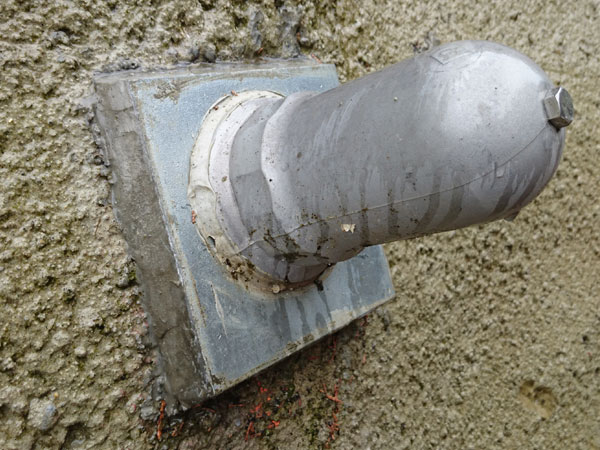
This is it.
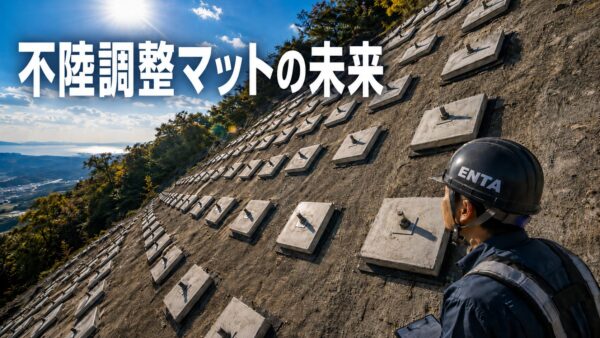
It's about how to handle the head.
Mortar has been packed under the plate to raise it slightly.
In an area without too many ups and downs...
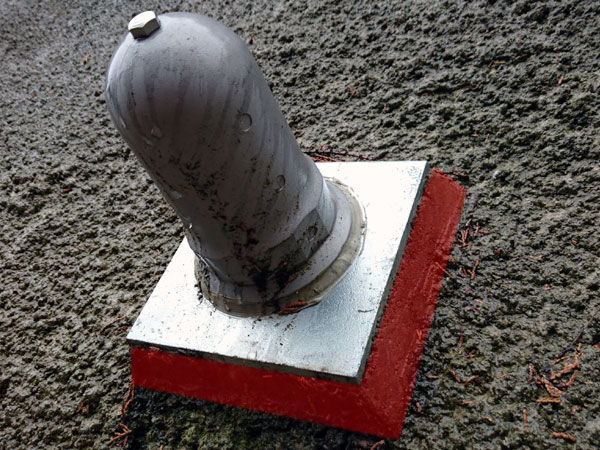
It's the red part.
There are benefits.
When the terrain is highly undulating and rolling, and the drilling angle remains constant,
The head can turn in various directionsThat's how it turns out.
Even in areas where the terrain isn't very rugged, you can still see the caps on people's heads pointing in various directions to some extent.
Therefore, if you fill the space under the plate with mortar to maintain a consistent angle,
It looks good because the head faces in a specific direction.
In reality, if the difference between the natural ground and the drilling angle is too great, the plate cannot be installed, and
Since we can't put a cap on it, we'll raise the level instead.
Generally, the difference in head angle is within 10 degrees. (D29 is 5 degrees.)
The basic premise is that we need to install a plate, nut, and cap, but,
These days, some places are even raising the ground level in small areas.
It's not bad, but it adds unnecessary work.
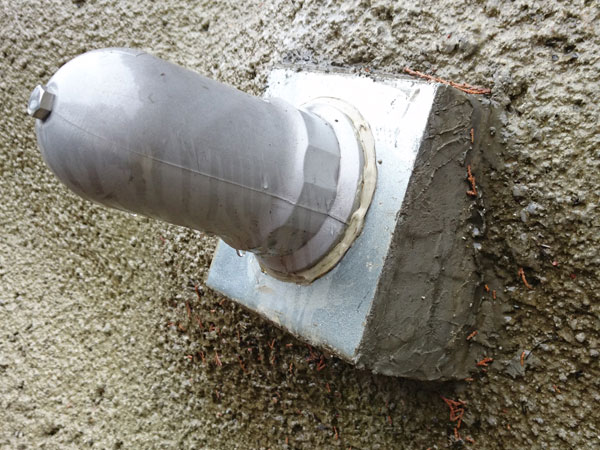
However, if the angle is similar to the one in the photo above, you'll need to raise the height a bit.
However, there are, of course, some drawbacks as well.
As I wrote above,Cost considerations; criticism regarding insufficient penetration during inspection (insufficient drilling depth)
Concerns that the thin mortar will peel off within a few years.
Insufficient drilling depth is something I was previously pointed out during an inspection.
If you account for that and make the steel rod 5 cm longer, you can avoid the problem, but,
I once had a problem because it turned out exactly as designed.
At that time, they somehow let me off the hook. (It was only a matter of a few centimeters, but since it was an inspection...)
Delamination due to aging is the biggest problem, isn't it?
In particularly cold regions, this cycle of expansion and thawing repeats itself.
In some cases, peeling begins as early as about two years.
Plus, the fact that it's thin makes it even more so.
I often see plates just hanging in midair lol
It all comes down to the construction manager's approach, but personally, I think it's better not to raise the ground level.
See you later.