

Hello, everyone.
This is Enta.
From a craftsman’s perspective, I think there are aspects of construction management that seem familiar but aren’t fully understood.
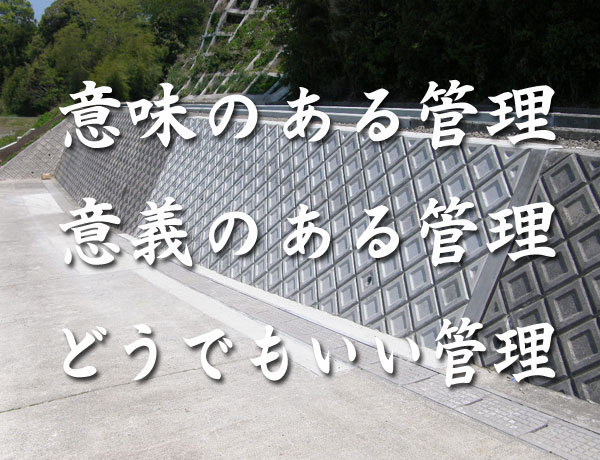
Management is management, so it's the same thing, right!?
That’s generally how it’s understood, and while that’s true, it’s not quite like that, you know~
For example, let’s say you’re performing drainage boring work.
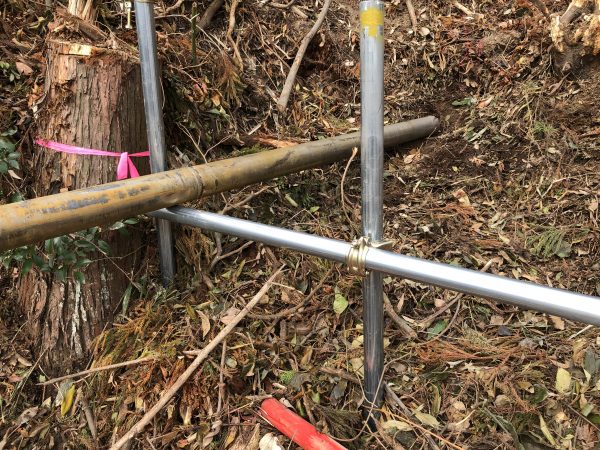
Suppose the drilling length is 50 meters, and the hole was drilled slightly deeper than planned, resulting in a total length of 50 meters + 0.2.
At that point, the perforated pipe slides 20 cm further in.
Since the design calls for the perforated pipes to extend inward from the surface of the slope, we will proceed with construction accordingly.
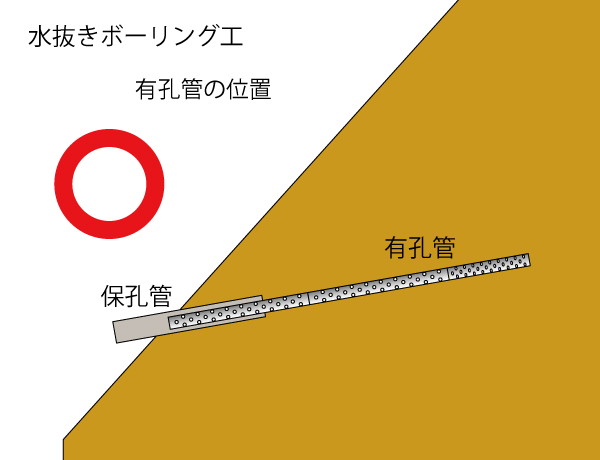
Adjust the position of the borehole casing so that it roughly aligns with the top of the slope.
For this operation, after inserting the hole-retaining pipe, staff members are sent down to verify the position each time the outer casing is withdrawn.
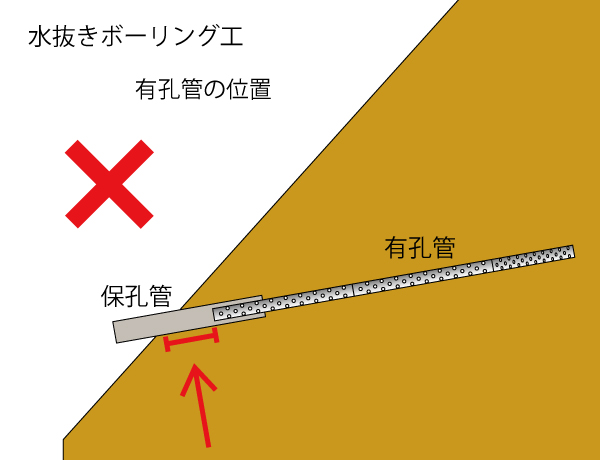
However, some people prefer to have it installed further back.
There is no change in functionality, but as shown in the illustration above, the excess material will be included.
As long as it goes all the way in, that should be fine, right!?
That's what I think, but in reality, this won't work.
The reason is that if, for example, you try to check a perforated pipe and it isn't where it should be but is instead further inside,
Did it get inside because the mountain's internal structure changed, or was it pushed out?
You could think of it that way. (Well, just as an example.)
If there's a perforated pipe in a specific location, you don't have to think about anything.
It looks clean even during inspections.
Even though we’re doing the same work in several places, depending on the location, sometimes we have to go deeper, and other times it’s fine as is.
It's weird that there's such variation, isn't it?
This is what management is all about.
Thinking that “as long as it’s included, that’s good enough” means you don’t understand management.
From a craftsman’s perspective, this is something they couldn’t care less about, but I think it’s important.
It's not that I'm being picky or anything.
We’ll make sure to handle all necessary administrative tasks thoroughly.
On the other hand, there are some pretty lame management practices out there, lol.
There’s always that moment when you think, “What is this? Is there any point to this?”
However, since it’s specified in the common specifications, it’s necessary—but only to a certain extent. (It’s nice to have.)

It’s inevitable that there will be differences in approach to construction between craftsmen and supervisors, but,
I’d appreciate it if you could help out a little with those kinds of detailed construction management tasks, too ^^
We, the craftsmen and the supervisor, are working together to build a single structure.
I hope we can respect each other’s work and coexist harmoniously.
See you later.