



Hello, everyone.
This is Enta.
The other day, I attended a presentation on the water discharge test conducted by an NPO that Enta is assisting with construction.
We do this every year without fail. (To promote the activity.)
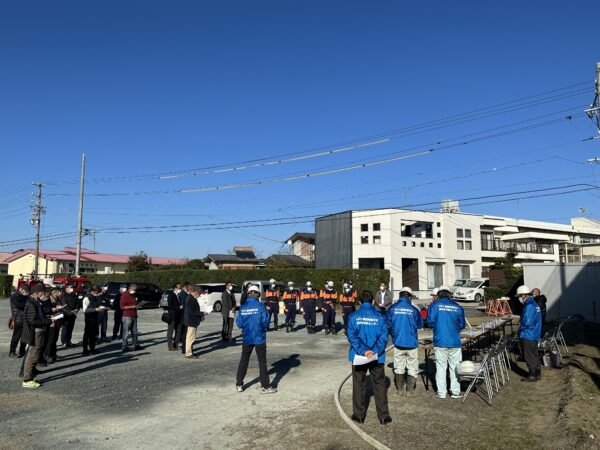
This is an NPO that promotes disaster preparedness by digging wells in advance so they can be used when a disaster strikes.
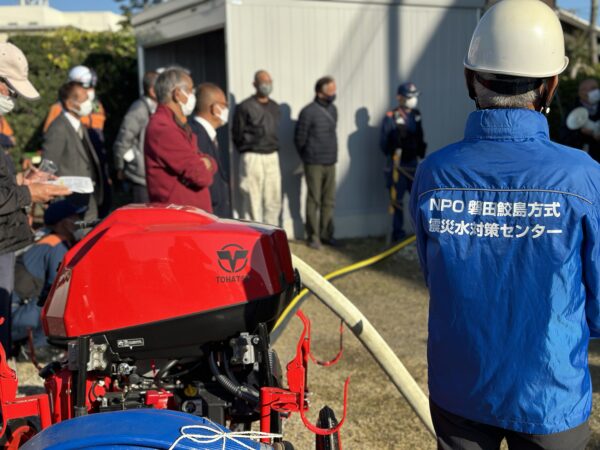
The new portable fire pump on the left.
Use this to draw water from the well!
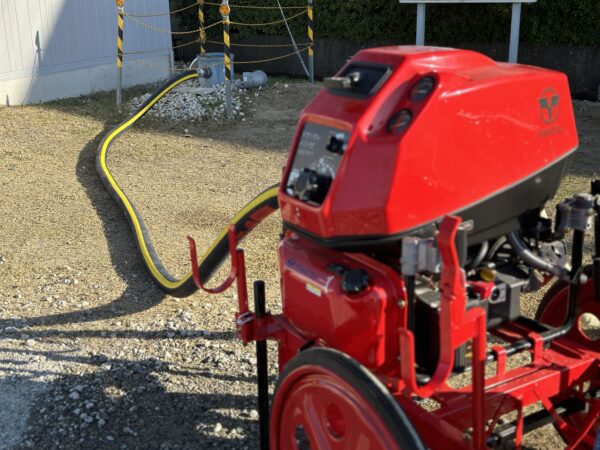
Ten φ30 wells are connected to the end of the hose.
We use a portable fire pump to draw water, but,
This portable fire pump is a type of pump that can be found in every municipality throughout Japan.
It’s reassuring to know that there’s always a pump right in the neighborhood, even if a disaster strikes, isn’t it?
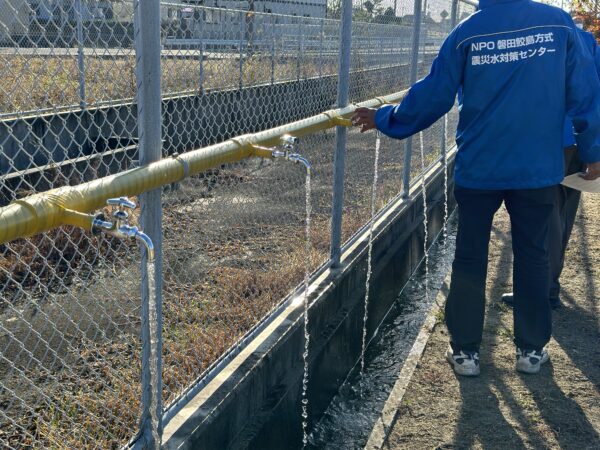
Even without running at full capacity, it can supply water to about 20 faucets.
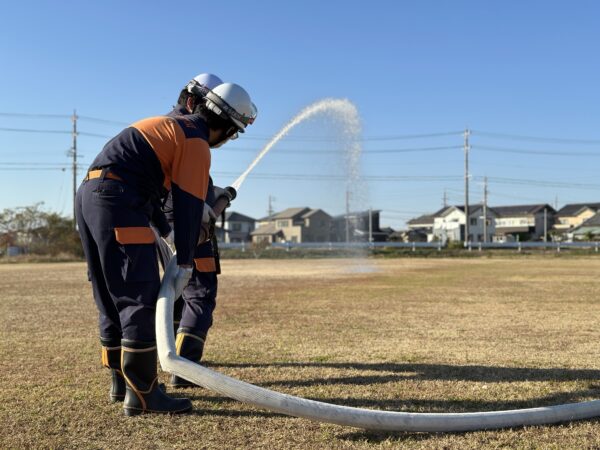
Naturally, it can deliver water at a pressure high enough to be used for firefighting.
It's a great system, but we're having a hard time installing it in other areas.
That's because this is less about disaster prevention measures and more about preparing for a disaster.
It would be great to have in case of a disaster, but other than that, it's not really necessary.
That's why it hasn't really caught on...
If we can successfully get this out there, I really think it’ll definitely come in handy during a disaster~
It's been over 10 years since I started this system, but I haven't made much progress.
Since I'm the youngest member of the NPO, the other members are wondering how many more years I'll be able to keep this up.
I'd say the average age is around 75, lol (That's seriously bad).
I know it’s too late once a disaster strikes, but if there’s a way to effectively promote this, please let me know.
Some members of the Diet are here on an inspection tour, but they're totally clueless, lol (Do they only get serious during election season??)
I’d appreciate it if you could share your insights.
See you later.
By the way, we have one installed at our yard, too.


How about opening it up regularly not just for serious disaster drills, but also for camping and water play events?
I think the key to widespread adoption is, first and foremost, raising awareness.
Thank you.
To get right to the point, they won't let me set it up, lol.
Since it will be installed at a location within a local government, this covers the cost of providing that space and the construction costs.
I’ve been working to raise awareness for about 10 years, but even though the city and prefecture say it’s a good idea, the funding just doesn’t seem to come through, lol.
It's not that expensive, but it's still a bit of a challenge.
It’s not a business—it’s strictly about providing technical support—so it’s actually pretty cheap, though~~
I’d like to do more public relations work, but since it’s almost entirely volunteer-based, we’re facing some challenges.
(Aging of Key Players)
Preparing for disasters like this really is a bit of a hassle, isn't it? ^^;
I see. So that’s how things stand.
It may be harder to visualize the infrastructure sector in the aftermath of a disaster than the disaster prevention sector (partly due to a bias toward avoiding such imagery).
I think water supply in disaster-stricken areas is a very high priority...