Hello, everyone.
This is Enta.
Are there any cracks in the sprayed coating?
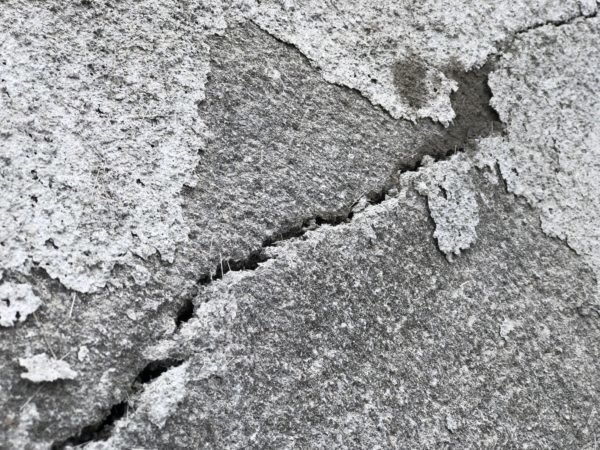
You get hairline cracks and sagging cracks, don't you?
No way lol
I'm sure you've all put in a lot of effort to improve this as well.
Slightly reducing the water-to-cement ratio, adding fibers, adding admixtures, inserting steel spacers, spraying water, or using a forced-action mixer.
I've done just about everything there is to do.
However, there’s hardly any method that can be called “the best” so far.
I have been asked about this issue time and time again by inspectors, the general contractor, employees of the general contractor, and the subcontractor.
However, almost everything I've tried has been a failure.
I say "almost" because there have been a few times when I actually got pretty close, lol.
However,The bottom line is: the crack will definitely form!
We will accurately communicate this information to the inspectors, the general contractor, and the subcontractors.
There will definitely be cracks.
However, we are doing everything we can to prevent that from happening.
That's what I usually say, lol
Please don't even think about telling a half-truth here just to make a good impression on the inspector.
Inspectors are professionals, too.
I'm testing the agent's skills. (I'm being a bit mean, lol.) Not that I actually know, though, lol.
Of course I know that. I know it's going to crack.
It’s mostly the younger staff members who are particular about these things, but I guess that can’t be helped… (We’ll just have to talk it over.)
To begin with, there’s a reason why the small-cross-section concrete products we produce—such as on-site sprayed formwork and sprayed concrete—are prone to cracking.
Simply put, concrete with a small cross-sectional area is easily affected by its surrounding environment.
For example, moisture in the ground or moisture in the air.
Places where the wind blew during the cool morning hours, and places where it blew during the sweltering heat of the afternoon.
It's clear that the water content, evaporation rate, and duration of effect are all different, right?
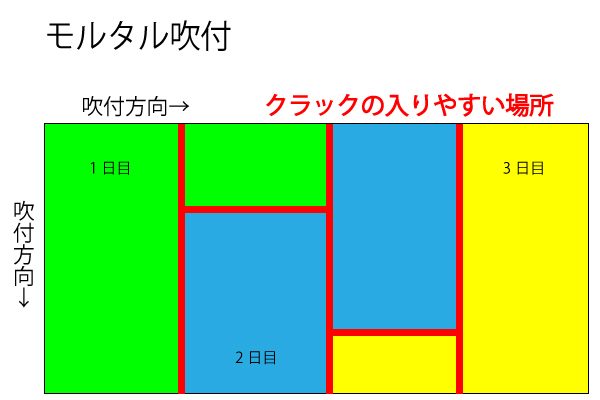
The surrounding environment always has a huge impact.
You might be thinking, “500 legal characters is a lot, isn’t it?,” but,
Take a look at that concrete structure over there.
There are tons of incredibly thick pillars, aren't there?
Furthermore, while they are unveiled only after being thoroughly protected with plywood and encased in boxes—at a stage when they have reached a certain level of strength—
Our concrete slope structures are left out in the open until they harden, lol (so wild).
Well, there's a very high chance it'll crack, isn't there?
They're treated differently, lol
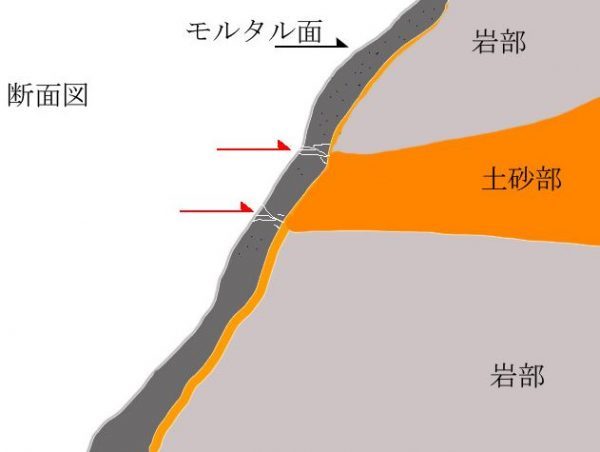
It's important to recover as honestly as possible.
Since there's no way to stop things from getting in, the only option is to make a V-cut and inject resin caulk.
Even if you apply mortar on top, it’s only a matter of time before it cracks and falls off, so I think using caulk or something similar is a better option, but,
It really stands out at first glance, so it looks kind of tacky...
To be honest, even if we repair it... I'm not sure it'll make a difference.
Isn't there any caulk that's the same color as cured concrete??
Or, a repair material that bonds firmly, is strong, resists drying, and has good flexibility—
If you know anyone, please introduce them to me.
See you later.