


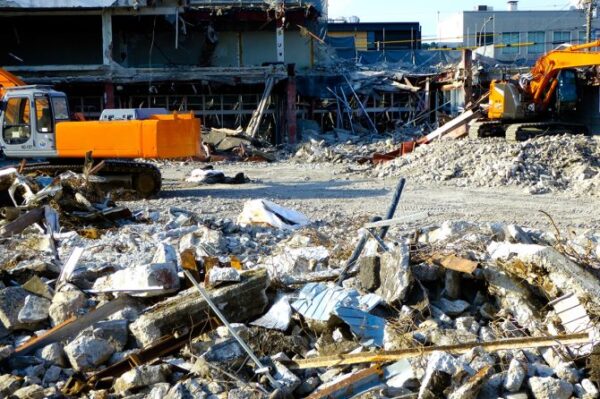
The Construction Industry in Steady Decline
The current environment surrounding the construction industry is extremely negative. This is due to the nature of the industry, which requires workers to be tied to a specific location and perform physical labor.
No matter how advanced the Internet becomes or how well-developed IT infrastructure gets, I feel that the fact that nothing can be built without first digging into the ground to lay the foundation is slowing down the pace of progress.
In other words, the industry is currently heavily reliant on manpower, and unless robots continue to evolve, it’s an environment where it’s difficult to achieve significant progress.
That said, given today’s declining birthrate and aging population, as well as the shift toward IT, it’s fair to say that it’s becoming increasingly difficult to attract workers to the industry. Still, the fact remains that the construction industry continues to rely on the skills of skilled craftsmen.
"We can't seem to attract new employees," "Even when we do hire someone, they quit right away."
When you’re in the industry, you hear comments like that from all over the place. But haven’t we come to realize over the past decade or so that simply complaining won’t change anything?
I know I’ve made this sound a bit complicated, but the fact remains that, as an industry that plays a vital role in “food, clothing, and shelter,” it must not be allowed to fade away. In other words, unless we properly pass down these skills, we cannot ensure people’s safety and peace of mind.
There Are “Only Two” Ways for the Construction Industry to Survive
So, what should we do? Ultimately, there are only two answers.
- Find a way to increase our staff
- Building a system that works even with limited staff
You get it, right? No matter how hard you try, there are no other options besides these two methods.
I’ve been using Method 1 all this time. Eighteen years ago, when I first joined the construction industry, many of the craftsmen told me,
"It must be tough for you guys these days. There are fewer and fewer skilled craftsmen."
Even now, 18 years later, the craftsman still says this.
"It must be tough for you guys these days. There are fewer and fewer skilled craftsmen."
In short, the situation hasn't changed at all. If anything, it has gotten worse as time has passed.
Ultimately, it comes down to the fact that I knew what needed to be done but did nothing about it. Or, to put it another way, I thought I was taking action, but I failed to take any effective measures.
Young people won't go near companies that are behind the times.
What specific measures are being taken as part of Initiative 1? Many forward-thinking companies are using social media to raise awareness, promote new initiatives, and improve employee benefits to attract talent.
Even so, there are quite a few companies that post job openings at the public employment office, put up signs that no one notices, and place ads in the newspaper. And then they say, “See? No one’s coming,” and lament.
Regarding Measure 2, leading companies are automating non-frontline operations to reduce costs, aiming to stabilize workloads through the use of multi-skilled workers, and cutting down on travel time and other expenses by implementing cloud-based tools.
Amid all this, there are still quite a few companies where the level of IT adoption is limited to having recently switched from feature phones to smartphones, and where faxes and phone calls remain the primary means of communication. All documents are sent by mail.
I don't mean to deny what I've done so far. It's just that,It’s important to consider whether young people will think, “I want to work there!” when they see companies that aren’t taking new initiatives despite the changing times.That's right. If it were me, I wouldn't want to join.
To begin with, we must accept the fact that the number of people who want to enter the construction industry is declining. Unless we seek out ways to create a more efficient work environment and make efforts to boost productivity, it’s only natural that we’ll fall behind.
"The construction industry is deeply rooted in the land. IT adoption is simply impossible," is a sentiment held by quite a few people who genuinely believe this. But if that’s the case, the industry will just fade away! That’s what worries me. Of course, there are probably some things that can’t be done. But aren’t there also things that can be done?
At the very least, if a company isn't attractive to young people, it may be doing well now, but it has no future. That's because young people are the ones who shape the future.I believe companies that are unable to see things from the perspective of young people should realize that they will not be able to grow.