Hello, everyone.
This is Enta.

Site representatives, site supervisors, and site staff are generally responsible for managing photographs.
On large sets, or when a director is juggling multiple projects, there are inevitably times when they simply can’t make it to the shoot.
Generally speaking, taking photos on-site is very important, but there are some craftsmen who are reluctant to allow it.
First, I'll explain what's most important.
At construction sites, photo management is one aspect of overall management, and the client requires these photos as part of the documentation to be submitted.
For that reason,Photos are an absolute must during construction!
To put it bluntly, even if the finished product exists, without construction photos, it’s as if it doesn’t exist at all.
Huh?
That's what you're thinking, right? lol
However, the important thing—assuming that’s the case—is that we’re documenting with photographs whether the construction is being carried out exactly according to the blueprints.
Let's say there is a single block of concrete.
For the purposes of this drawing, let’s assume that the rebar is arranged at 100 mm intervals.
After assembling the rebar and pouring the ready-mix concrete, a concrete block was formed.
The rebar inside will no longer be visible. Will it be possible to check the rebar during the inspection?
You can't do that, can you?
The supervisor measures the spacing of the rebar and takes photographs once the rebar has been tied.
This is when we use photographs to document the quality control of the rebar work.
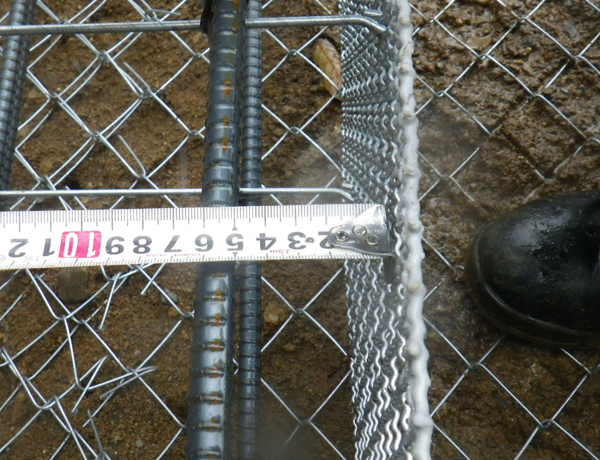
This is especially important for the parts that will be hidden by ready-mix concrete or sprayed mortar.
Parts like thisHidden Parts(Steamed Portion)is what they say.
It’s okay because the parts that will be visible in the end can be fixed later, but there’s nothing we can do about the parts that won’t be visible!
So, as a director, I absolutely want to take photos.
To do that, I’d be willing to halt production just to get the shot.
Many people think, “If you’re a construction company or a tradesperson, you wouldn’t know anything about that! The job comes first, right?!!” But unfortunately, managing the photos takes priority.
Without this photo, there is no evidence.
So even if the craftsman says, “I did a thorough job. I definitely did the work right!” there’s no proof to back it up.
No evidence = the work wasn't done properly
If the work isn't done properly, I won't pay.
That's how it works.
It’s a matter of asking people to wait until I take a photo, but as a craftsman, I have my own way of handling it.
I think there are times when the supervisor just isn’t available or is running late, and the workers really want to get the work done up to this point by the end of the day.
The craftsman should just take the photo!
If you're the type to say, "That's the director's job, so I don't know anything about it!", please wait until the director arrives.
For those who want to get the work done as soon as possible, ask the director, “I’m going to take a photo of this—can you tell me how to do it?”
There isn't a single director who would say, "Absolutely not!" if you asked them to send sample photos via LINE. (If they're really particular, they'd just tell you to come in, lol.)
There are a few things I’d like craftspeople and beginners to keep in mind when taking photos. (Some of this may overlap.)
1. Blurry photos
This is unacceptable, so please reshoot it as many times as necessary.
2. I don't know what I'm filming
This is another common issue: it's either too far or too close.
Even though it's a photo of the "XX situation," the person doing the work is cut out of the frame, so only their hands are visible, or something like that
I'd understand if the photo showed both the whole person and their hands.
3. I don't know the scale
A scale refers to dimensions. Even if there's no blackboard, it's still better if you can tell which part it is.
Also, please use a convex mirror and a pin pole to mark the distance from here to here so that it is clearly indicated as XX mm.
If the location is hard to find, just take a bunch of photos, starting from a distance and gradually getting closer.
In any case, please try taking photos of the hidden parts from various angles and at different scales.
As many as possible.
4. Take photos so that others can understand them
Please film it in a way that anyone—even a layperson—can understand.
Actually, this might be the most important part!
Even though I'm the director, there are a lot of people who take photos and go, "Huh?"
That’s how hard it is to convey something to people through photographs.
It would be best to write the details on a blackboard, but since many people—especially craftsmen—might not understand that, please take plenty of photos—even snapshots are fine—and make an effort to take photos that clearly convey the information!
5. Take lots of photos
If there are only a few, there's nothing we can do.
Please take lots of pictures.
From here, there, and everywhere! The director will handle the editing, so please feel free to take lots of shots.
If you pass this along to the director and let them decide whether the photo is good or bad, the quality of your photos will improve next time, right? lol
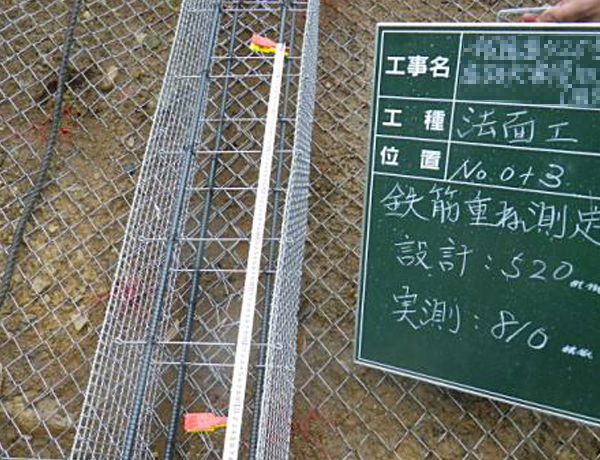
6. Keep the area clean.
Please be mindful of your surroundings when taking photos.
Photos that are too dirty, have trash in them, or are untidy are not acceptable.
7. Is it safe?
Isn't this a dangerous situation?
Is there anyone behind you who isn't wearing a helmet?
Is anyone here smoking?
Isn't that unsafe behavior?
This is a very important point, so please be careful.
Even though there are specific technical requirements for photos, if you’re thinking, “Well, I can’t go that far!”—just take them anyway, and that’ll really help the director!
You might be thinking, “I shot this in 4K with a super high resolution—it looks so clear, right?!” But if possible, it’s better to use a smartphone with around 3 million pixels lol.
I can't really complain, though, lol (The specifications are so detailed—to a level that only the director would know about—that even he's having a hard time with them.)
Since you can also use video these days, if you're unsure about taking a photo, just record a video instead.
If you're recording a video, please shoot it a little slower. Please be careful—if there's too much movement, it will be hard to follow.
When filming, try to pause for about 5 seconds at the key moments.
One last thing—and this is super important!
When taking pictures with a camera, try toTighten your armpits for the photoThat's it!!
This is a basic principle of photography.
Just doing this will reduce the number of blurry photos and help you focus on exactly what you want to capture!!
Here's how to handle situations where there is no supervisor, as described above.
If you can actually do this, it’ll be incredibly useful!
What's more, you'll become a professional who can manage photos.
It's not about whether you can or can't. It's just a matter of whether you'll do it or not!
It would be strange for the coach not to be there at such an important moment, but nobody’s perfect.
We're living in an era with such a severe shortage of directors.
Let's help each other out!
A pro at managing photos. No matter how you look at it, wouldn’t you want to bring that person along to your next job site?
See you later.