Hello, everyone.
This is Enta.
I'm sure you're familiar with the term "nominal diameter," but it's actually completely different from what design consultants tend to think it is.
Nominal Diameter
You often see hole diameters like 90, 115, or 135 listed in design specifications and drawings, don't you?
So, when I calculate the ingredients for the cement slurry, sometimes I end up short.
While the loss rate is also an issue,Actually, that's not allThat's right.
The design specifies a hole diameter of 90 mm, but it’s actually about 105 mm.
The outer casing is 96 mm, and the bit diameter is 105 mm.
The diameter varies by a few millimeters depending on the manufacturer.
There is no such thing as a nominal diameter labeled “φ90.”
The φ90 is actually φ96, and the bit diameter is 105 mm.
It's actually 15 mm different from the design, lol.
For the 115mm size, the outer casing is 118mm and the bit diameter is 127mm.
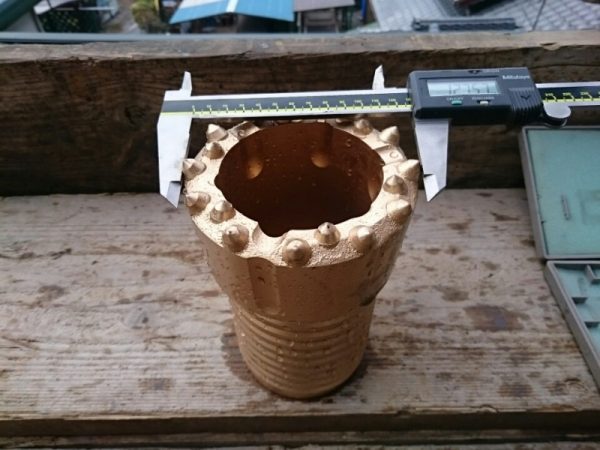
The tip of the blade is sticking out.
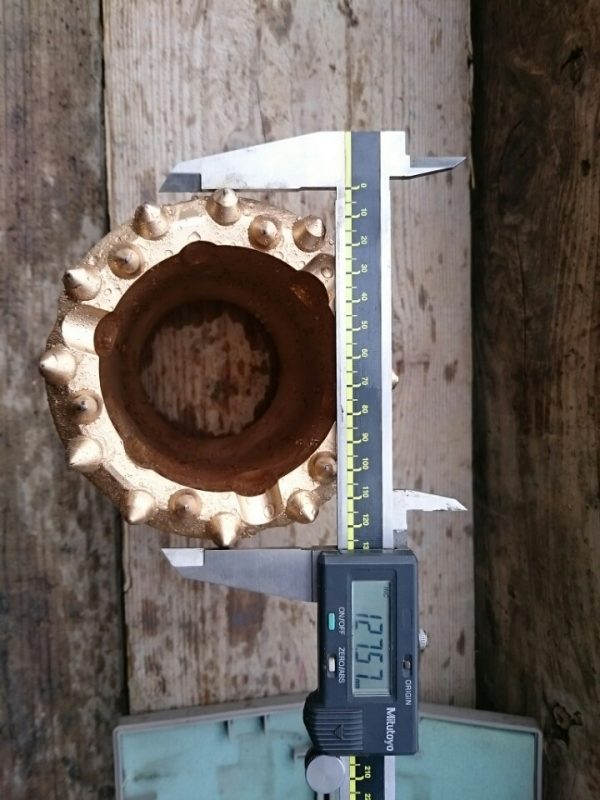
This means that even if the bit isn't brand new, the drilling diameter is still guaranteed.
The design diameter is commonly referred to asNominal DiameterThat's what they call it, isn't it?
Use this number when calculating the cement content in cement slurry for the most accurate results.
There's one more thing you need to be careful about.
Although the drilling diameter for rock bolts is specified as 65 mm, this is not a problem under Site Condition 1.
The issue lies with single-hole drilling under Site Condition 2.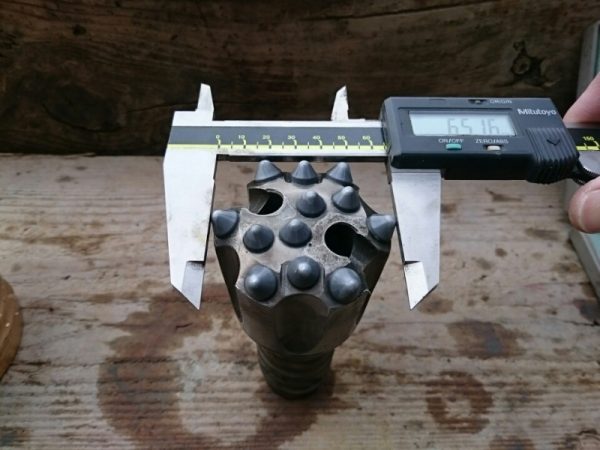
The tip of this one is sticking out as well.
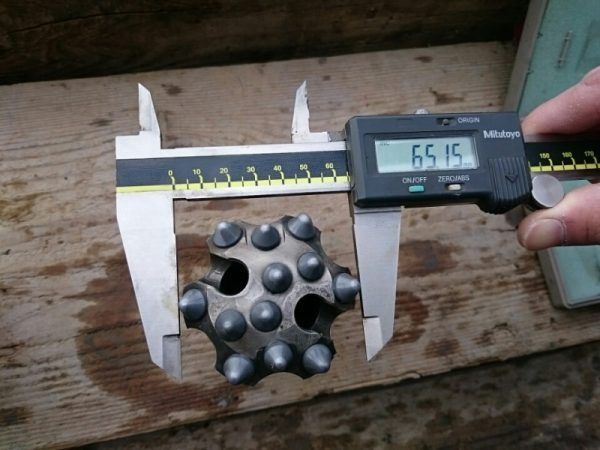
This bit is the inner bit for a skid-type core drill.
The inner rod diameter is 57 mm.
The bit diameter is 64 mmWhat?!
We're interpreting that as 65 mm based on the design nominal diameter.
However, a brand-new bit is about 65 mm long.
However, if you use a bit that’s been used a little, the hole diameter gets really bad.
People ask, “So what am I supposed to do?!” but all I can say is, “Check that the bit is brand new and use it” (lol).
Alternatively, use a bit designed for the 73mm inner casing.
A bit for inner casings designed for use with outer casings 90 mm or larger,
The bit diameter for a 73mm inner rod is 80–83mm.
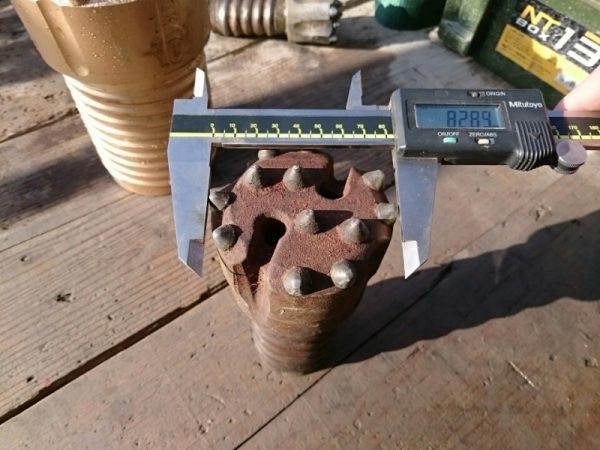
It ends up being about 25% larger than the design.
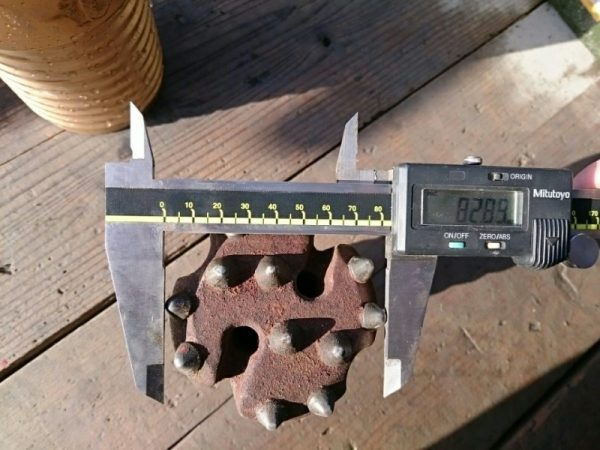
Naturally, when the diameter increases that much, the amount of cement also increases.
Since we're at it, let's get creative and...
Under the pretext of ensuring the quality of the drilled holes,
"Since there will be areas where the required drill hole diameter cannot be achieved if the drill bit becomes worn, drill a larger hole in advance."
I guess that's one way to look at it. The amount of cement will increase, but the cost is negligible.
It'll be a little bigger, but if you want to play it safe during installation...
When you think about how the nominal diameter means it’s actually designed with a surprisingly wide safety margin, it kind of gives you a sense of reassurance, doesn’t it?
I don't know, though...
See you later.