Hello, everyone.
This is Enta.
I've gotten pretty used to water stopping lol
The construction company is short-staffed, so I'm also handling construction management on-site; I'm sealing the water behind the drilling operations.
I've gotten pretty used to it.
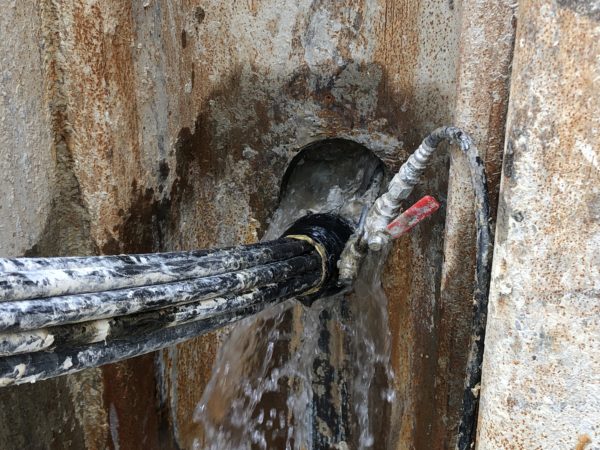
I've gotten to the point where I can stop it even when it's gushing out like this!
If you know there’s going to be a massive leak, you can seal off the surrounding area from the start (other than by injecting chemicals).
It's a bit of a new gadget, but I gave this a try!
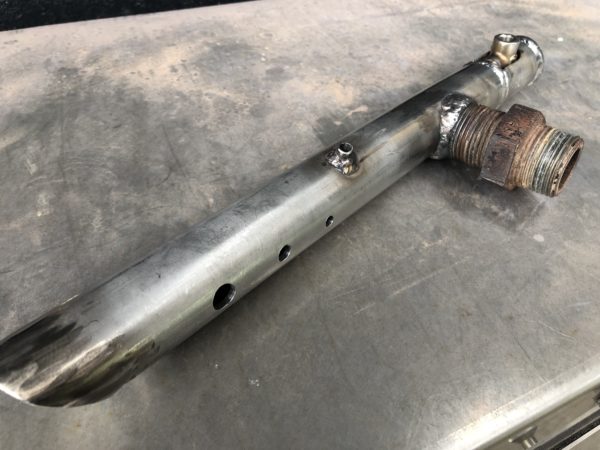
This is a water-stopping jig, and the great thing about it isYou can use two liquids!
The piece was a little too short for this experiment, but,
No matter what kind of ground it is, there’s a hammer head (the part you can strike with a hammer) at the back, so you can drive it into any surface.
Cement slurry can be injected through the holes on the sides and at the tip. (A 1-inch injection port is welded in.)
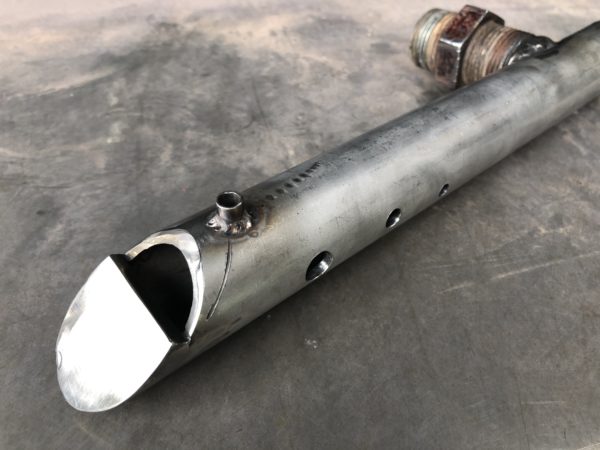
And,You can dispense the quick-setting agent through the vertical hole!!
Cement slurry that comes into contact with a rapid-setting agent hardens rapidly.
If it's just a matter of shutting off the water, strength isn't necessary, so it's not a problem.
Furthermore, since sand layers allow for a certain degree of penetration, if we can drive the tool about 50 cm into the surface layer, we can inject the solution just as we would with grouting.
For injection, I believe a pump rated at MG10 or higher is required, with a minimum pressure of at least 5 MPa (50 kg).
Since the chemical pump has a pressure of about 5 MPa, it will fit.
When using cement slurry, soil mixed with gravel may be a better option than a sand layer, as it can be compacted more effectively.
There isn't enough data yet to say for sure, but I get the feeling that method makes it easier to stop.
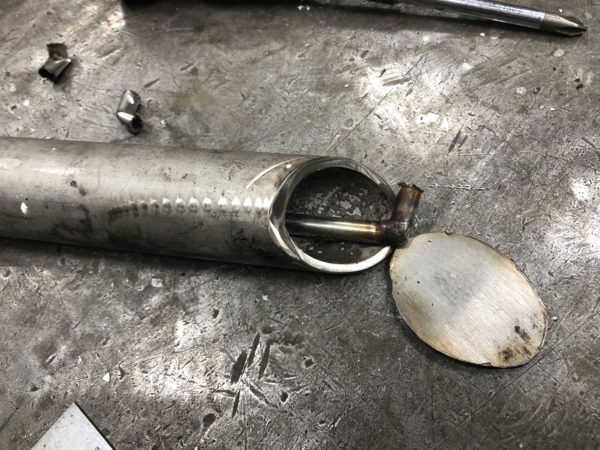
If you add the rapid-setting agent first, it’s easier for lumps to form when the cement slurry is added.
After that, as the mixture gradually sets while you’re mixing it, inserting and removing this water-stopping jig will agitate it even more, making it set more easily.
It was short this time, so I couldn't use it much, but next time I'll make some improvements and give it another go!
I'm going to give it a try with something about 60 cm long and thin. It offers a lot of resistance, so it's a real pain to install, lol.
And now that I've got the hang of using Oha to stop water, I'll be posting a video on that soon, too!
See you later.