Hello, everyone.
This is Enta.
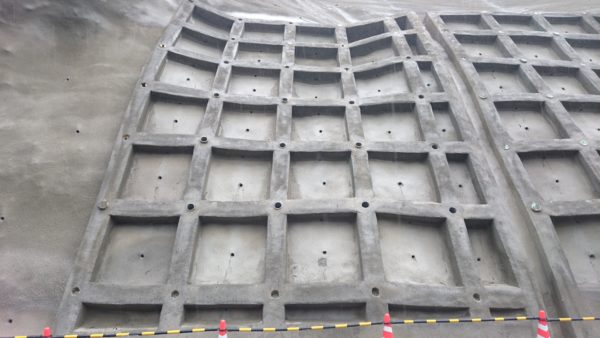
We've recently started taking on small scaffolding projects as well.
Actually, there's a reason for this—it's simply because there aren't any scaffolding contractors, lol.
With a large-scale project, there’s usually a certain amount of money available, so we can secure it, but,
For small jobs, the cost is even higher than for direct labor.
It could even be double that!!!!
There are financial considerations, but the main reason is that it saves time.
Traditionally, the chain goes from the government agency to the general contractor, then to the slope work contractor, the scaffolding contractor, and the anchor work contractor—with three subcontractors working under the general contractor.
As a result, the number of documents, such as sub-subcontracting notification forms, will also increase.
In some cases, the subcontracting chain may extend as far as the third-tier subcontractor.
In our case, the chain is: government agency → general contractor → first-tier subcontractor (all construction work)
That's how it works.
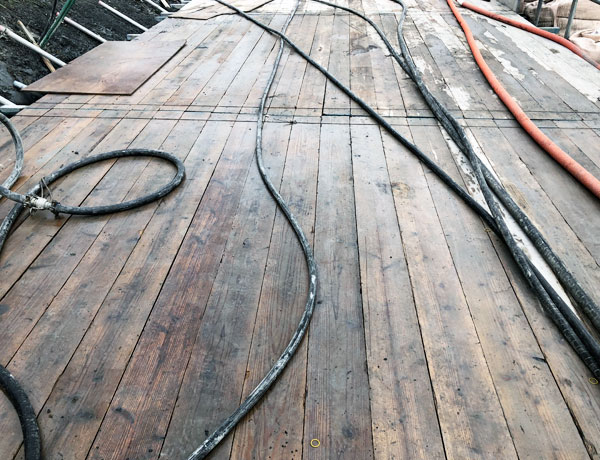
Scaffolding companies are way faster at putting up scaffolding than I could ever be, lol.
I think it's probably about twice as slow.
However, when you look at the actual final process, it doesn't change.
The reason is that there is absolutely no time lost.
The slope work is finished, and just as the scaffolding crew is about to start, they say they can only work for ○ days!
Only two of us can go this week. We'll be doing it all at once on Saturday, so please plan the work accordingly!
That happens all the time.
It feels like the only way to reduce this waste, even a little, is to do it in-house.
The smaller the job site, the less likely they are to come out, lol.
The general contractor must be having a hard time, too, huh?
Since we handle the entire project with the same team of employees from a single company without any delays, it may seem slower overall, but I don't think it actually takes any longer.
However, it’s definitely slow when moving the machine or lowering it on a ramp.
That's because there isn't a distinction between scaffolding contractors and anchor contractors; rather, the number of workers at the anchor contractor's company is the same as the number of workers who set up the scaffolding.
That said, when anchor crews come and go (to reconfigure the scaffolding), there are bound to be times when adjustments can’t be made with certainty.
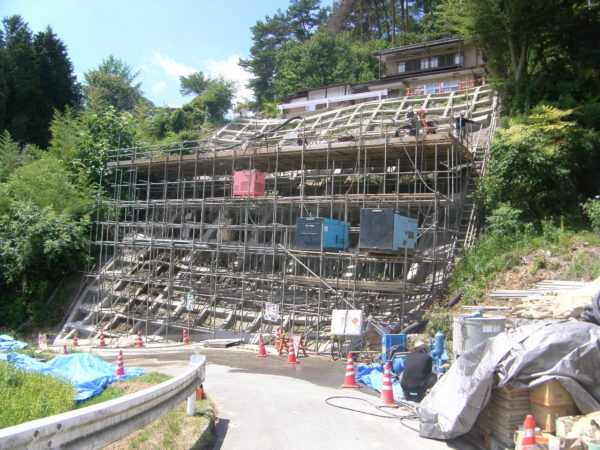
Overall, the process hasn't changed, but considering the director's schedule and such, it's definitely easier.
It's just that it's hard to tell because the speed right in front of me is so slow, though.
Our scaffolding crew is a bit slow right now, but I hope they’ll gradually pick up the pace.
By the way, when it comes to certifications—from Scaffolding Supervisor to Special Scaffolding Training—there’s no problem at all lol.
I have a feeling that as the labor shortage worsens, situations like this will keep happening more and more.
With small projects, it seems like you have to do absolutely everything yourself or else you’ll never finish.
See you later.
P.S. We're looking for people who can set up scaffolding!
Please contact us ^^