



Hello, everyone.
This is Enta.
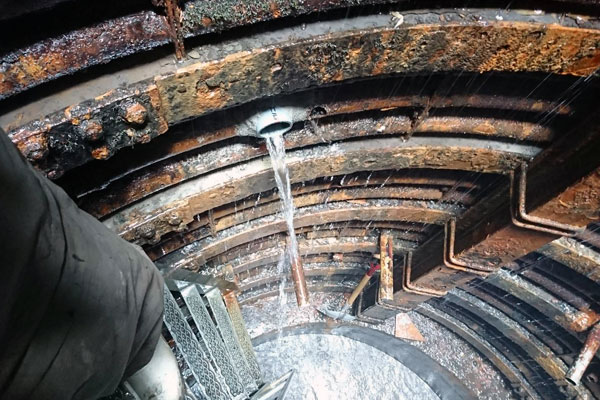
When you're in the design phase, how do you determine things like the horizontal spacing for horizontal boreholes?
This refers to the spacing when pouring concrete within the boundaries of a formwork frame or similar structure.
There isn't anything about that in the literature, is there?
In the case of catch basins, the documentation on landslides states that the leading edge is approximately 5 to 10 meters.
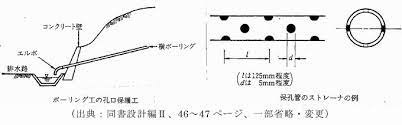
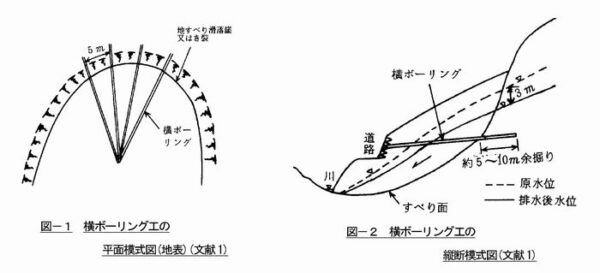
It doesn't actually say, "This is what it looks like when it's on the ground!"
Guidelines for Landslide Prevention Technology and Explanatory Notes Thereon
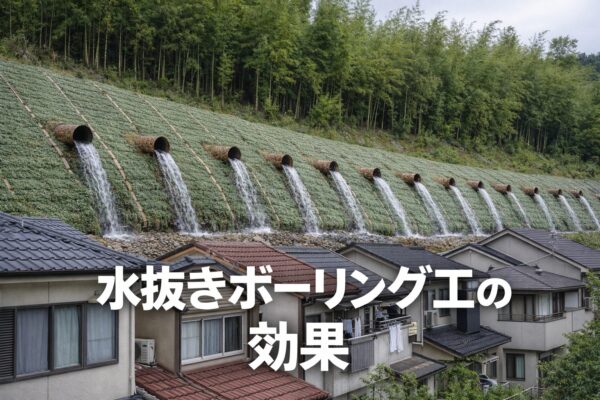
"Horizontal Boring Method: The horizontal boring method is used to drain groundwater in shallow strata that cannot be drained by open or covered channel construction, and is planned when topographical conditions permit construction. While it is desirable to plan the diameter, length, and angle of the horizontal boreholes based on groundwater analysis results, the spacing between the tips of the boreholes is generally set at 5 to 10 meters, and they are typically concentrated in areas with abundant groundwater."
Guidelines for Landslide Prevention Technology and Explanatory Notes Thereon
Even if you look at this, the minimum spacing between tips is 5 meters.
But in reality, they’re sometimes designed to be 2.0 m or 3.0 m—what’s the basis for that?
How do you respond when someone asks you that?
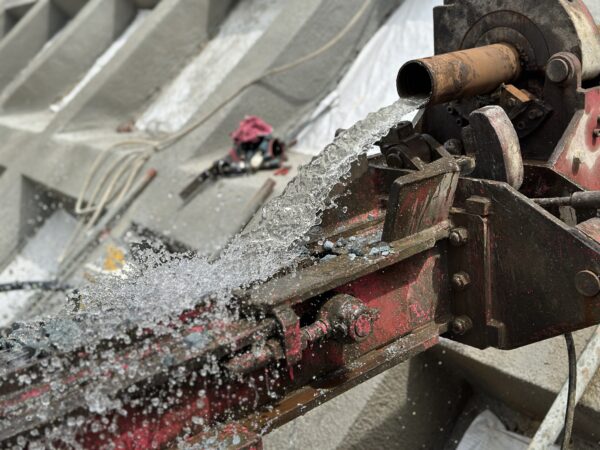
If there's any basis for that, I'd like to know.
Personally, I believe that in the shallow section of a slope, a single drainage point—about 3.0 meters deep—should be installed to quickly drain infiltrating water from rainfall and other sources.
We try to pour the concrete at intervals of approximately 2.0 m to 5.0 m.
We also believe that using the same spacing as for the rebar insertion work will result in better balance.
But since there’s no reference material, this is just my personal opinion as a contractor—lol.
Well, I suppose you could say it’s based on experience.
Since money is involved, government agencies can't just do whatever they want, can they?
If you have any such literature or have any thoughts on this, please let me know.
Thank you in advance.
See you later.



I always enjoy your newsletter. I work in research and design.
■The standard horizontal spacing for horizontal boring operations is 5 to 10 meters.
I believe the evidence for this can be found in various sources.
(Although Enta’s text stated, ”In the case of a collection well,” all the evidence provided relates to ”horizontal drilling” (please look at the borehole opening). In any case, the principles behind both collection well drilling and horizontal drilling for access are the same.)
■In forestry-related design and catchment well design, the “culvert formula” is sometimes used to determine the spacing between boreholes in the strainer section. It is likely that spacing as narrow as 2 meters—which is less than the typical 5 to 10 meters—was determined in this way.
Although the “Kankyo Formula” does not appear in the technical standards established by the Ministry of Land, Infrastructure, Transport and Tourism, it has long been included in the Forestry Agency’s “Technical Standards for Mountain Conservation (Landslide Prevention).”
https://www.rinya.maff.go.jp/j/sekou/kizyun/attach/pdf/gijutu_kijun-56.pdf
(In the latest edition, the R6 edition, it’s on pp. 68–70.)
For your reference.
Thank you.
That's a huge help.
I'm going to try calculating the formula for a culvert right away!
I always enjoy reading your posts. As far as I recall—though it was quite some time ago— I recall that in a paper by Professor Watanabe of Nippon Koei, regarding area-wide treatment methods for removing groundwater, it was stated that if the discharge point is unclear, drainage holes should be arranged in a fan shape to remove the water; if the discharge point is clear, they should be arranged individually; and if the aquifer is clearly defined, they should be arranged at appropriate intervals along that layer. I’m not entirely sure which landslide prevention literature this was from, but I think an interval of 2 to 5 meters is appropriate.
Thank you as always.
I'd love for you to try to remember which book it was lol
Since old books are disappearing one after another, I buy them whenever I find them, even if they're used lol
Books are really important, aren't they?