Hello, everyone.
This is Enta.
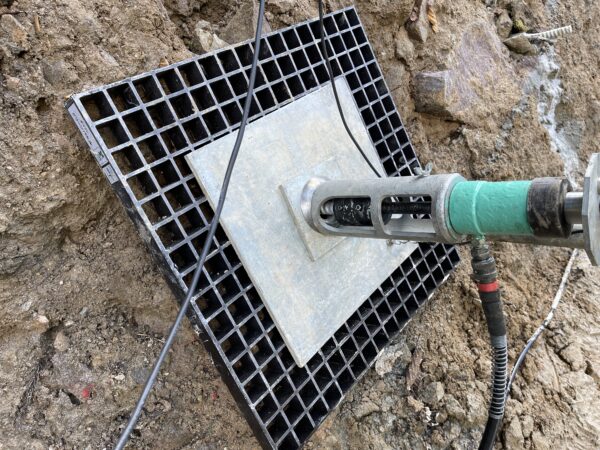
For the past few days, I've been planning the basic exam for ground anchor construction.
Since this was our first time, we weren't able to conduct tests using standard anchor materials... lol
The reason is that,
First, determine whether the anchor will hold based on the actual embedment depth.
Since, in most cases, the anchor reaches its yield load of 90% before the circumferential friction resistance value τ can be confirmed,
We will conduct the test using tendons with the same specifications and shorter anchor lengths.
However, this time I can't even use the same anchor.
The reason for this is that the initial design’s τ (tau) is high, lol (not that it’s a bad thing, lol).
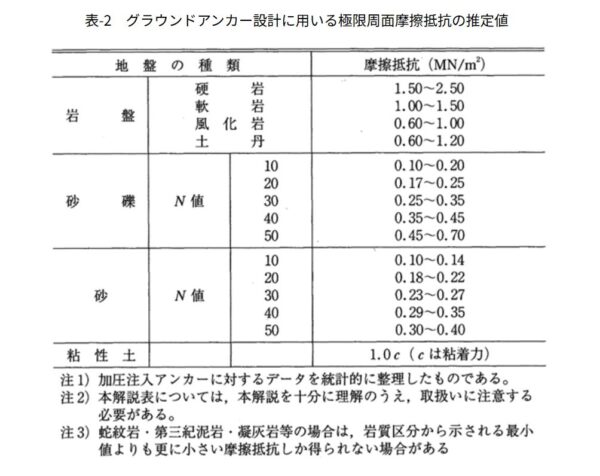
The design τ is 1.0, lol.
Because of that, the anchor snaps before we can measure τ.
So, the question is, "What should we do in that situation?" But,
At that point, set the deposition length to 1 m to minimize adhesion. (General)
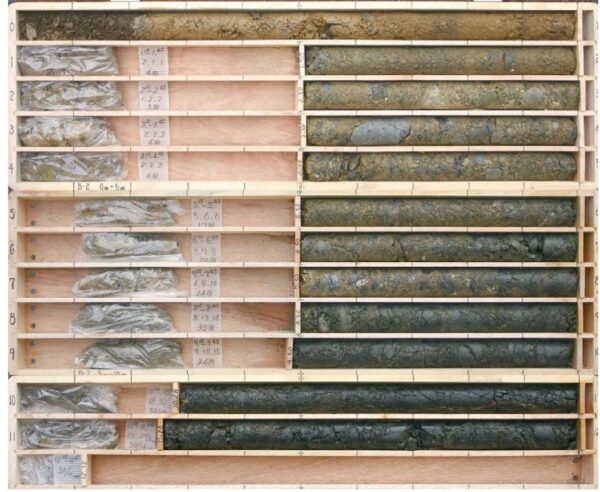
Normally, you’d be able to pull it out before the anchor breaks, but in this case, the anchorage is assumed to be in soft rock.
To be honest, I don't have much experience with τ=1.0, so I had a really hard time selecting the anchor material.
It looks like this test will come down to tweaking the allowable adhesion stress (/mm²) in a sort of "workaround" to barely pass.
Since the comparison of the ultimate bond strength between the grout and the tendon is also very close, we need to manage the load values with considerable precision...
While I’m hoping I can pull it off somehow on set, there’s also a bit of fun in taking risks like this right up to the last minute.
I’d like to make sure we can conduct thorough research so we don’t make any mistakes.
However, I do have some doubts about whether the soil in that part of the design should really be classified as soft rock—but that’s something I’ll find out once I give it a try, so I’m looking forward to it.
I hope we can carry out the construction while maintaining close communication with the design consultants.
This is Part 1, but in the next post, I plan to explain the calculation methods and other details.
See you later.