

Hello, everyone.
This is Enta.
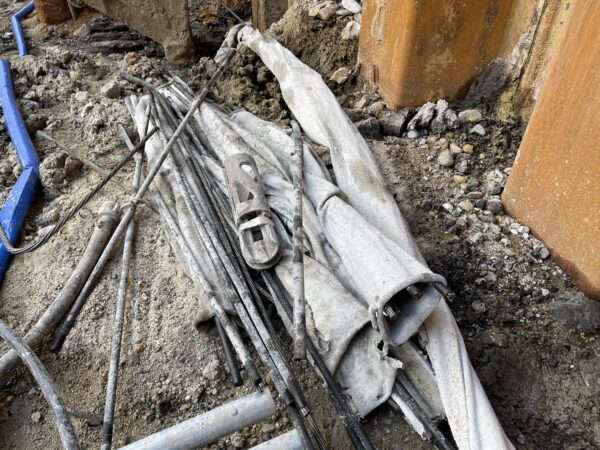
Do you know what this is?
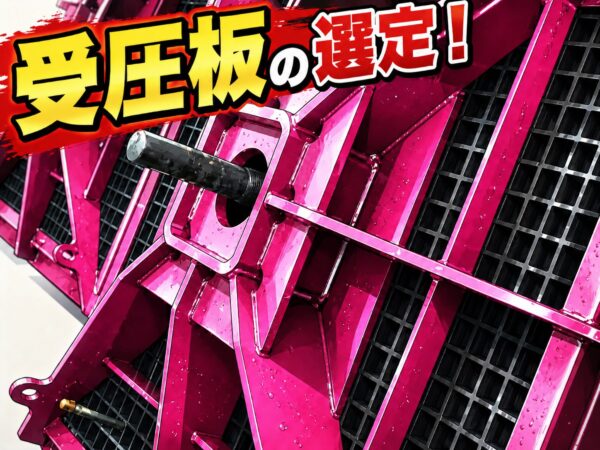
That's right! These are the remains of the anchor material from the ground anchor work lol
Here's what happened when I messed up lol
We've had two failures at this site before.
What I learned from this experience was the mix ratio for grout used in grouting drilling.
Standard grouting drilling isStandard FormulaWe'll do it there.
In our case,
W/C = 50%, admixture 2%
8 bags of cement, 96 L of water, 4 L of admixture
That's right.
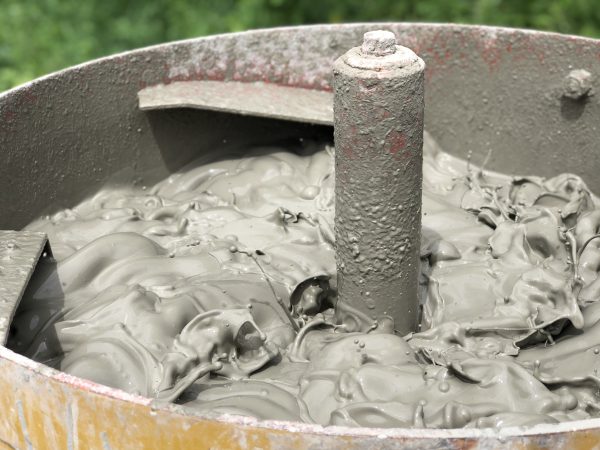
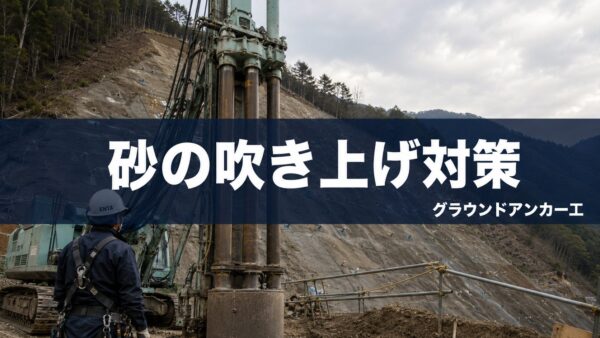
In cases where the borehole wall in natural ground is prone to collapse, or where backflow occurs after drilling in sandy soil,
This is a drilling method in which grout is used as drilling fluid and injected around the casing as the hole is drilled.
Because cement slurry has a high specific gravity, it helps prevent backflow, and
Since it is driven into the natural ground, the borehole wall becomes self-supporting, or
This is a method that ensures the area around the anchor is completely encased in grout, even after the anchor is inserted.
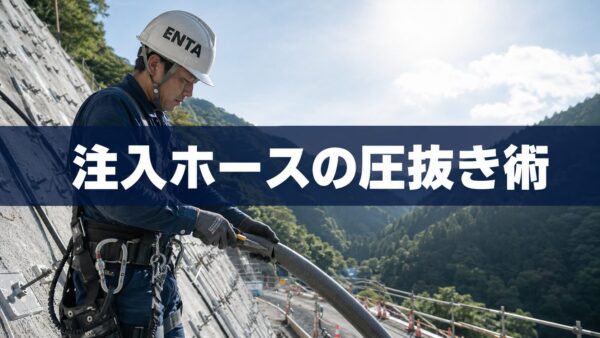
Once the drilling is complete, install a blind plug in the swivel’s discharge port and inject grout to prevent it from escaping,
It feels like you're pushing it forward again with the drilling machine.
If you move the machine up and down several times and grout comes out from the outside of the casing, I think the installation will generally go smoothly.
Just this once, let's go with single-hole drilling
Water pressure at this site was extremely high, so we used packers during construction.
(Even after drilling, the anchoring section had collapsed, making it impossible to secure the anchor.)
However, you generally can't use a packer for grout drilling.
I can drill the holes, but,
In a standard cement mill, the cement starts to set the moment the anchor—which uses a packer—is inserted into the casing!
In the anchoring industry,The packer is spinningThey say they'll do it.
If you dip a piece of cloth into highly concentrated cement slurry, the cloth absorbs the water from the slurry, and the area around the cloth hardens instantly. (It’s not very strong, but it’s in a firm, paste-like state.)
That's what happens inside the casing.
If that happens, the anchor, the packer, and the inner surface of the casing will become stuck together inside the casing and cannot be removed.
The result ends up like this lol
Since I'm completely stuck inside the casing, I'm cutting it open with a sander to get the casing out lol
It's all a waste of time and money, lol.
Based on past experience, I knew that the standard formula wouldn't work.So,
At this job site, we had reduced the amount of cement. (Lean mix)
At first, I was mixing six bags at a time.
100 L of water and 6 bags (150 kg) of cement, without admixtures; W/C = 66%
We used this to perform a grouting borehole, and after inserting the anchor, we injected standard cement slurry into the packer.
Things were going well. (For a while, at least.)
But I realized later that it was super hot that day!!!
I think it would probably be possible to apply it even with just six bags of mixed material, but,
Even in winter, if a little time passes, it's probably a no-go. (High risk)
In the summer, it's only on rainy days or when the temperature is a bit lower. (Higher risk)
From then on, we switched to a batch of five bags.
100 L of water and 5 bags (125 kg) of cement, without admixtures; W/C = 80%
With this, we can definitely get the job done. (Low-cost mix)
We were able to ensure that the grout spread thoroughly around the casing without causing dehydration, and we were also able to significantly reduce backflow.
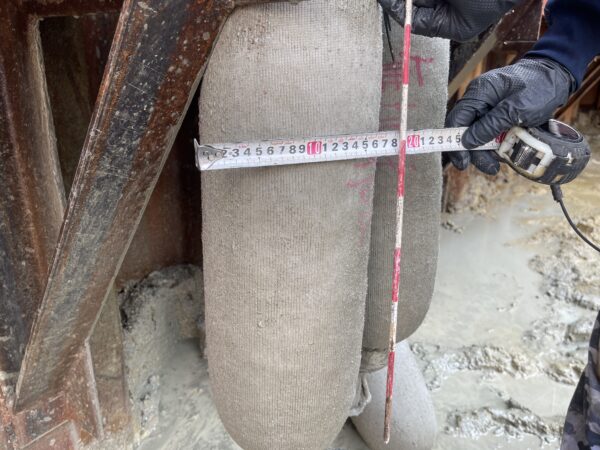
If you want to use a packer to make the borehole wall self-supporting while ensuring the most reliable installation possible,
There's also this method, so please give it a try.
Of course, the process concludes with the injection of the standard mixture.
We use a lot of cement, but it's still reliable.
Considering the possibility that the ground anchors might come loose, I’d really like to use plenty of cement to build a solid foundation, lol.
I imagine each provider has its own way of doing things, but if you know of any other methods, please let me know.
See you later.