Hello, everyone.
This is Enta.
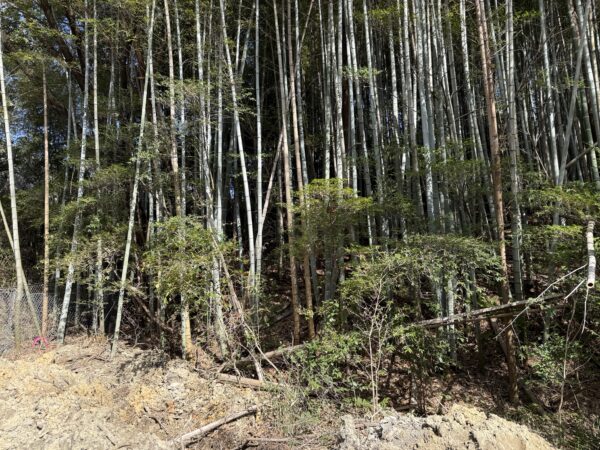
Is there a bamboo grove near the site?
Well, there’s a pretty good chance that the places where we slope contractors work have a lot of bamboo groves, right?
For example, let's say this bamboo grove was cleared, and formwork and rebar installation were carried out.
The ground smells really bad after you slide through a bamboo grove because the soil’s all rotted, doesn’t it? lol
Well, that's fine, but even if we were to simply install the formwork and rebar here,
I think there’s a high probability that the side that hasn’t been reinforced will collapse next.
If you ask me for evidence, it’s really just a gut feeling based on my experience, but,
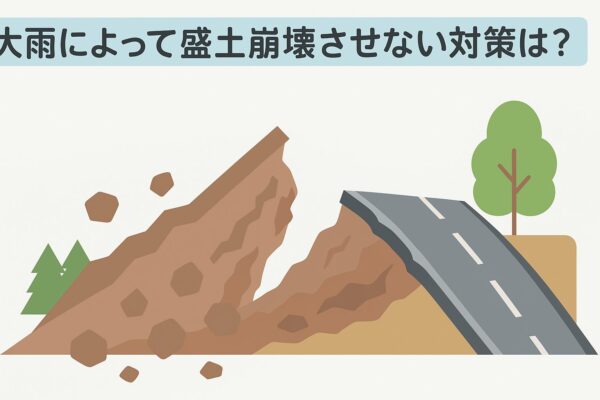
There are actually quite a few sites where the surrounding bamboo groves have collapsed after measures were taken to prevent the collapse of a particular bamboo grove.
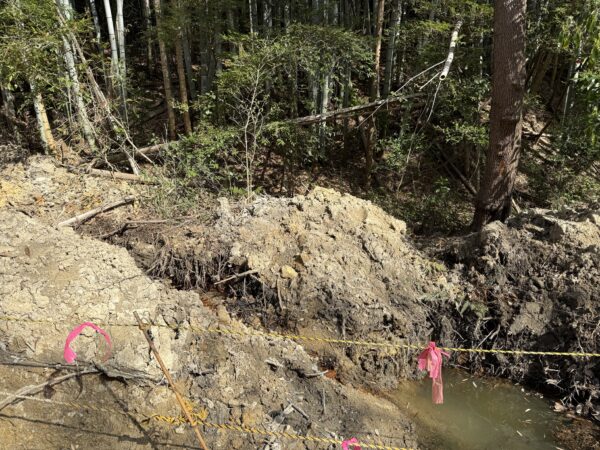
Considering that this is a mountain that is always well-watered, construction work on the mountain surrounding the bamboo grove—which has already collapsed once—is,
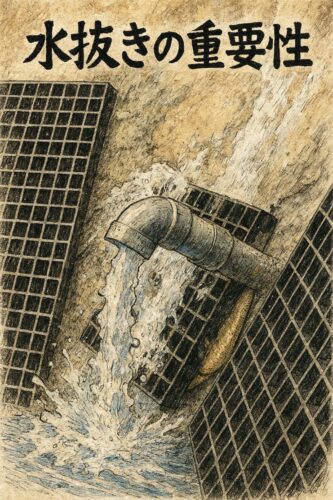
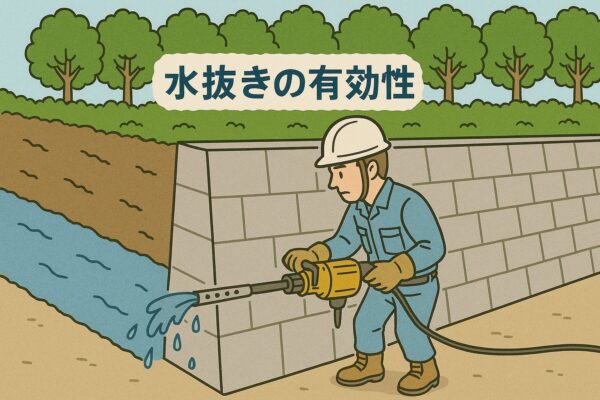
Isn't this more like dewatering drilling than rebar insertion work??
That's what I think.
If you go by the technical documents and books, it tends to be classified as a "frame + rebar insertion" job, but,
As far as the area around the bamboo grove is concerned, I believe that the combination of a retaining wall and dewatering boreholes has a greater impact on the surrounding area.
It might not be that effective in that specific area, but it has a huge impact on the surrounding area.
Once a hole is drilled in a mountain, internal pressure builds up there.
The pressure within the soil (in-situ stress) is,It depends on factors such as "the weight of the soil," "depth," and "soil type," among others.Well, I can't say for sure that this is always the case, but in civil engineering, it's also referred to as "earth pressure" or "ground pressure," isn't it?
For standard soil (fill soil, clay)
| Types of Soil | Weight per Unit Volume γ\gamma | Pressure at a depth of 1 meter |
|---|---|---|
| Dry Sand | Approx. 17 kN/m³ | Approximately 17 kPa |
| Damp sand and clay | Approximately 18–20 kN/m³ | Approximately 18–20 kPa |
| Saturated clay | Approximately 20–22 kN/m³ | Approximately 20–22 kPa |
So, here's a rough soil pressure chart I found online lol ↓↓↓
Well, there are differences depending on the type of soil, but this is just for reference.
📊 Earth pressure by depth (unit: kPa)
| Depth hh (m) | Vertical stress σv\sigma_v | Lateral earth pressure σh\sigma_h |
|---|---|---|
| 0.5 | 9 kPa | 3.0 kPa |
| 1.0 | 18 kPa | 5.9 kPa |
| 2.0 | 36 kPa | 11.9 kPa |
| 3.0 | 54 kPa | 17.8 kPa |
| 5.0 | 90 kPa | 29.7 kPa |
| 7.0 | 126 kPa | 41.6 kPa |
| 10.0 | 180 kPa | 59.4 kPa |
*In reality, factors such as the type of geological strata, the groundwater level, and other conditions vary.
kgf/cm² = kPa
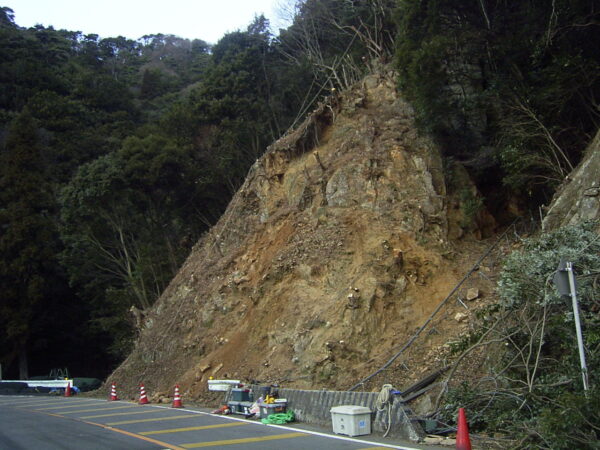
If you drill a hole in this soil pressure, the pressure will naturally concentrate there.
Water collects.
When heavy rain falls, the excess pore water pressure in the mountains increases, causing water to seep out.
While it’s certainly important to address the areas that have collapsed, I think it’s also important to prevent the problem from spreading beyond those areas.
I think that's what preventive measures are all about, you know?
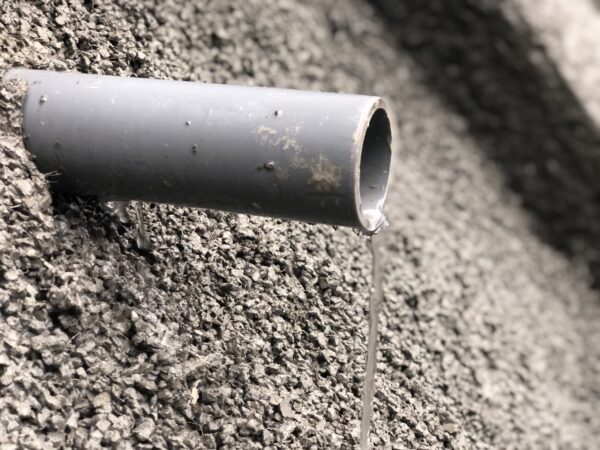
It's fine if no water comes out at all under normal circumstances.
If water comes out during a heavy downpour—just when it counts—that’s proof that the preventive measures are working, right? ^^
When I was younger, the name “drainage driller” made me really hope water would actually come out, lol.
There were also some sites where an incredible amount of water came out, but in most cases, hardly any water came out at all.
I mean, once you've gone to the trouble of digging it up, you want to see results right away, don't you? lol
Well, if you think of draining the water this way as a preventive measure for the surrounding area, drainage boring does seem like an essential method for slope stabilization.
What do you all think?
This is strictly from the perspective of preventive maintenance.
See you later.