Hello, everyone.
This is Enta.
It's gotten really cold lately, hasn't it?
It looks like it's about to snow here in Iwakura City, where I live! lol
It's that time of year again. That's right!
Waiting for Santa!!

To all the Santas out there! You'd better get things organized soon, or you might run out of stock or miss the deadline!
Hurry up, Santa!!
But that's beside the point.
In a recent article, I introduced the Thunder Blade.
This is the blade for cutting PC steel wire!
The blade that President F—who saw it—sent me, saying, “Please try this out,” has arrived!
This isThe kind of thing where a challenger appearsThat's it!

Here's the item that was sent to me!
So, to test this, I'll proceed as follows.
1. Measure the diameter of the unused item
2. Cut the PC wire in five places (PC wire diameter: 15.2 mm)
3. Measurement of Cutting Time
4. Measure the diameter after use
5. Impressions of the User Experience
So, let's start by taking some measurements.
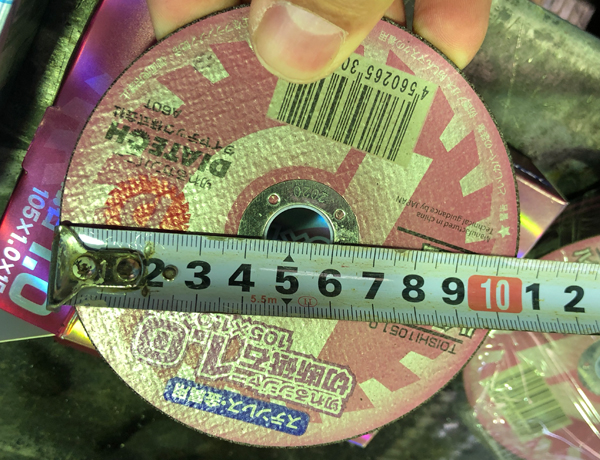
The diameter is104 mm
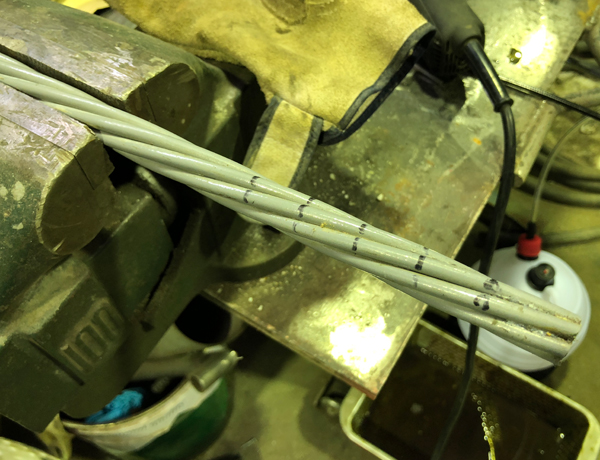
Cut these in order!
Please watch the cutting process at 3x speed.
*Please be mindful of the volume, as sound will play.
What do you think?
The exact time is47.29 seconds

The diameter after cutting is95 mm
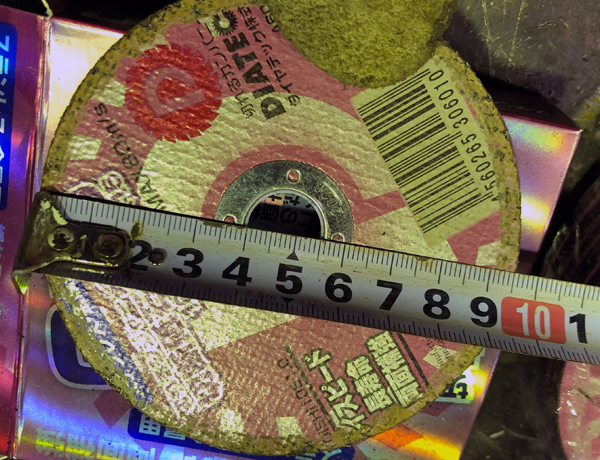
My impression is that it cuts very well.
I'm surprised at how well it turned out—better than I expected. The cutting action is smooth, with a crisp, snappy feel.
But it does go down, doesn't it? I get the feeling it's dropping quite a bit.
104 mm – 95 mm = 9 mm. Five pieces will reduce the length by 9 mm.
Per rod: 9 mm ÷ 5 rods = 1.8 mm
When the effective cross-sectional area is set to 25 mm,
25 mm ÷ 1.8 mm =
According to the calculation, it can cut 13.8 strands of PC wire.
I still don't think it measures up to the Delta Cut.At this point!!
See you later.