Hello, everyone.
This is Enta.
As for next week, since the projects are overlapping and there’s no way around it, we’ve decided to have one of them put on hold...
It was supposed to run smoothly, but one was late and another was early, so I couldn't get it sorted out... orz
We apologize for any inconvenience this may cause.
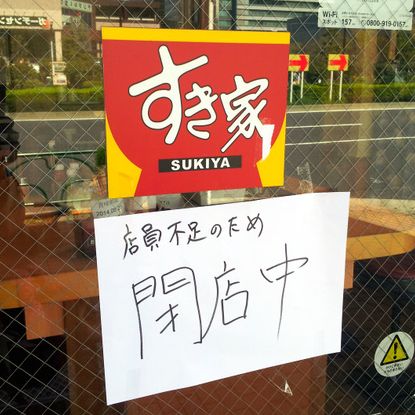
There are so many sites with a 300-person capacity limit... What am I going to do... We're short-staffed lol
But that's beside the point.
If you search for "packer" on Google, you'll find all kinds of results.
It doesn't make much difference which one you use, but I tested them all.Valuable RecordsThere is one.
Types of Packers
From the right side
1. Friction Packer (Moriya Steel Machinery)
2. Seamless Pyren Packer (Sansui Engineering)
3. Packer (now Okabe Civil)
There are other types as well.

I poured some actual cement slurry into this and let it expand.
1. Friction Packer (Moriya Steel Machinery)


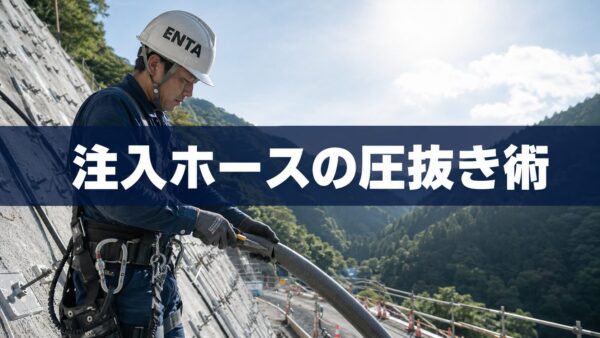
※We've blurred the image to protect the privacy of the person holding the hose, but he's an incredibly sexy technician.
 The diameter remains almost the same.
ThisThe injection pressure is approximately 3 kgf/cm² (SI units: 0.3 MPa or less)

We do not recommend applying any more pressure, as this could cause damage.
In particular, please be careful, as damage to the sealed sections—such as the wire strands at the tips—will ruin the entire piece.
Not to mentionThe tip is the point where the entire grout load inside the packer is applied.Therefore, it must be built to be particularly sturdy.
How a Packer Works

When pressure is applied to the interior, only the water from the cement slurry escapes through the surface of the packer.
The inside of the packer becomes rapidly dehydrated, and the surface hardens completely.
In fact, since there’s an internal pressure of as much as 3 kgf/mm², that’s also why it’s become rock-hard.
Since the water is removed, a high-concentration grout is produced, and because it is injected under pressure, its strength is higher than usual, but,
This is strictly assuming that the pressure can be maintained. (We are verifying the strength through other experiments.)
I have photos of all three Packers, but since they're all pretty similar, I'll just post one lol.
That wraps up this installment of "This Is What a Packer Is All About!"
In my next post, I’d like to write about how to use the packer.
See you later.