Hello, everyone.
This is Enta.
There used to be a grout calculation website, but I shut it down, so people still mention it to me every now and then lol
So, I'll list the minimum coefficients here.
Just in case, I’ll also include the calculation method, even though it’s a bit dry on its own.
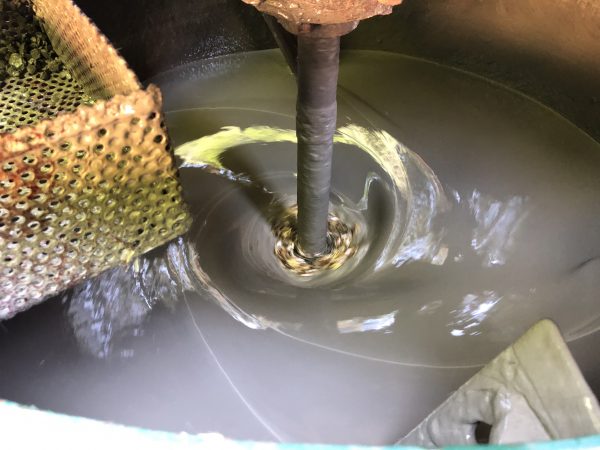
| Borehole Diameter (m) | 0.09 | 0.115 | 0.135 | 0.165 |
| Radius | 0.045 | 0.0575 | 0.0675 | 0.0825 |
| Per meter | 1 | 1 | 1 | 1 |
| Volume | 0.00636 | 0.01038 | 0.01431 | 0.02138 |
| Loss Rate | ||||
| 1 m³ of cement | 1230 | 1230 | 1230 | 1230 |
| kg | 7.8 | 12.7 | 17.6 | 26.2 |
| 1 bag of cement | 25 | 25 | 25 | 25 |
| Number of bags | 0.4 | 0.6 | 0.8 | 1.1 |
Basically,
Cross-sectional Area × Drilling Length × Loss Rate(Depending on the soil type)
Therefore, I would appreciate it if the design team could include the figures per meter and the loss rate in the design calculations.
The table below, based on the loss rates in the table above, contains the figures used on-site.
Since the loss rate isn't factored in, cement purchases on-site must take losses into account.
For example, for a drill hole diameter of φ90, it says 0.4 bags at the bottom.
Since this is per meter, if it's 15 meters, that would be 15 meters × 0.4 bags = 6 bags.
However, there is some loss involved here.
This is just a rough estimate, but since some ingredients are inevitably lost during mixing, please plan on using about twice as much.
6 bags × 2 = 12 bags
That's the gist of it.
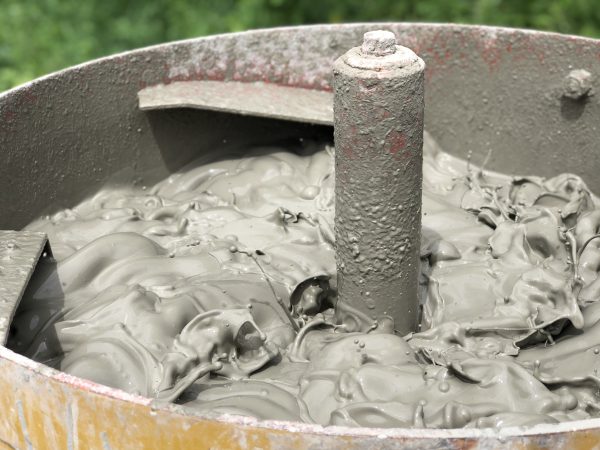
What exactly is this "loss"?Some people might think that, but,
It is impossible to completely empty the mixer used to mix the cement slurry before the injection stage.
Think of yogurt.
It’s impossible to eat every last bit of yogurt from the container, isn’t it? (Don’t just lick it all around!)
From there, it travels through the grout hose and sticks to the inside of the hose as well.
It also sticks to the casing during injection.
It sticks to absolutely everything before you can finally inject the grout to fill the gaps.
Therefore, you’ll need at least nearly twice as much as the design calls for. (Depending on site conditions.)
Also, if the ground is in poor condition, it will seep into those gaps.
Opinions on loss vary from person to person, depend on the underlying geology, and are also influenced by the site conditions.
So, that wraps up this post on how to calculate cement slurry.
It makes things a lot easier if you remember the coefficients.
See you later.