Hello, everyone.
This is Enta.
In Hokkaido, the leased machine we rented has been having one problem after another and is basically out of commission lol
Our company's aircraft are performing well—that's a relief... but the lease payments are such a waste, though.
We plan to wrap things up after we dig two more. It's getting too hard to take care of the kids.
It’s a job site where one vehicle would be enough, but they’re forcing two in there, so I guess there’s nothing I can do...
But that's beside the point.
Cracks in the Backfill of Compression-Resisting Structures
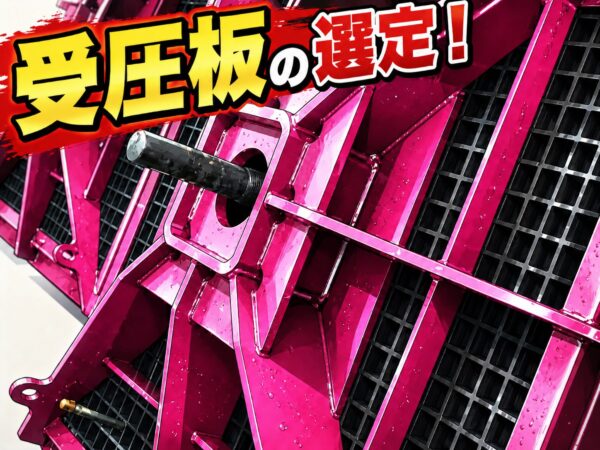
The backing on the pressure plate is pretty weak, isn't it?
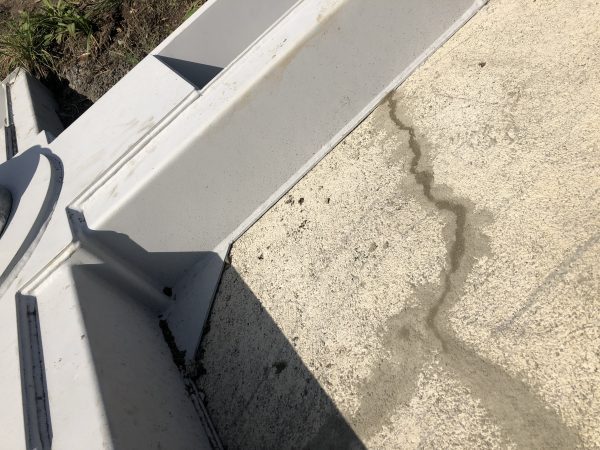
Some people get worried when cracks appear right away.
And then there are people who start complaining about the poor workmanship, lol
Think back to the "zabuton" frame. (For those who know what it is.)
For mortar intended to provide standard strength, the mix ratio is 1:4.
The specified strength is also 18 N/mm² or higher.
However, for zabuton frames, the specified value is approximately 10 N/mm². (No specific strength tests are conducted.)
It is a mortar with a mix ratio of 1:8 to 1:10.
Therefore, if you place a load-bearing plate on top and apply a load, cracks will form. (Of course, there are cases where cracks do not form.)
As a load is applied to the load-bearing plate, the load-bearing plate and the cushion frame gradually settle into place.
Cracks form, allowing it to bond firmly. Pressure is applied to the front surface, causing it to adhere tightly to the natural rock.
You can do a little touch-up later if you want, but I think it’s fine to leave it as is. (This is purely for leveling; it’s hard to tell just by looking at the mixture.)
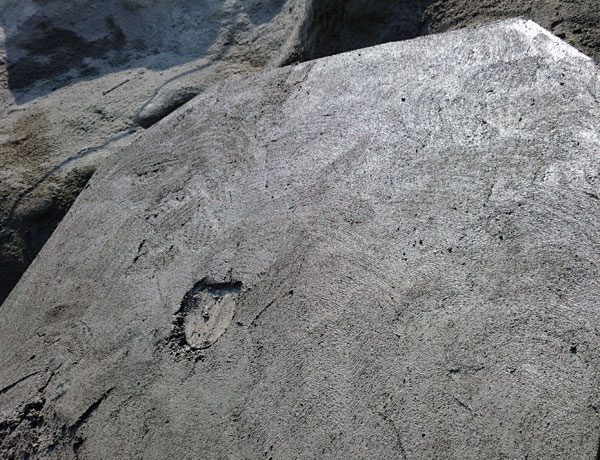
The same applies to backfill made of unreinforced concrete. (It does have some reinforcement, such as assembly rebar.)
It cracks and settles inThat's it.
It's not like it happened just the other day, but it's extreme pressure.
If a structure under pressure fails to settle properly and the backfill becomes distorted, stress is applied, causing extreme pressure in certain areas.
When it breaks, the pressure becomes evenly distributed.
If the backfill material is concrete, it’s best to repair it with a product like Hi-Mol, as this will result in a better appearance.
With zabuton-style frames, the grain pattern is often dense, making cracks difficult to spot (especially when the frame is thin).
Since this type of backfill for pressure-bearing structures is, after all, just backfill, there are no standard values or the like.
(The finished product comes in various thicknesses and sizes.)
Unless it's washed away by rain, it's constantly under pressure, so it's highly unlikely to collapse.
What this means is that you don't need to worry too much about cracks.
But if it looks bad, fixing it up is considered a sign of careful workmanship lol
Well, I'll fix it, though lol
See you later.