Hello, everyone.
This is Enta.
I'm Enta, and lately my blog posts have been getting out ahead of everything else, which has led to me becoming known for all the wrong reasons.
Everyone, just think about it normally. Just normally.
I'm just writing about what the construction company staff do on a daily basis.
Also, since I've been a bit forgetful lately, I'm using this blog as a way to keep track of things.
I really do forget! lol

Just ask our employees, and you'll see.
Since I'm not actually working on the front lines of construction management, it's especially easy for me to forget these things.
Ultimately, a blog is just something I use to look things up myself when I've forgotten them.
It also includes sections that serve as a reminder to myself, a space for self-reflection, and a diary.
I'm just writing this as a slope engineer, you know...
It's really no different from the construction supervisors at any other slope construction company.
And when it comes to construction, they're just a run-of-the-mill construction company.
I’m writing this blog post so I don’t forget what I’ve learned about construction (since I’m not working on projects all the time).
That's all there is to it, lol.
If this happens to serve as a reference for any of you, that would be great...
To be honest, I'd really rather people didn't call me "amazing."
It's not like that at all—no, really!

By the way, the projects in Kagoshima and Hokkaido are scheduled for the same day, and I'm seriously in a bind!
What should I do... Someone help me!! lol
But that's beside the point.
Fiber Content in Grout Injection
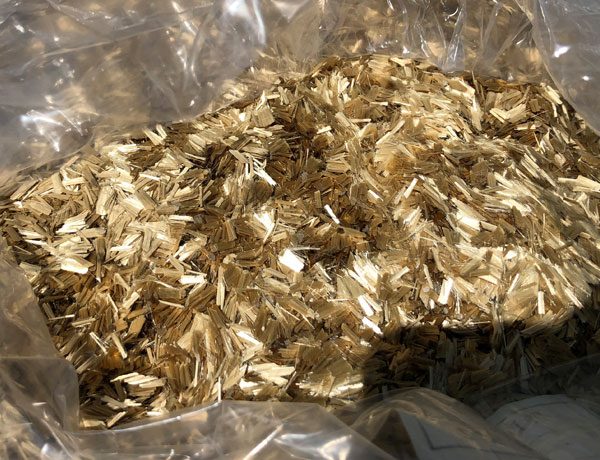
The other day, we mixed NAF-6 into the grout at the job site.
This is aramid fiber, a material commonly used in simple formwork systems, as you all know.
It's quite expensive, but it really comes in handy when grout won't rise.
It can be used just as well for applications other than spray coating.
You do have some in stock, right?? Isn't it just sitting in the back of the warehouse?
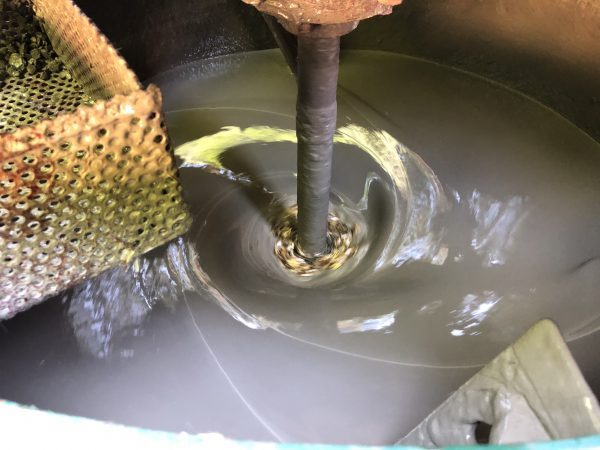
When you put fiber in water, it swells up and looks like it's taken up a lot more space!
That said, it just looks bigger because the water is being drawn up by capillary action.
And when it's actually mixed into the grout, it gets pretty clumpy.
If you pump it through, the leak is usually filled in nicely and the milk starts flowing back up, lol.
I can't say for sure, but it will come up.
Furthermore, since its strength has been verified, there are no issues whatsoever regarding its compressive strength.
Examples of Failure
Be careful not to use too much.
In an article I wrote previously,
Please take a look.
As a general rule, use about 400 grams per 4 bags of cement.
With a vertical mixer, you add the ingredients to the lower bowl; however, even when mixing 8 to 10 bags, the total weight is only about 1,200 grams at most.
Just give it a rough mix with your hands about three times—that's plenty.
If you add any more, it will become too lumpy and may clog the injection hose.
Then give it a good stir. That’s all it takes to make some nice “cement-aramid milk” (a name I made up myself)!
At our place, we put in too much and ruined three high-pressure injection hoses...
Be careful not to add too much.
We also recommend Grace Microfiber for grout.
See you later.