Hello, everyone.
This is Enta.
It's a typhoon, isn't it?
It really has been raining a lot this year.
It might not be the best topic for our line of work, but doesn't the rain make your joints ache a little?
I hear it's called "weather-related illness" or "weather pain."
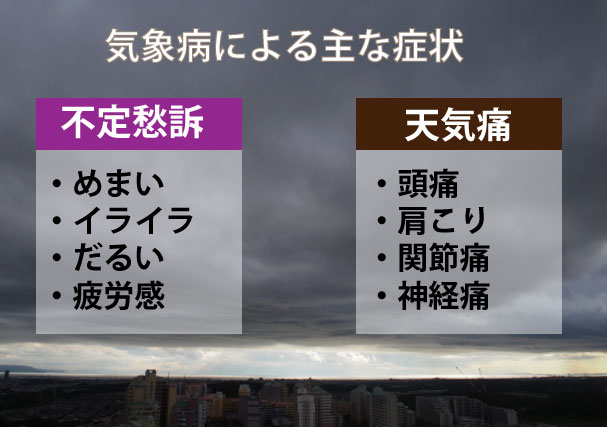
I seem to get headaches pretty easily.
That said, ISuperbA "Rain Man" Beloved by the RainBut lol
But that's beside the point.
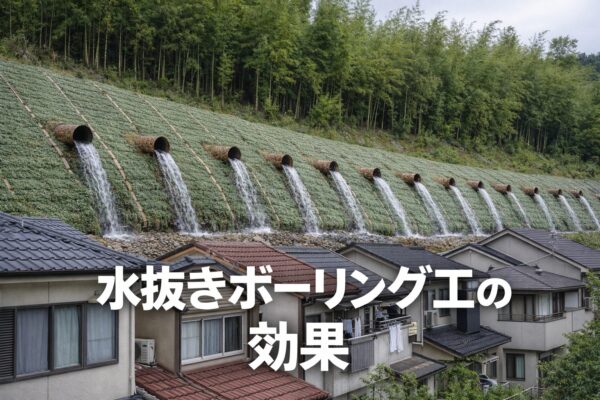
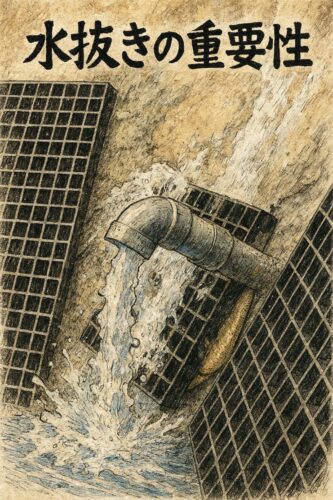
Speaking of the dewatering drilling work we did the other day, we sometimes run into problems.
So, here's this week's "What Should You Do in a Situation Like This?"
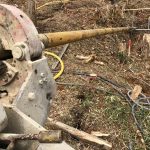
As you can see even while drilling, this is a situation where there is an enormous amount of wastewater.
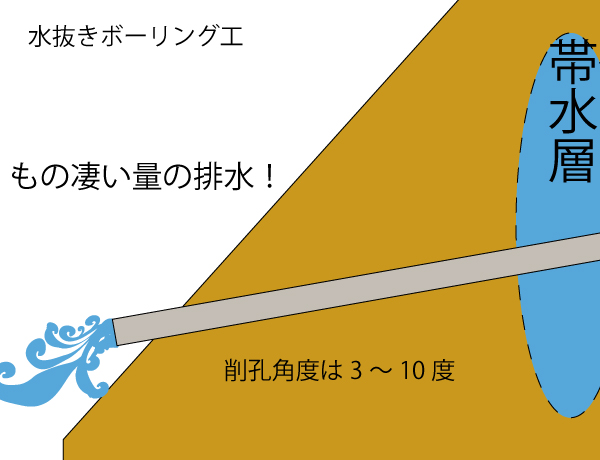
Although drilling is performed while drilling fluid is being supplied from the machine side, there is clearly more drainage than that.
This drain is easy to spot because it comes out from the outside of the outer casing.
In some cases, the amount produced can be enormous.
That's when problems arise.
That is,The strainer tube being inserted may be pushed back.
Insert the strainer pipe into the outer casing, and then pull the outer casing out.
When doing that, I make sure to leave the strainer tube inside, but it slides down due to water pressure.
No matter how many times I push it, it keeps falling.
What do you do in situations like this?
As a site supervisor, how would you handle this situation?
The most important thing to consider on-site is figuring out how to carry out the work.
We'll cover the countermeasures next time.
See you later.