Hello, everyone.
This is Enta.
I met a supervisor who was new to dewatering drilling some time ago.
They ask me all sorts of detailed questions about things that interest them, and I answer them, but I still get the feeling they don't quite get it.
So I told them, “Just go ahead and do the work, and you’ll see for yourselves!” But the way they’d been managing the photos up until then—
So when they said that, I replied, “Don’t worry! I’ll point out every spot where you need to take a photo so you don’t miss anything, and I’ll show you how to write on the blackboard, too.”
So, with that, we got started lol
That said, since this is just drainage drilling, there aren't that many photos, so it's easy to understand if you're new to drilling.
While I was teaching, I also mentioned things like, “Be careful—they might ask you about this part during the exam,” and so on,
A common saying is,Is the angle correct when the free travel is long?That's what people say.
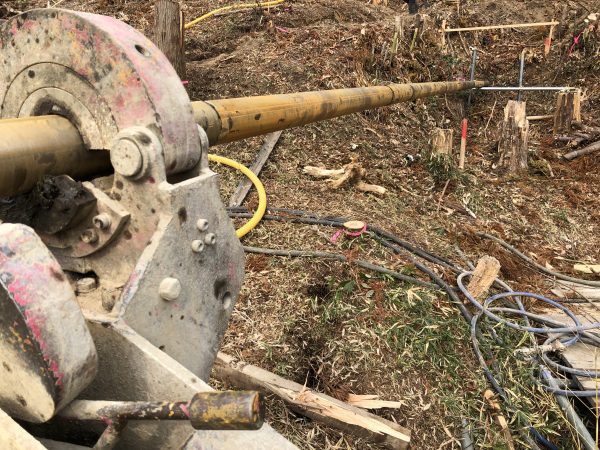
The machine is designed with a 5-degree upward angle, but when the coasting distance exceeds 5 meters, the front end definitely drops.
This time it was about 10 meters long, but when I measured it at the tip, it was practically ±0 degrees.
So, to ensure the angle is just right, we have them wear geta.
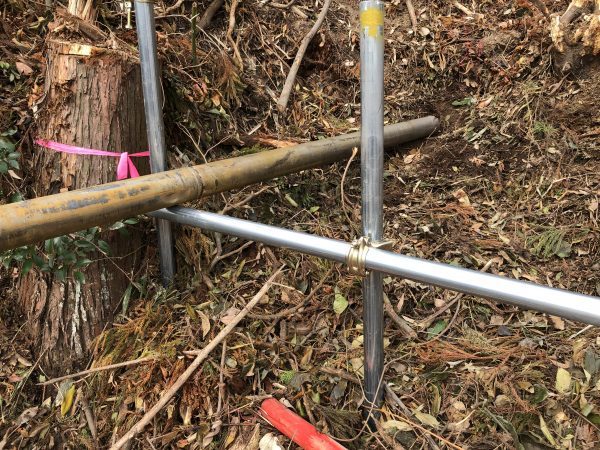
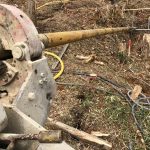
First, place the tip of the casing against the undisturbed soil and lower it slightly.
Then I lift it with my hand so it’s pointing up at a 5-degree angle. (It’s a little heavy, lol.)
Next, determine the approximate position and place single pipes or similar supports under the casing to ensure it remains at a 5-degree upward angle (the design position).
Align the tip, mid-section, and machine side of the casing to a 5-degree upward angle, and begin drilling.
Once the casing is driven into the rock, it won't sink much further, but
You need to be careful because the pressure can sometimes rise instead, but even if you drill carefully, if you hit a rock or something,
It goes up and down.
(As you can see if you check with a gyro sensor, drainage drilling doesn't require that level of precision.)
Installing this single pipe will ensure compliance with the standards, so I believe it will serve as a precaution in case any issues are raised during the final inspection.
By the way, the angle of the drainage borehole doesn't really matter at all (which kind of defeats the whole point, lol).
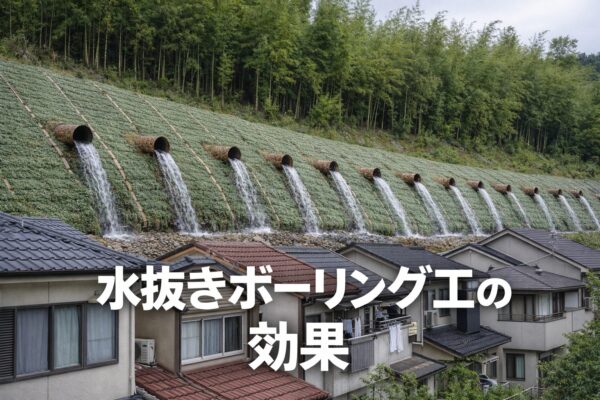
Since this is simply a matter of releasing the pore water pressure, if the internal pressure rises rapidly due to the water,
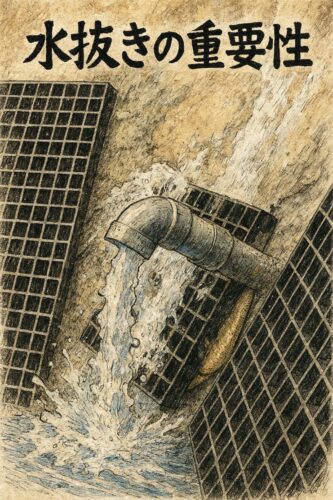
Pressure builds up in the drainage borehole, and water escapes from there.
So, whether you're facing down or up, the pressure will always escape toward the side with lower pressure. (You get the idea, right?)
Pressure always flows from areas of high pressure to areas of low pressure.
Just because it's slanted upward doesn't necessarily mean it'll roll down, lol.
As for drilling, they really put me through the wringer on this mountain lol.
The drilling length was 45 meters, but the last 15 meters were sandstone, and the drill bit wouldn’t rotate unless the hydraulic pressure was set to “Low.”
Removing the tube was also a real challenge; it took a long time as I had to hammer away at it relentlessly at low speed.
Well, since the rotation wasn't at its maximum, I had some leeway, but mountains are scary, aren't they? lol
See you later.