Hello, everyone.
This is Enta.
We’ve been receiving a lot of inquiries about clip spacers lately.
The reason is that, while there are many design consulting firms, it appears to involve rebar insertion work for seismic retrofitting of bridges.
I'm hoping a lot of them will end up leaving because of the seismic retrofitting work! lol
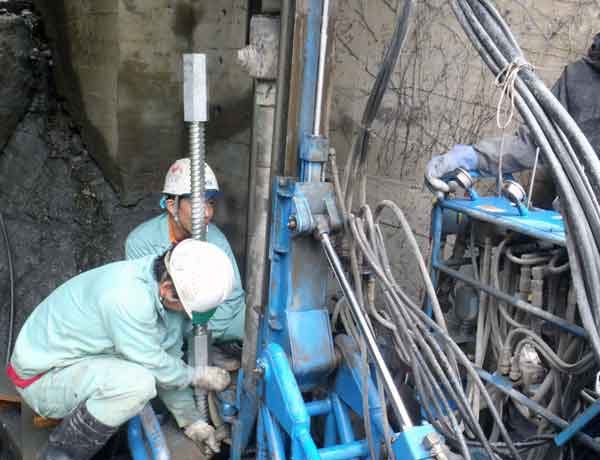
By the way, the rock bolts used in this bridge seismic retrofitting project were D51 lol
One of the biggest rock bolts in the country lol
Even if you just think about it normally, isn't the D51 a bit unrealistic??
Wouldn't it have been better to reduce the diameter of the PC tension rod in the Gebindistab?
I keep telling myself that, but I actually felt kind of happy working on my first D51 project lol
The employee was... angry.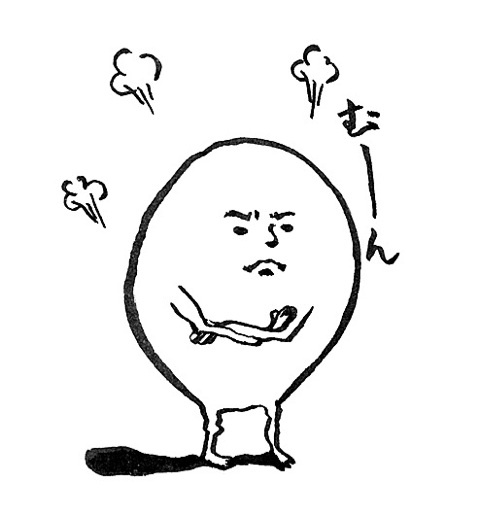
But that's beside the point.
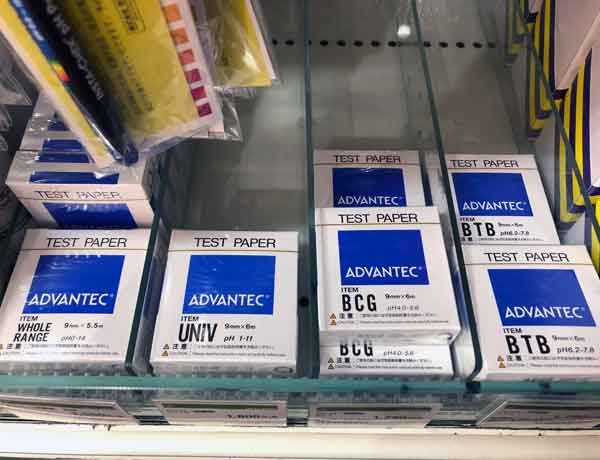
Have you heard of this?
That's right!
That's what they call litmus paper, isn't it?
Don't you use it every now and then?
I bought one myself for the first time in a while, and it seems you can now check the pH range down to the finest details.
By the way, it's Tokyu Hands.
I seem to remember that there used to be only one kind.
So, what do you do with this?pH Adjustment of Wash WaterThat's right.
Usually, we have the ready-mix concrete company take the wash water back with them, but that wasn't possible this time, so
We treat the wash water that has seeped out of the flexible containers.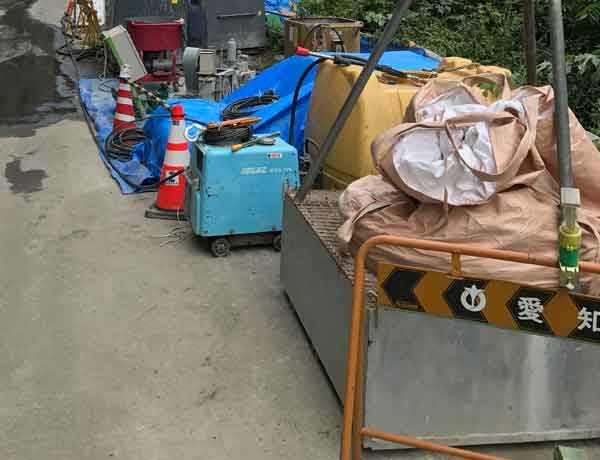
It's a little hard to see, but there's a box with a flexible container bag on top of it on the right side of the photo above.
Hang the flexible container bag from a single pipe, and fill it with wash water, leftover cement slurry, and wash water from the spray application.
Any material remaining in the flexible container bags will be disposed of as industrial waste.
Adjust the pH of the water that has accumulated below the lower mesh.
First, add the coagulant.
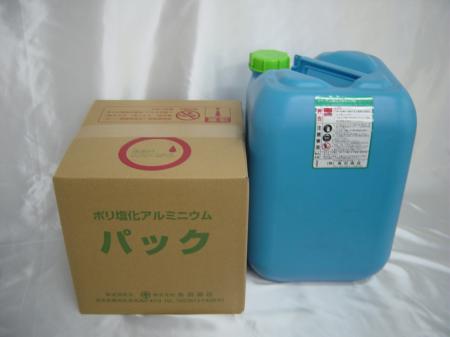
The photo above shows polyaluminum chloride (PAC) used in water treatment. Products such as sulfuric acid-based coagulants are of the same type.
Add this in small amounts while stirring.
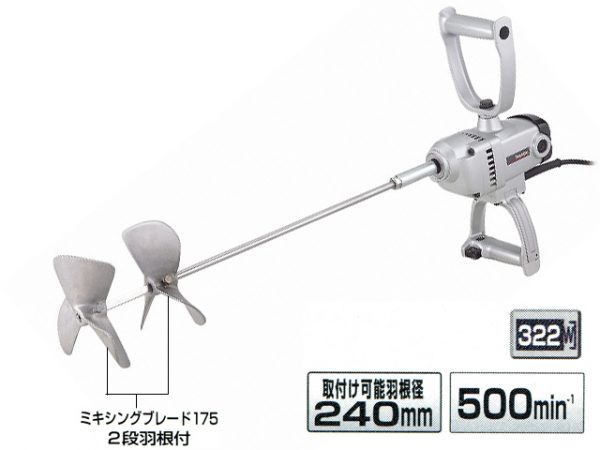
If you don't stir thoroughly while doing this, the pH will fluctuate.
I'll keep dipping in a bit of litmus paper here and there to check.
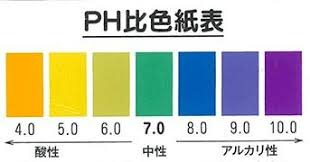
The color of the litmus paper changes gradually, like this.
Anyway, the trick is to add it little by little.
If you add all of this at once, it'll suddenly become acidic, which will cause some trouble lol
The key is to take it little by littleThat's it.
The discharge standards for contaminated water from construction projects are as follows.
| Category | Enabling Act | SS Reference Values | pH Reference Values |
| Discharge Standards | Water Pollution Control Act | 200 mg/L (Daily average of 150 mg/L) |
5.8–8.6 |
| Additional Drainage Standards | Prefectural Ordinances | Set by Prefecture | Set by Prefecture |
| River Environmental Standards | Basic Environment Act | 25 mg/L or less | 6.5–8.5 |
| Drinking Water Quality Standards | Waterworks Act | Turbidity of 2 or less | 5.8–8.6 |
| Water Quality Standards for Aquaculture (Rivers) |
None | 25 mg/L or less The concentration of artificially added suspended solids must not exceed 5 mg/L. (When artificially introduced turbidity persists over a long period) |
6.7–7.5 There are no sudden changes in pH severe enough to adversely affect the organisms living there. |
Generally speaking, it’s okay to release it if the pH is between 6 and 8, but let’s aim for a neutral pH as close to 7 as possible!
It's just a small thing, but once you get used to it, it's easy.
If there's a place on-site where you can set up a pH treatment unit, using carbon dioxide would be a breeze, but it does cost money, doesn't it? lol
It's just a little tip, but it comes in handy if you know it.
See you later.