

Hello, everyone.
This is Enta.
It's been a string of hot days—are you taking precautions against heatstroke?
I'm already barely keeping up on the job, lol.
It seems there have been a number of cases of people collapsing from heatstroke all over the country, so please be careful.
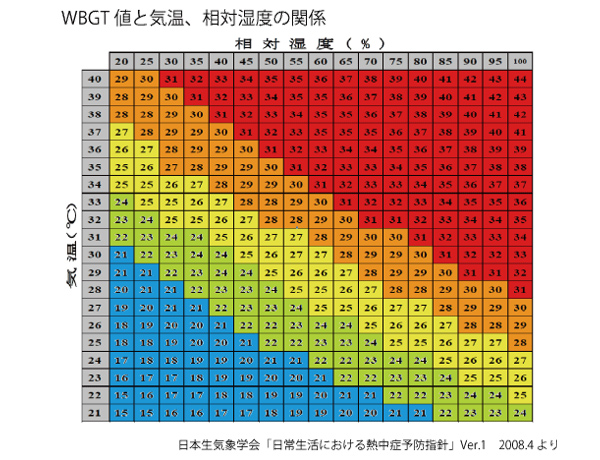
Humid, sweltering days are dangerous.
If you feel the humidity is high, treat that day as a high-risk day and work accordingly.
But that's beside the point.
Conducting Routine Inspections
I realize I haven't checked it in a while, so I go ahead and do it.
Even if it's just for show, we still perform routine inspections on-site.
Oil~, water~, gauges~, lights~, grounding rod~, circuit breaker~~~~~~
Wait, is this really necessary??
I do think that, to some extent.
Why do we do this?
That’s so we can check everything before starting work, ensure trouble-free operation, avoid hazards, and keep the job site running smoothly!
But 20 percent!!!
So, in reality...
About 80% of people say it’s because they have to submit it to the government, right?
(Well, this is one of those "what I really think vs. what I say" situations, so it's the kind of thing I'm not supposed to say, lol.)
Why are you required to submit this to the government office?
Basically, the reason government offices say that is because,
"List of Regular Self-Inspections"("An Overview of the Occupational Safety and Health Act" (p. 14)
It is required by lawThat's right!
So, that means the government office has no choice but to verify it, right?

Since this is a public works project, we are, of course, obligated to act in accordance with the law.
It’s a whole different level of leniency compared to private construction projects. (Large sites run by general contractors are a different story.)
Ministry of Health, Labor and Welfare (Safety and Health)
There's a ton of stuff on this page, but feel free to just check out the parts you're interested in lol
That’s why routine inspections are so important.
What's important to check?
Let's proceed with the discussion assuming the equipment is owned by the company, rather than leased.
First, here are the hour meter readings after the oil change and the hour meter readings at the job site.
So, if large generators or compressors have exceeded 250 to 500 hours of operation, that’s a problem.
So, that means the oil change interval is long.
Oil Maintenance for Engine-Related Machinery
In reality, it doesn't break that easily even if you don't use it much, but the risk of it breaking is higher.
You could say that.
Water is important, too, but oil is the key!
Next is water, but unless the machine is really old, there shouldn't be any issues with the water.
However, machines do have a tendency to break down.
If you're aware of that habit on a daily basis, you can take steps to deal with it, right?
Things That Cross My Mind During an Oil Change (Just Some Random Thoughts, lol)
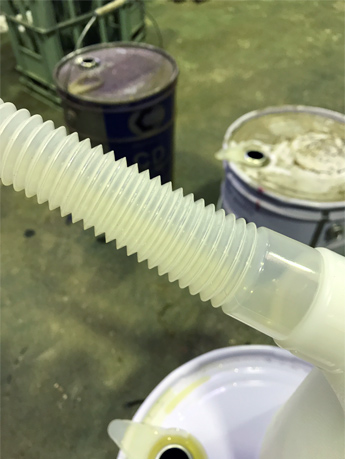
This is the spout of the oil jug.
Doesn't this make you curious??
For example, I filled it exactly to 5 liters using a 5-liter oil jug.
Pour the oil into the machine.
You can still see it on these jagged edges, right?
There's still some oil left in these grooves, right?
It's gone down a little from 5L, hasn't it? ...
I've always been really bothered by this tiny amount, you know~
See you later.
Bolt Scales, Clip Spacers, and Greening Spacers
Please see below for inquiries and retail locations.
Natural Applied Sciences, Inc.
(Slope Greening Materials Group)
Phone: 052-212-1441
Koiwa Wire Mesh Co., Ltd.
(Contact the Chubu Branch)
Tel. 0568-75-7710
Showa Co., Ltd.
(Kagoshima Prefecture)
Tel. 099-296-1234
Fujiwara Industries Co., Ltd.
(Bolt scale only)
Phone: 06-6683-0797