Hello, everyone.
This is Enta.
I imagine that at some job sites, the person in charge can determine the hardness and soil type using a slime test—how about this site?
I was asked that.
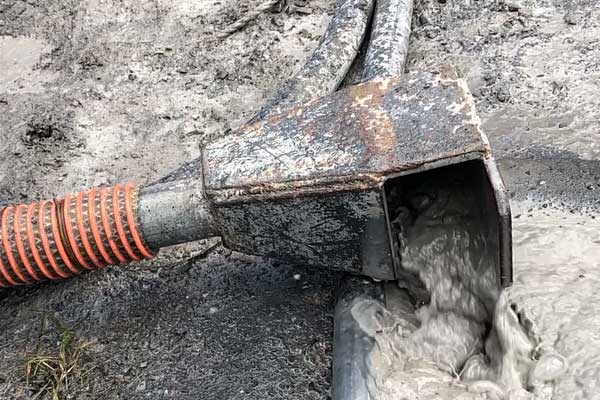
From the unconsolidated zone to the consolidated zone at that site, the rock consists entirely of mudstone.
"You can't tell how hard it is from the slime, and as you can see, the soil is pitch black," I replied, lol.
It really makes you wonder: Who even said you can tell the hardness or soil type from a slime in the first place?
So, when most project managers make design changes to ground anchor work, the contractors end up writing them into the consultation document, lol.
I totally get where the contractor's rep is coming from lol
I remember writing something like that myself a long time ago.
If the anchorage layer is too soft, or if the installed anchors keep coming loose and surface friction around the anchorage area cannot be achieved, how should the anchorage layer be inspected?
In situations like that, it’s virtually impossible to conduct another exploratory borehole (unless there are exceptional circumstances).
If we do that, it would render the exploratory drilling conducted during the previous design phase meaningless and completely invalidate the original design.
Since the government agency has already accepted it, they can’t deny it, and while the contractor would like to deny it, they can’t do that either.
In the end, that whole issue gets swept under the rug.
And I think the only way to explain it is to say that when extending the fixed length or the free length, you use a slime to check that section.
In other words, something I wrote as a last resort has come full circle and ended up here...
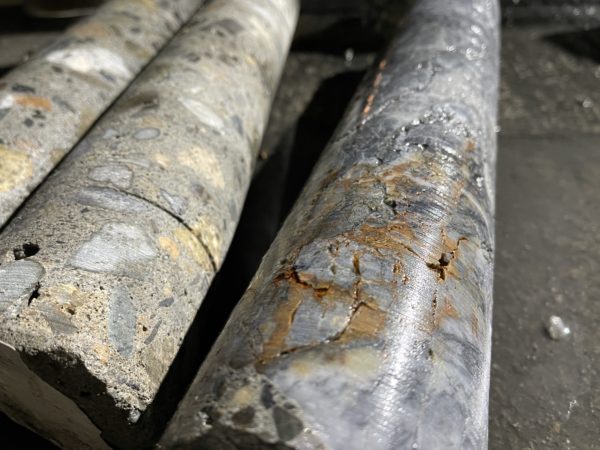
In reality, while you can clearly determine the hardness and soil type from a freshly extracted columnar core, you cannot do so from drilling slurry.
I guess I should mention that to the local government office, too.
From the government's perspective, as long as those around them are somewhat satisfied and it goes through, that's all that matters.
What’s more, this area is somewhat of a gray zone in audits, so it can be hard to understand, right?
If we, as the contractor, have no choice but to write it that way, we’ll manage the construction accordingly (e.g., removing slime).
That said, the only thing I can really tell is the color.
There’s no end to the contradictions that arise on-site, but we have to find a compromise somewhere.
It sounds like a lie, but it's not. It seems like it won't work, but it will.
I think the local government is aware of this issue, and the contractors just have to deal with it, lol.
It’s hard to get any work done if you’re too rigid, after all.
In my case, I consulted with the local government office after explaining everything to them.
Due to the reasons mentioned above regarding ○○, we cannot proceed with the installation, and there is a high likelihood of poor workmanship; therefore, although this is an exception, we would like to proceed with this method.
However, they said they were having trouble because the ○○ construction guidelines state it this way.
For now, we'll discuss this verbally and then decide whether to put it in writing.
When you do that, the government office or the general contractor will provide an answer.

In our public works projects, I believe it is absolutely essential that construction not be carried out based solely on the contractor’s own judgment.
It may sound extreme, but this means that any construction methods other than those specified in the construction plan are strictly prohibited.
We will carry out construction based on the construction plan, and will consult and seek instructions only when it is not possible to do so.
This is the foundation for public works contractors.
There are bound to be all sorts of contradictions, but let’s accept them and proceed with the construction safely and smoothly!
See you later.