Hello, everyone.
This is Enta.
On my way home from an event the other day, I stopped by the site of a retaining wall collapse in Suginami Ward, Tokyo.
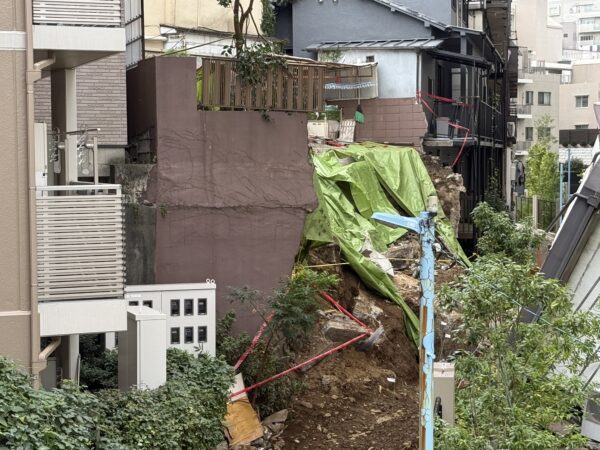
The sight of the house just lying there is really striking.
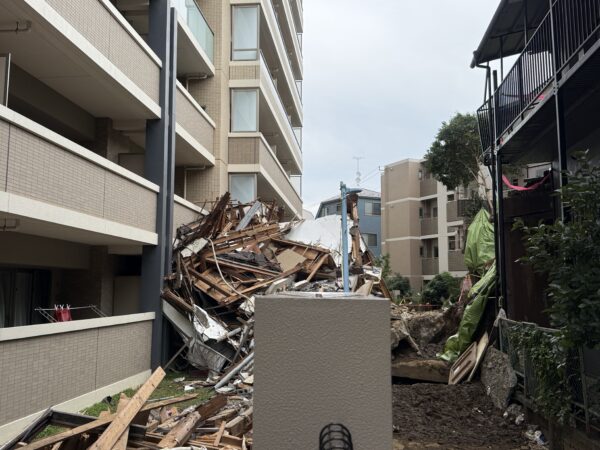
I was able to take photos from the roads on both sides as you face it, but the road leading to the site was closed to traffic.
Even though I knew it wasn't going to collapse, since it wasn't my land, I couldn't go any further...
A shot taken from a distance.
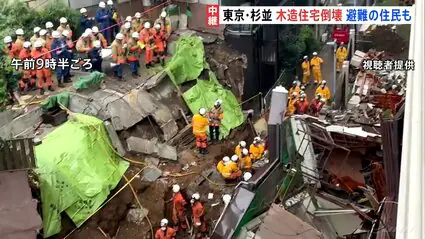
The photo in the news is taken from above, so you can get a general idea.
According to news reports and what I've heard, this is a type of construction commonly seen in hilly areas like the one described below.
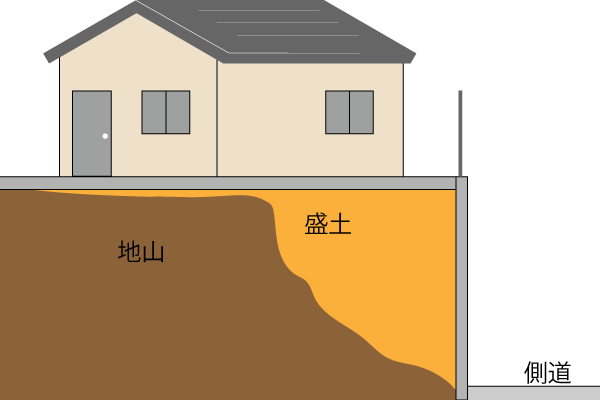
A retaining wall is built against the natural ground, and then the house is built on the resulting embankment.
I wonder if the natural ground was relatively solid? But I suppose that was good enough back then.
As a result of aging and the recent heavy rainfall, cracks have formed in this retaining wall.
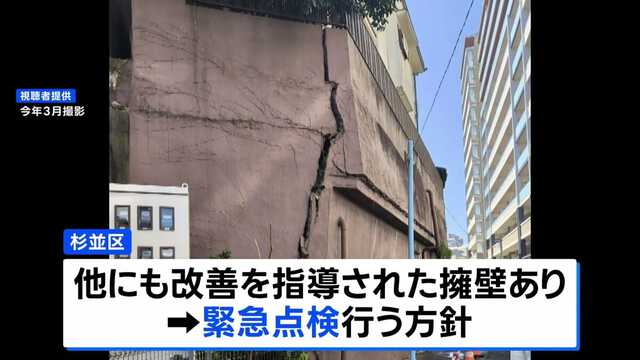
At first glance, the retaining wall itself looks like it's made of concrete, but I couldn't see any rebar.
I don't know exactly how it was constructed back then, but it seems to be separate from the concrete on the sides as well.
According to news reports and other sources, rainwater and spring water—or something similar—accumulated on this embankment, causing soil pressure to build up and leading to its collapse.
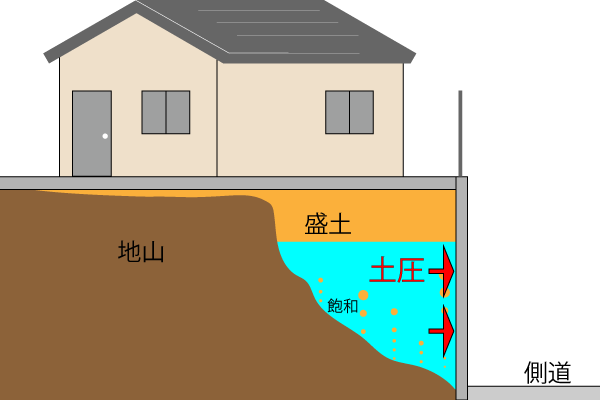
It's something like this.
To begin with, the Kanto Loam Formation tends to weaken rapidly when water penetrates it.
It’s entirely possible that this caused the apparent cohesion to decrease, leading to an increase in earth pressure.
Maya, there are also reports that there was no drainage system in place when water backed up.
And then it all came crashing down.
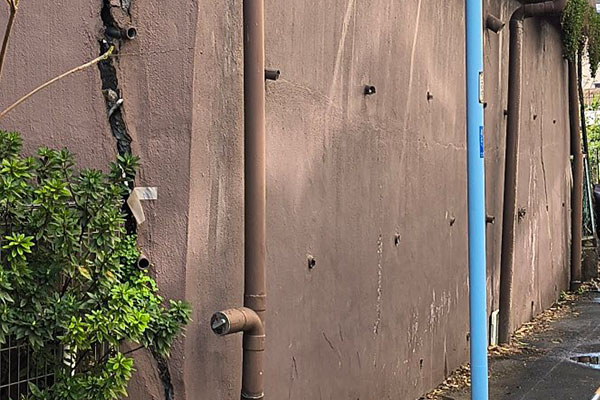
Looking at photos taken before the collapse, it seems like there was a drainpipe at the bottom, but...
I think I could have checked it a little more closely if I could have gotten inside, but as it stands, I have absolutely no idea.
So, what will we construction workers be doing in places like this going forward?
What kind of construction work is best?
After all, as slope engineers, reinforced earth wall construction is our specialty—it’s what we design and build on a daily basis, isn’t it?
I'm going to try to think things through by making full use of that line of thinking.
See you later.